As the electrical industry evolves, so do the expectations placed on designers, contractors and authorities having jurisdiction (AHJs) to prioritize safety from the start of the installation process. Recent updates to key industry standards make it clear that worker protection must be an integral consideration throughout the entire life cycle of an electrical system. Proposed revisions to the 2026 edition of the National Electrical Code reflect a shift in focus, moving from reactive measures to a more proactive approach centered on risk management and accountability from design through installation.
NEC 110.16: Wired for safety
With the conclusion of the annual NFPA Membership Technical Meeting, the forthcoming revisions to NEC Section 110.16 are poised to represent a significant evolution in how the Code addresses worker safety through labeling requirements. To fully understand the magnitude of this change, we must first revisit the historical development of this section and examine how the NEC has previously attempted to balance its scope with that of NFPA 70E, Standard for Electrical Safety in the Workplace.
For years, Section 110.16 has reflected an ongoing struggle to delineate the boundaries between the NEC’s scope—focused on installation requirements—and NFPA 70E’s focus on workplace safety practices. The revisions in the upcoming 2026 NEC appear to take a bold step forward by directly incorporating elements traditionally reserved for NFPA 70E.
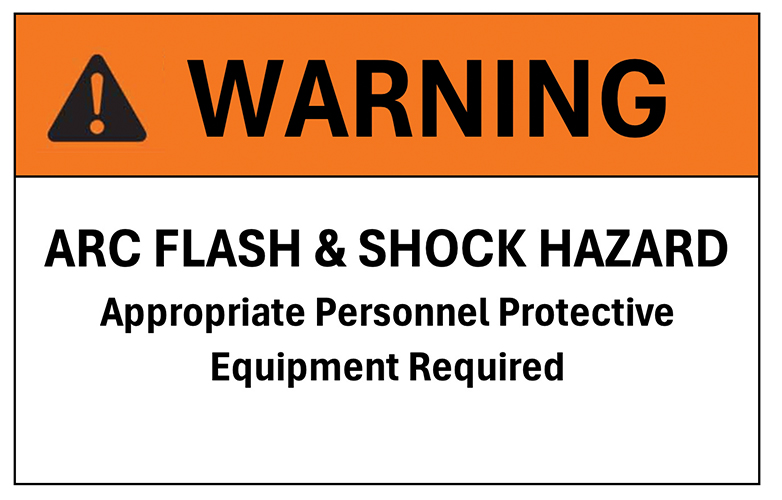
Figure 1
Understanding the scope divide
According to Section 90.2(A), the Code establishes minimum installation requirements for electrical and communications conductors, equipment and raceways. In contrast, NFPA 70E, as outlined in its own scope (Section 90.3), defines electrical safety-related work practices necessary to safeguard employees from hazards associated with electrical energy.
In principle, the technical committees responsible for each document develop rules within their respective scopes. However, conflicts can arise when proposed requirements appear to overlap. Section 110.16 has long been the flashpoint for this tension—especially as it relates to arc flash labeling. Let’s trace the evolution of this requirement to see what has led us to the latest revision.
2002–2014 NEC: Establishing the baseline
The 2002 NEC marked the first edition to include a requirement for field-applied arc flash warning labels on electrical equipment in locations other than dwelling units.
The intent was to alert workers of the potential arc flash hazard. This requirement remained largely unchanged through the 2014 edition, with only a minor modification that allowed manufacturers to apply labels at the factory rather than requiring them to be field-installed. (See Figure 1.)
2017–2020 NEC: The first major shift
The 2017 edition brought the first major change in five Code cycles. Section 110.16 was divided into two subsections. Subsection 110.16(A) established the general arc flash labeling requirement seen since 2002. Subsection 110.16(B) introduced a new mandate requiring service equipment in locations other than dwelling units to include the following additional information on the label (see Figure 2): nominal system voltage, available fault current, clearing time of the overcurrent protection device and the date the label was applied.
These additions provided the necessary information for a technician to select appropriate arc flash PPE in accordance with NFPA 70E’s table/category method but were still considered within the scope of the NEC, as they tied directly to the installation of service equipment.
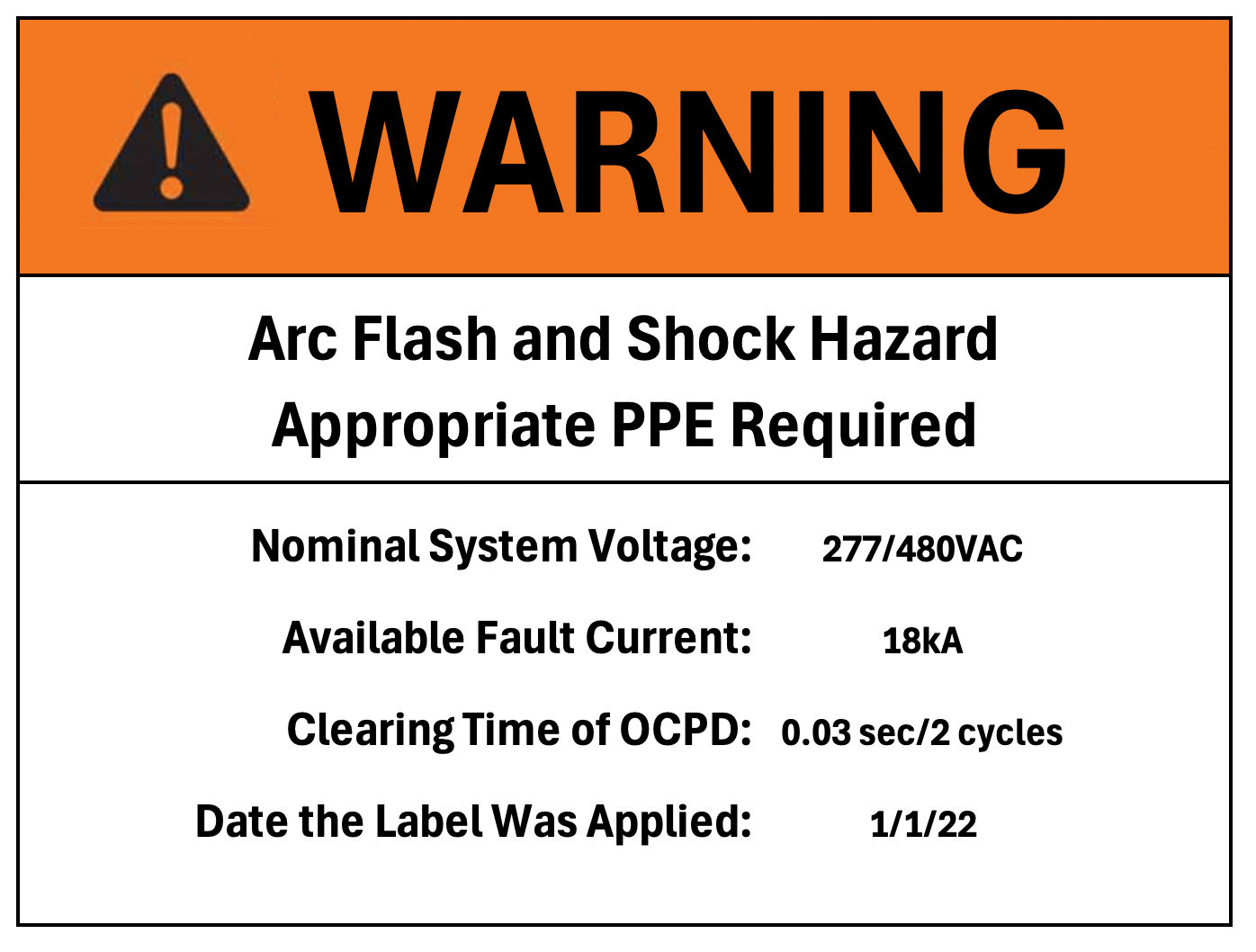
Figure 2
2023 NEC: Course correction
In the 2023 NEC, the general language of 110.16(A) was maintained, but 110.16(B) was revised significantly. The first change expanded the arc flash warning label to other than dwelling-unit feeder-supplied electrical equipment. The second part of the change deleted the information previously required. This was driven by concerns that the detailed labeling information required before fell outside the NEC’s scope, since these labeling elements are primarily associated with safety-related work practices covered by NFPA 70E.
As a result, the 2023 edition still required an arc flash warning label on services and feeder equipment rated 1,000A or more in locations other than dwelling units. But instead of the four elements from the 2017 edition, the label was to reflect “industry practice” and include the date of application, thereby removing language that could be interpreted as exceeding the NEC’s authority.
2026 NEC: A unified approach
Fast forward to the 2026 edition, which has been approved as a consent document and is awaiting publication. The latest revision to Section 110.16 eliminates the previous two-subsection format and introduces a streamlined, unified requirement that more closely aligns with NFPA 70E’s labeling practices (see Figure 3). To better understand this alignment, let’s compare the current requirements from each standard.
2024 NFPA 70E, Section 130.5(H)—Equipment Labeling. Electrical equipment in locations other than dwelling units must be marked with a label containing the nominal system voltage, arc flash boundary and at least one of the following:
- Available incident energy and corresponding working distance or the arc flash PPE category for the equipment (but not both)
- Minimum arc rating of clothing
- Site-specific level of PPE
2026 NEC, Section 110.16—Arc Flash Hazard Marking. Service equipment and feeder-supplied equipment, in locations other than dwelling units, must be labeled with the nominal system voltage, arc flash boundary, available incident energy or minimum required level of PPE, and date the assessment was completed.
At first glance, one notable difference is that the 2026 NEC explicitly requires the label to include the date the assessment was completed—something not directly required by NFPA 70E Section 130.5(H). However, upon closer examination, Section 130.5(H) of NFPA 70E mandates that building owners document the method used to calculate the information on the label and review it for accuracy at intervals not to exceed five years.
While NFPA 70E does not explicitly require the date to appear on the label itself, the requirement to review and validate the data implies that a documented date must exist. The NEC simply makes that information visible at the point of use. This subtle difference underscores a broader trend: both standards support ongoing hazard awareness and accountability, but the NEC now embeds that visibility directly into the installation requirements.
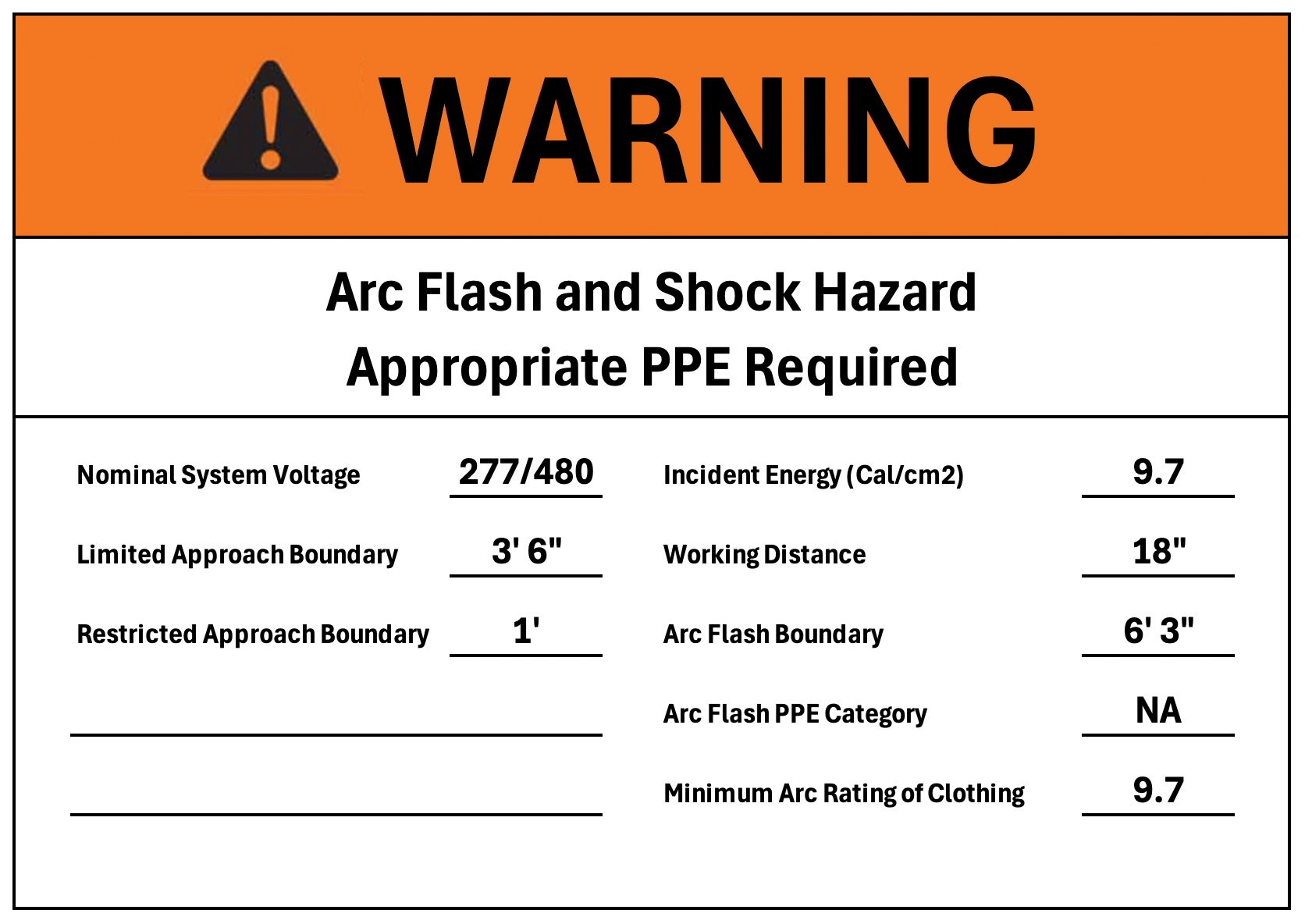
Figure 3
Scope or safety? Why this matters
This change marks a clear departure from traditional installation requirements and signals a long-overdue alignment between system design, installation practices and worker safety. So a critical question arises—did the technical committee get it right?
The NEC holds a unique position among safety standards. It is adopted—in some form or edition—by every U.S. state and enforced by municipal, county or state electrical inspectors, giving it the force of law. By incorporating arc flash labeling requirements directly into the NEC’s installation provisions, compliance is a legal obligation that must be satisfied before a system is approved.
By contrast, NFPA 70E, while widely respected and essential for workplace safety, is not universally adopted into law and lacks a consistent enforcement mechanism. As a result, its requirements—particularly those related to arc flash hazard assessments—are often perceived as optional. This has historically led building owners to “value-engineer” out essential safety measures, such as incident energy analyses, to reduce project costs. Unfortunately, this puts contractors and technicians in difficult and potentially dangerous situations.
Consider the following real-world scenario: A service technician is dispatched to a new customer’s facility to troubleshoot an issue with their manufacturing equipment. Upon arrival, the technician determines that diagnostic testing will be required—an energized work task that qualifies under Exception No. 3 to NFPA 70E Section 110.2(B). However, the technician realizes the equipment has not been evaluated for arc flash hazards. There is no incident energy analysis, and the available system data is too incomplete to support the table/category method for PPE selection.
Recognizing the risk, the technician informs the customer that the necessary voltage testing constitutes energized work and cannot be performed without an arc flash hazard assessment. They explain that, at minimum, the portion of the system requiring testing must undergo an incident energy analysis and be properly labeled. The customer expresses frustration at the additional cost and implies that if the technician won’t do the work, another contractor will.
Now the technician is placed in an impossible position: proceed with unsafe work or walk away from a potential new client.
As safety professionals, we know the correct course of action is to stop work, report the situation to leadership and refuse to proceed without the necessary safety measures in place.
The 2026 NEC aims to reduce the frequency of such scenarios. By requiring arc flash hazard assessments and appropriate labeling as part of the installation process, these critical safety steps will now fall under the AHJ’s jurisdiction and will be subject to inspection before system approval.
Moving forward, any new installations—whether in existing or new facilities—will need to meet these labeling requirements as a condition for final approval. This shift strengthens compliance and enhances safety culture across the board by embedding hazard awareness into the foundation of every electrical installation.
Incorporating these labeling elements into NEC 110.16 may technically represent “scope creep,” but it’s the kind we need. It acknowledges a long-standing gap in enforcement and bridges the divide between installation and operational safety. More important, it sets the stage for a future where worker protection is no longer an afterthought.
The time for prioritizing worker safety is now. And if that means the NEC steps a bit outside its traditional boundaries, then so be it. Because when safety is the goal, crossing perceived or realized lines may just be what moves the industry forward.
Kyle Krueger
About The Author

Kyle Krueger
Executive Director of Codes and StandardsKRUEGER is NECA’s executive director of codes and standards. He has worked in the electrical industry for over 25 years as an inside wireman, authority having jurisdiction and educator. Kyle currently represents NECA on the NEC Correlating Committee, Code-Making Panel 3, NFPA 72 Correlating Committee, NFPA’s Electrical Section Executive Board and the UL Electrical Council. Reach him at kkrueger@ necanet.org.