You're reading an older article from ELECTRICAL CONTRACTOR. Some content, such as code-related information, may be outdated. Visit our homepage to view the most up-to-date articles.
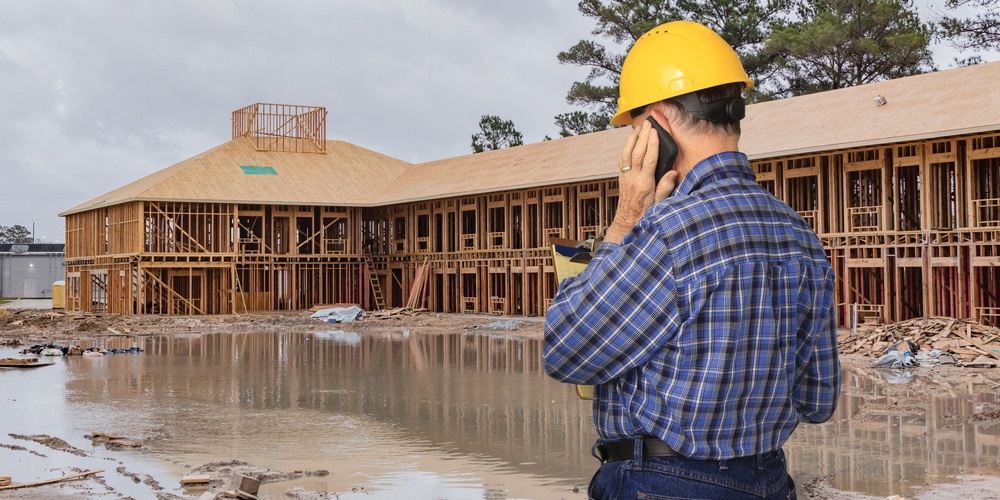
Every year, preventable, weather-related injuries and deaths occur both on and off the job. With the summer storm season in full swing, employers and employees must educate themselves about the dangers associated with thunderstorms, tornadoes and hurricanes. Doing so will help to protect people and property from Mother Nature’s wrath.
First and foremost, employers should have an emergency action plan that deals with different weather-related scenarios. Typically, a good emergency action plan includes suitable shelter locations for employees, policies to ensure all workers are accounted for and procedures to address any hazardous materials that may become displaced and harmful to personnel after a storm.
Thunderstorms
During spring and summer, thunderstorms are common throughout the country. As a result, employers and workers must be cognizant of potentially severe weather. Radios, televisions and mobile devices can be invaluable tools for tracking the most up-to-date forecast.
Meteorologists can predict hazardous storms and notify the public with watches and warnings. A watch indicates a storm is possible, while a warning indicates a storm is imminent and severe weather has been spotted. Unfortunately, despite these warnings, people are killed and seriously injured every year. While some of these victims are unaware of the dangers, others simply ignore them.
According to the American Red Cross Guide for Thunderstorm Safety and Severe Weather, “Every thunderstorm produces lightning, which kills more people each year than tornadoes or hurricanes.” When storm conditions produce lightning, personnel must take shelter indoors or in a vehicle with all windows rolled up. Thunderstorms can produce heavy rain, flash flooding and high winds, so it is important to guard against these hazards as well.
Tornadoes
Severe thunderstorms can also generate tornadoes. A tornado’s strength is measured on the Fujita Scale with ratings from F0 (weakest) to F5 (strongest). Although severe tornadoes are more common in the middle of the United States, they can occur in every state.
Often, tornadoes arise quickly, and authorities may not be able to provide much warning. Green or funnel clouds, roaring sounds and hail indicate a tornado is possible. All personnel must be familiar with community warning systems, such as sirens, air horns, emergency news bulletins and even cell phone alerts. Once a warning is issued, all personnel must go to an underground shelter, basement or safe room. If no such shelters or safe rooms are available, individuals should seek refuge in a small, windowless interior room or hallway on the lowest level of a sturdy building. Temporary or mobile structures are not sufficient shelters.
In the event that you are caught outdoors during a tornado, get into a vehicle and attempt to drive to the nearest shelter. If you encounter flying debris, pull over and park. Stay in the vehicle with a seat belt on and your head below the windows while covering yourself with a blanket.
Hurricanes
Unlike tornadoes, hurricanes come with plenty of advanced notice. Hurricanes can produce wind speeds exceeding 155 miles per hour. Hurricane season runs from May 15 through Nov. 30 and typically has the greatest effect on coastal areas.
Employers in potentially affected regions should ensure workers are familiar with hurricane evacuation routes. It is also important they know where to go in the event that an evacuation becomes necessary. In preparation for a hurricane, all windows must be covered or boarded up. In high-risk areas, structures are usually equipped with permanent storm shutters.
Prior to the storm, personnel should move any equipment or items that could become debris or get damaged. Employers may also consider clearing loose and clogged rain gutters or downspouts, reinforcing garage doors and installing straps or additional clips to securely fasten roofs to building frames.
Calm after the storm
Once a storm has passed, recovery efforts begin, which come with their own hazards, such as downed electrical wires, gas leaks, carbon monoxide and electrical hazards from portable generators, fall and struck-by hazards from tree trimming or structural damage, being caught in unprotected excavations or confined spaces, and contaminated water. Personnel must not lower their guard after a storm passes and also must be aware of how to safely navigate these dangers.
For more information on storm safety or preparedness, visit www.osha.gov, www.fema.gov or www.noaa.gov.
About The Author

O’CONNOR is safety and regulatory affairs manager for Intec, a safety consulting, training and publishing firm. Reach him at [email protected].