Everyone wants a safe workplace. But the focus should be on improving the collective process, not fixing individual failings. Created amidst a back and forth of ideas and open conversation between management and workers, below is an example
of a safety program that was built in, rather than bolted on.
Bill Belongea entered the safety arena 25 years ago. He currently serves as senior safety services program manager for The Master Lock Co., Oak Creek, Wis. The company began offering an arc flash and electrical safety services program three years ago.
“I think if you ask any organization, they are going to say absolutely, yes, they support safety. But if you take a deep dive, you may find the pronouncements don’t always translate to what you see on the floor,” Belongea said.
consumers energy
Further, if safety programs are siloed, safety managers are typically given sole responsibility for safety.
“That approach really doesn’t work,” he said. “Looking at safety as a total system, not just the responsibility of a designated safety manager, is an important step toward building a successful safety program. Any decision that’s made, every element in a safety program should have buy-in and engagement from every individual within that organization. The safety manager can then help facilitate the program that works for that company. It’s also important to ingrain safety throughout operations, be it quality, production and so forth.”
Not a bottom-line budget item
Viewing safety as a budgetary, bottom-line item can be problematic.
“You can have safety inspections, safety training, things of that nature,” Belongea said. “But the ROI of a safety effort is difficult to capture. It’s hard to add up or anticipate something like employee falls and view them from a dollar standpoint. Add to that budget impacts due to inflation. It absolutely affects a business’ safety programs. But in electrical, you can’t forgo the safety training employees need (e.g., National Fire Protection Association/NFPA 70E). In 70E, there’s a lot to learn, and it takes time.”
Belongea shared that when he talks to customers and explains his firm’s three-day foundational training, the customer often wants to get that down to four hours. They will also ask if the training can be done online.
“If we look at most of the incidents related to electricity, it is due to human error,” he said. “This tells me these individuals are not getting the proper training. The shrinking of margins leads to shrinking of budgets. Putting the time, the effort and the money into a safe work environment is already challenging.”
So, the question arises—in today’s economy, does safety look more aspirational than deployable? Belongea thinks it does, but also recognizes that inflation softens and fades. “I think that safety is something we will be talking more and more about in the next three to five years,” he said.
Creating a speak-up culture
For Belongea, you can claim your company is adopting a zero-incidence culture, but employees must feel it’s more than talk. They need a voice, a role in crafting the safety program so it can be lived.
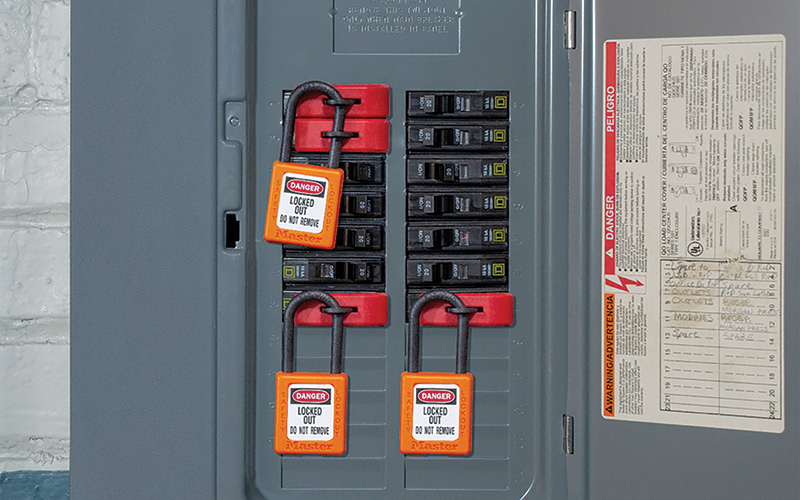
“Employees need to see money being put in for training, that arc flash and lockouts are being addressed,” he said. “Are new gloves issued every six months? Do workers have the proper electrical tool for the task? Safety must be more than a banner; otherwise, trust is broken between employees and management. Trust is hard to regain.”
master lock co.
It comes down to creating a speak-up culture instead of blame.
“Fear and retribution must fall by the wayside,” Belongea said. “Management should understand what crews are up against day to day and how that impacts safety. If employees can speak up when faced with electrical safety hazards, really any hazards, safety becomes ingrained.”
Belongea works with a range of organizations, from those with no electrical safety policy to those with existing programs they want to improve. He recommends being as specific as possible across tasks and going through a process of analysis or qualification when handling electrical work. “For instance, now that organizations must recertify and meet NFPA 78 [Electrical Inspections] every three years, it’s better to have a methodology in place to confidently meet inspections, as opposed to ramping up an effort every three years. I think in safety, you are either doing it or not doing it as an organizational practice. I don’t use the term best practices.”
Finally, Belongea finds that the psychological aspect of human behavior as it relates to safety cannot be dismissed. It’s the key to building a safety program that sticks. In fact, NFPA 70E references what is called Human Behavior Performance in its Informative Annex Q.
Human behavior performance at work
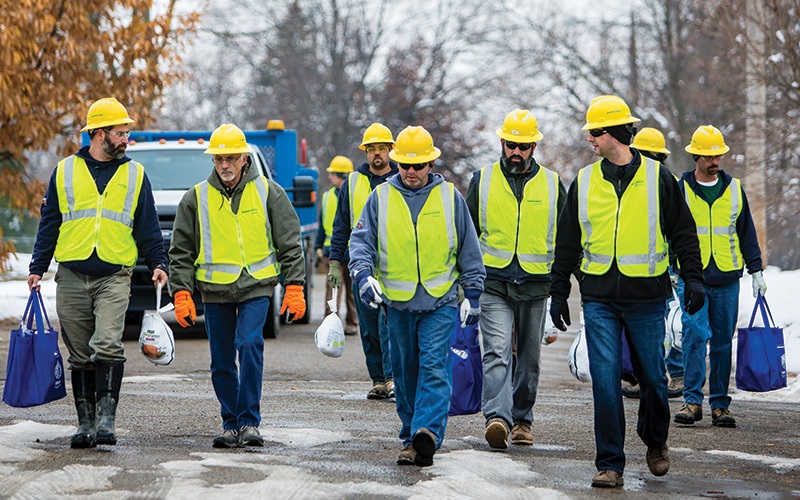
Consumers Energy is a public utility that provides electricity and natural gas to more than 6 million of Michigan’s 10 million residents. It is part of CMS Energy, Jackson, Mich. Consumers has adopted a human performance approach to its safety program, creating a give and take between management and workers. Typically broken into three concepts, human performance begins by recognizing that no safety effort is infallible. Accidents will happen. But by recognizing human behavior that can be identified and remediated through well thought-out company processes, a safety culture becomes a living thing instead of just a slogan.
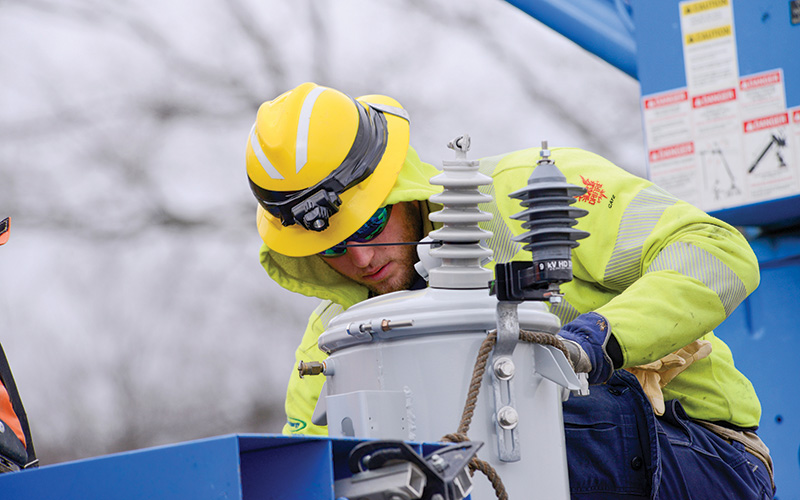
The first of three elements in a human behavior approach is skill-based performance. This refers to an individual’s extensive experience with any given operation. Deep familiarity with a task often places a worker on autopilot, creating blinders where they can miss something that affects their safety or the safety of others.
“We train workers so they are aware when they are in skill-based mode,” said Daniel Pfeffer, a millwright at the utility’s Campbell Plant and a member of the company’s safety culture team. “We ask them to take a step back, ask if they are missing anything. It’s having a situational awareness to avoid hazards while focused on a task.”
A key company strategy for better situational awareness is “scan and focus.”
“I step out of that truck, scanning the whole area in front of me,” said Jim Wade, director of safety and health for Consumers Energy. “Are there any hazards in a wooded area? Are there any landowners? Are kids playing? As a supervisor or field leader, only then will I next focus on what is happening right in front of me, the workers.”
“I believe tunnel vision and maybe overconfidence leads to the most safety incidences in our industry. By employing ‘scan and focus,’ you step back, look at what you’re doing and then go back in, which helps break that tunnel vision. Taking that pause to look at what’s going on around us is so important, as job sites are very dynamic,” Pfeffer said.
Knowledge and rules
The second element, knowledge-based performance, refers to a worker who may not fully know a particular operation but tries to fill in with the knowledge they have. Related is the third element, rules-based performance, which speaks to applying the right rule but misapplying it to navigate an unfamiliar situation, thus jeopardizing the outcome.
Wade finds that knowledge-based performance is misnamed. A lack of knowledge might be his better definition.
consumers energy
“This mode results in the highest probability of making an error, 50/50. You don’t know what you don’t know. The best way to succeed in the knowledge-based mode is to stop and ask questions. Have a conversation. For example, one of the folks that’s turning a gas valve stops and asks for confirmation, ‘The gas should flow that way, right?’ If I’m unsure, we find out together.”
Be it a procedure, a standard or protocol, Consumers’ supervisors and employees have resources, such as a digital app or physical manual, and work procedures meticulously explained and committed to paper.
“We also created an error-reduction team identifying triggers and traps for workers,” Pfeffer said. “If someone says to me ‘I think this is what I saw the guy do last time, so we should be good,’ that’s a trigger for me. We’re operating in a negative knowledge-based mode. The only way to get out of that mode is to either call a subject matter expert or pull out the procedure and go over it step by step. Find out how something is meant to be done and what you’ll need. This is the rules-based mode. When we think about all the standards we have in electrical, you are never going to know all of them at the top of your head.”
While Consumers had an established safety program in 2006, looking at safety through a human performance lens was introduced in 2015. It helped drive a change.
“In our previous safety program, we were seeing a reduction in recordable injuries rate,” Wade said. “What stayed steady was our high-risk injuries. We had to change the mindset of our folks; how we thought, how we worked. The principles of human performance brought about a cultural shift.”
Between 2021 and 2022, Consumers Energy reduced its high-risk incidents by 24%. The company attributed that to a human-performance-based safety program that has a union and company co-chair.
“We’re going to have ebb and flow with the safety numbers,” Pfeffer said. “But we know we’re a better company by thinking and working differently. When it comes to safety, our low incidence rates are because we’re good, not lucky.”
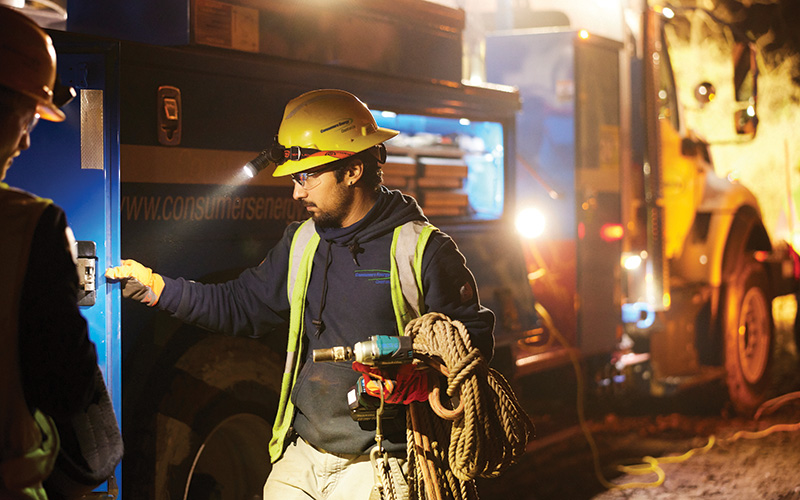
Header image: Create a speak-up culture, not a blame culture, for safety program success.
consumers energy
About The Author

GAVIN, Gavo Communications, is a LEED Green Associate providing marketing services for the energy, construction and urban planning industries. He can be reached at [email protected].