In my March 2025 Q&A article, I tackled questions often raised by those in the field trying to understand the NFPA 72 requirements that affect their fire alarm system installations. I’ll answer a few more of your questions this month.
Note: An asterisk* after a code section number indicates additional information regarding the requirement is in Annex A.
Can smoke alarms be used in temporary construction of a commercial building? If so, what are the guidelines for use in this application?
In my opinion, the answer is no. Smoke alarms are not listed for commercial use and devices and systems used for temporary construction are required to notify everyone in the building under construction as well as notify the fire department, either directly or through a supervising station.
How does supervision of alarm communication happen from hardwire to fiber and back to hardwire?
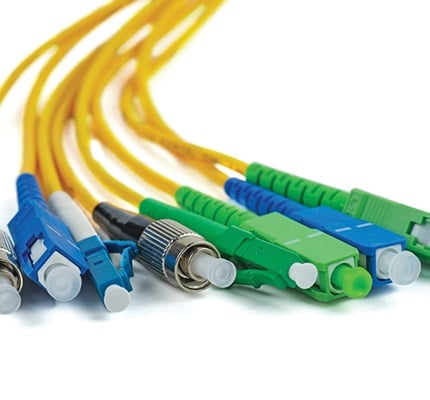
The code has always treated the telephone connection points between the protected premises and the supervising station as a “black box” because the code has no jurisdiction over the telephone or cable companies. The “supervision” only happens each time the DACT “checks in” with the receiver at the supervising station. The connection in between may be hard copper, fiber or microwave, but the performance of the interrogation provides acceptable supervision to the Technical Committee who writes the code.
If a remote station fire alarm system provides voice/alarm evacuation, is the correct calculation 60 hours of standby and 5 minutes of alarm, or 24 hours of standby and 15 minutes of alarm?
The requirement for battery standby for all systems is now 24 hours with a 5-minute “ring time.” However, in previous editions the requirement was 60 hours and 5 minutes as you state in your question. The goal of the 60 hours was to ensure the system could operate from 5 p.m. on Friday until 8 a.m. the following Monday, thereby considering a possible power outage over a weekend after all the workers had gone home. When Monday holiday observances were introduced, that goal became moot. The Committee then decided that, given the current reliability of municipal power systems, the 60-hour requirement could be reduced to 24.
Having said all that, the answer to your question would be based on the edition of the code in force in your jurisdiction. I would remind you that the 15-minute alarm time for the voice evacuation part of the system should also be met. The 15-minute time is the committee’s belief that the voice system would be used intermittently during an emergency, and calculating the power needs for 15-minutes at full power would provide enough of a safety factor to meet the goal.
The requirement for battery capacity of a voice alarm system is found in Section 10.6.7.2.3 and 10.6.7.2.4 of NFPA 72-2025:
10.6.7.2.3 The secondary power supply for in-building fire emergency voice/alarm communications service shall be capable of operating the system under quiescent load for a minimum of 24 hours.
10.6.7.2.4 At the end of the period in 10.6.7.2.3, the secondary power supply shall be capable of operating the system during a fire or other emergency condition for a period of 15 minutes at maximum connected load.
What is the technical justification for 15 dBA over ambient? Where did it come from?
Numerous audibility research studies have indicated that the level above ambient that will gain our attention is 15 dBA. For a very good presentation on the audibility characteristics of alarm systems, refer to the “SFPE Fire Protection Engineering Handbook.” The references to that information were the same references used by the Technical Committee on notification appliances to develop the requirements now given in the code.
Are light-scattering smoke detectors sensitive to camera flashes?
No. Light-scattering detectors operate by causing light to be reflected onto light sensitive sensors by particulate matter introduced into the chamber. The light source that enables this to occur is located inside the detector. The detector is designed so that external light cannot enter the chamber and the chamber itself is black to avoid reflecting outside sources of light. Having said that, I am aware of one detector that had a poor design initially and did give false alarms from bright light located near or adjacent to the detector. To the best of my knowledge, that device is no longer on the market. Keep in mind that, under the right conditions, several things may false alarm a detector, and if you are investigating such an issue you will want to rule out all external events that may cause an alarm, including camera flashes.
Radiant energy detectors (flame detectors), on the other hand, are susceptible to false alarms caused by camera flashes.
About The Author

MOORE, PE, is a licensed professional fire protection engineer, and located in Jamestown, R.I. He is the editor of five editions of the National Fire Alarm Code Handbook. He authored, “Designing Mass Notification Systems – A Pathway to Effective Communications.” He is a principal member of the NFPA 72 Correlating Committee and former chair, now principal member, of the Emergency Communications System Technical Committee. He can be reached at [email protected].