Cordless tools have reshaped the modern job site, offering mobility, efficiency and performance that rivals many corded products. Among the most commonly used (and sometimes confused) are the cordless drill and cordless impact driver. While both are designed to drill holes and drive fasteners, their internal mechanics and intended applications differ in ways that directly affect productivity, precision and tool longevity.
In many situations, selecting the wrong tool can lead to unnecessary fatigue on the body and tools. Understanding how these tools generate torque, control speed and interact with fasteners is important for new apprentices and seasoned electricians aspiring to refine their workflow. This article will discuss the practical differences between cordless drills and impact drivers, cover a few of the top models available and explore some other useful options.
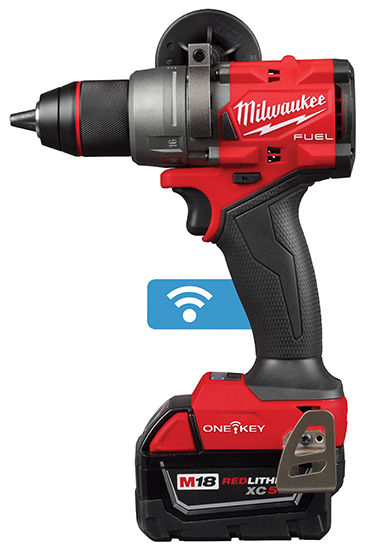 | 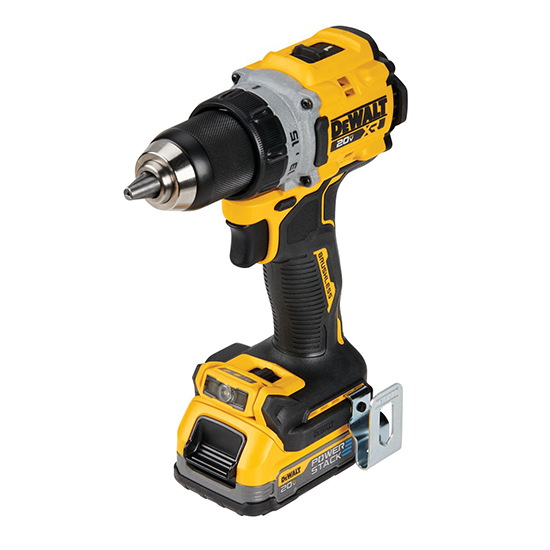 | |
Milwaukee Tool M18 Fuel cordless ½-inch drill/driver | DeWalt 20V Max XR cordless ½-inch |
Distinct differences
Cordless drills and cordless impact drivers appear relatively similar at first glance, but their design, function and best use applications are distinctly different.
I think we all understand what a cordless drill does. They are built primarily for drilling holes, performing light fastening and general-purpose work where control outweighs raw torque. These drills use smooth rotational motion delivered through a clutch-controlled gearbox, which enables users to control the torque applied and prevents overdriving fasteners. This adjustable clutch is especially valuable when working with device screws, panel covers and other delicate components where precision matters. Cordless drills typically feature 3-jaw chucks (with either 3/8-inch or ½-inch capacity) able to accept a wide range of drill bits and driver accessories.
A cordless impact driver, by contrast, is designed for high-torque fastening. Rather than relying solely on rotational force, it combines that rotation with rapid concussive impacts delivered through an internal hammer-and-anvil mechanism. This concussive action dramatically increases torque output while reducing wrist strain and cam-out (slipping of the bit from the fastener). It makes impact drivers ideal for driving long screws and lag bolts and installing things such as switchgear covers. Impact drivers use a ¼-inch hex collet instead of a standard chuck, allowing for quick bit changes but limiting compatibility with standard round shank drill bits.
These tools are complementary rather than interchangeable. The drill provides accuracy, versatility and drilling capability, while the impact driver delivers power and efficiency for demanding fastening tasks. Carrying both tools ensures electrical workers can transition from precision-type work to heavy fastening with relative ease.
Cordless drills
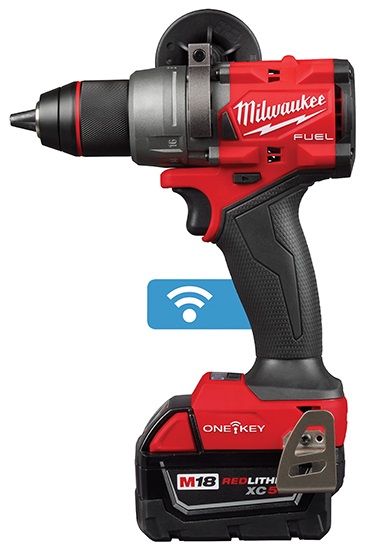
The cordless drills of today are vastly improved from those of the past. Advances in technology have resulted in tools that are lighter in weight, smaller in size and have considerably better performance. Milwaukee Tool, Brookfield, Wis., produces the M18 Fuel ½-inch drill/driver, which focuses on efficiency and versatility. At just under 7 inches long, it is easy to access and maneuver in tight spaces. The drill also has two speed settings that enable the motor to deliver from 0–2,100 rpm, 16 clutch settings to adjust the 1,400 in.-lbs. of torque and a ½-inch all-metal chuck with carbide teeth for durability and grip. The onboard electronics provide an auto-stop mode for enhanced operator safety by preventing over-rotation if the drill binds up.
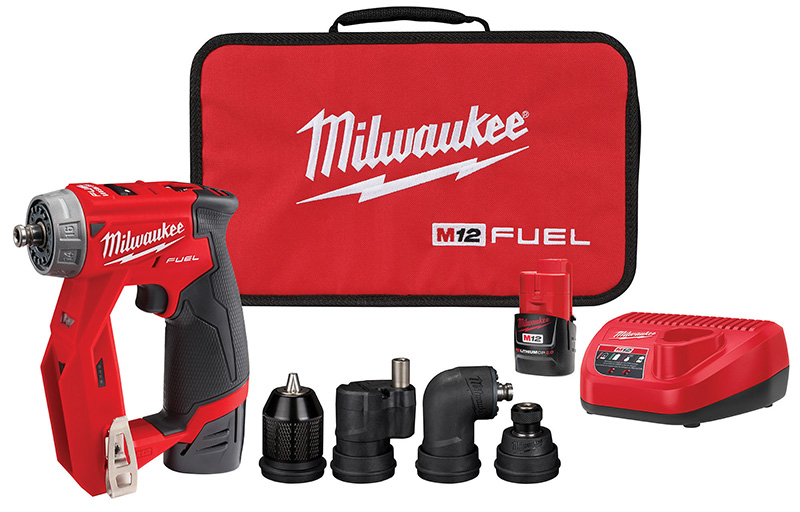
Milwaukee Tool M12 Fuel Installation drill/driver kit
DeWalt, Towson, Md., also manufactures cordless drills. The 20V Max XR cordless ½-inch drill/driver is compact and nimble, coming in at a little under 6½ inches in length and a bit under 3 lbs. But its small size still houses a variable-speed motor that produces up to 2,000 rpm and has 15 clutch settings for precise torque control. The drill also features a ½-inch all-metal chuck capable of holding a range of bits. While most drills offer some type of onboard lighting, this model has an adjustable three-position, three-mode LED light with up to 70 lumens to illuminate the workspace.
Cordless impact drivers
The cordless impact drivers today are much smaller, lighter and provide greater torque than when they were first introduced on the market. Dewalt’s 20V Max XR cordless three-speed, high-torque impact driver focuses on fast and efficient performance. Without a standard drill chuck, it can be reduced to 44/5 inches and about 2½ lbs. This small size and lighter weight allows it to fit into tight work spaces. However, that small size still manages to house a three-speed motor capable of 3,800 rpm and 2,500 in.-lbs. of torque with an impact rate of 4,500 per minute.
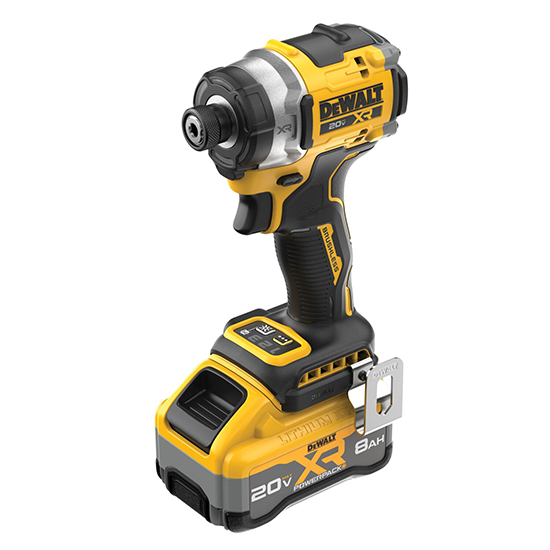
DeWalt 20V Max XR cordless impact driver
Impact drivers are not known for being quiet or vibration-free. Milwaukee Tool has introduced the M18 Fuel Surge ¼-inch hex hydraulic driver. This new redesigned impact driver is centered around a hydraulic powertrain that delivers 50% quieter operation and about three times less vibration than traditional impact drivers, which makes it ideal for use in occupied spaces. The tool is very compact at a little over 4 inches and about 2½ lbs., allowing it to be used in tight spaces with ease. While having an impressive 6,300 impacts per minute and 3,200 rpm, the tradeoff for the hydraulic operation puts the torque down to 1,000 in.-lbs. While not a game-changing issue, it is definitely something to keep in mind.
Other options to consider
While drills and impact drivers both have their uses, what if we had to pick only one to carry? Which one would be the best overall tool to own? I would honestly have to say that an impact driver would be my choice—not because of torque or the impact ability alone, but because of the accessory options available.
An impact driver can’t use a standard round shank drill bit due to the lack of jaws in its snout, and the ¼-inch hex-shaped collet is incapable of holding something round. In addition, standard drill bits are made to drill only and aren’t necessarily designed to withstand the “impacting” forces an impact driver produces. The same can be said for hole saws. They just aren’t made to be used by an impact driver.
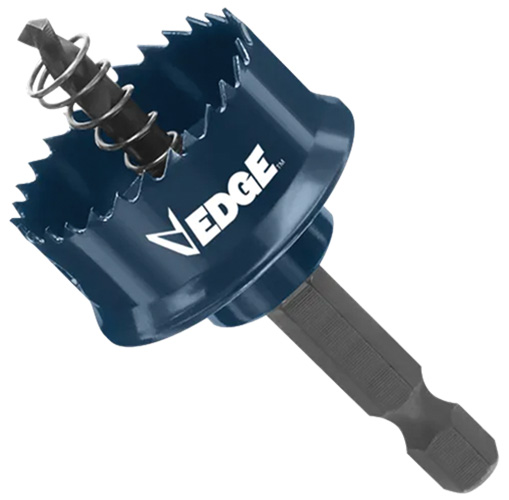
Bosch Edge Impact tough hole saw
Tool manufacturers like Bosch Tools, Mount Prospect, Ill., have recognized this and now produce impact-rated drill bits and hole saws. Both feature ¼-inch hex-shaped shanks that will fit into the hex-shaped collet of an impact drill. The bits and hole saws are also made to withstand the force produced by an impact driver. Both are game-changers for those who reach for an impact driver before a standard drill.
Milwaukee Tool’s M12 Fuel installation/driver is another interesting choice focused on versatility. In lieu of having to carry an individual drill and impact driver, this tool features interchangeable heads that attach to the drill. The set comes with a 3/8-inch chuck and a ¼-inch hex, enabling the use of standard and impact-style bits. But there are two other useful heads in the kit. One is a right-angle head useful in hard-to-reach positions. The other is an offset head that is exceptionally helpful when trying to drill or drive right up against a perpendicular surface.
Final thoughts
Cordless drills and impact drivers bring unique strengths to the job site, making them more complementary tools rather than interchangeable ones. A drill offers versatility, precision and drilling capabilities through easily controlled rotational torque and adjustable clutch, making it ideal for more delicate fastening and hole-drilling tasks. On the flip side, the impact driver excels in high-torque applications where efficiency and power are more desirable, using concussive force to drive fasteners.
By recognizing these differences, we can improve our workflow, protect the materials we are using and extend our tool life. Selecting the appropriate tool ensures consistent work and greater efficiency. Options are available to provide a bit more versatility to the impact drivers, but, at the end of the day, owning a cordless drill and an impact driver offers a more balanced approach, allowing users to transition easily between precision and power.
Dewalt | Milwaukee Tool | Bosch