Jim Dollard has an extensive background in codes and standards. Send questions about the National Electrical Code (NEC) to Jim at [email protected]. Answers are based on the 2023 NEC.
Pool pump motor
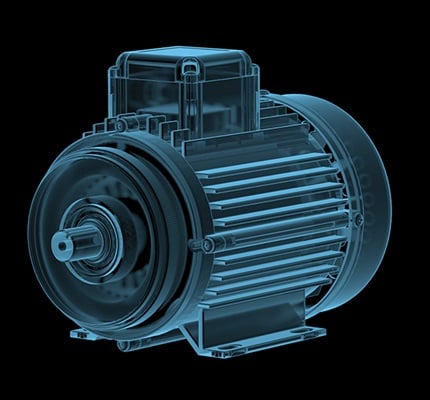
Does a large 240V pool pump motor require GFCI protection? This will be hard-wired, not cord-and-plug-connected.
Yes, see Section 680.21(C)(1), which requires outlets serving pool motors to have GFCI protection complying with either 680.5(B) or 680.5(C). The question does not clarify if the motor is single- or three-phase. Section 680.5(B) requires motors rated 150V or less to ground to be provided with a Class A GFCI protection where the branch circuit is rated 60A or less, single-phase and where the branch circuit is rated 100A or less, three-phase.
Receptacles in bathrooms
A bathroom design upgrade included multiple nontypical receptacles. One is 2 feet from the shower door opening and another is 2½ feet from the tub behind the toilet intended for a bidet. Are these receptacles permitted?
Requirements for wiring devices in bathtub and shower spaces are in Section 406.9(C). Receptacles are not permitted inside tubs or showers or within 3 feet horizontally from any outside edge of bathtubs or shower stalls. See 406.9(C) Exception No. 4, which permits a single receptacle for electronic toilets or personal hygiene devices such as electronic bidet seats in dwelling units. This single receptacle must be readily accessible and not located in the space between the toilet and the bathtub or shower. Section 210.52(D)(1) requires a receptacle outlet within 3 feet of the outside edge of each bathroom sink.
Transformer secondary conductors
The approved drawings for a new manufacturing line in a large industrial facility require unprotected transformer secondary conductors that will be between 40 and 70 feet in length. The response to our RFI states that this is compliant with the tap rules in the code. Isn’t the maximum 25 feet?
The general requirements for transformer secondary conductors are located in 240.21(C). However, as stated in your question, this is a large industrial facility. Provided this facility meets the criteria outlined in the definition of “supervised industrial installation,” Part VIII of Article 240 applies. A supervised industrial installation has conditions of maintenance and engineering supervision to ensure only qualified people monitor and service the system, a 2,500 kVA or greater load used in industrial processes/manufacturing activities, or both, and at least one service or feeder more than 150V to ground and more than 300V phase-to-phase. These installations are permitted to install transformer secondary conductors in accordance with Section 240.92(C). Where short-circuit, ground-fault and overload protection are provided as required in 240.92(C)(1) and (C)(2) and physical protection in 240.92(C)(3), transformer secondary conductors in a supervised industrial installation are permitted to be up to 100 feet.
In sight form
A homeowner wants to install a hot tub 40 feet from their house. Can we install the required disconnect on the house or will it need to be pedestal-mounted near the tub?
A permanently installed hot tub must comply with parts I and IV of Article 680. Because this is a dwelling unit, the requirement in 680.41 for an emergency switch does not apply. A maintenance disconnecting means is required; see 680.13. The disconnect must be readily accessible and within sight from the hot tub. Section 110.29 clarifies that any equipment requirement in the code mandating “in sight from,” “within sight from” or “within sight of” must be visible and not more than 50 feet from the equipment, in this case a hot tub.
Reduced conductor size permitted?
An inspector is failing the installation of a feeder to an outbuilding. The feeder in question is 400A. It is supplying a large pole barn behind a car dealership intended to store antique cars and includes a workshop and garage. We used 600-kcmil aluminum conductors as permitted in Article 310, which we use for large homes all the time. Is the inspector correct?
Yes, the inspector is correct. The permissive requirements in 310.12 allow service and feeder conductors to be reduced in size where they supply the entire load associated with an individual dwelling unit. Since this installation is commercial, 310.12 does not apply. A 600-kcmil aluminum conductor has an ampacity of 340A in the 75°C of Table 310.16. In this case, Section 240.4(B) does not permit rounding up to 400A since the next larger standard size for fuses and inverse time circuit breakers is 350A.
Four-gang meter base
My question is about installing a four-gang meter base with 100A circuit breakers. The plan reviewer was concerned about conflict with NEC Article 230.71(B)(1). Is this an issue?
Section 230.71(B) provides permissive requirements for up to six service disconnects. There is no conflict with 230.71(B). In a metering center, each disconnecting means is completely compartmentalized; see 230.71(B) list item (4), which prescriptively permits service disconnects in metering centers where each disconnect is located in a separate compartment or enclosure.
Swing scaffold temporary power
We must install temporary power for swing scaffolds to be used for masonry restoration. Are we required to provide GFCI protection for those branch circuits? Could the branch circuits be terminated directly in the panel board and laid on the floor to the point where they go off the roof to the swing scaffold?
GFCI requirements for temporary power are in Section 590.7, Ground-Fault Protection for Personnel. Sections 590.7(A)(1) and (A)(2) address GFCI protection for 125V, single-phase, 15A, 20A and 30A receptacle outlets. Section 590.7(B) applies to other receptacle outlets as seen in this installation and requires GFCI protection in accordance with 590.7(B)(1) or the implementation of an assured equipment grounding conductor program (AEGCP) in accordance with 590.7(B)(2). Cords may be laid on the floor only where GFCI-protected or where an AEGCP is implemented.
Fender supplied by a generator
An engineer is requiring that we upsize conductors being supplied from a 200A circuit breaker on a generator set. We installed 3/0 AWG copper rated at 200A and the engineer wants it increased to 115% with a 4/0 AWG copper at 230A. Is that correct?
No, the engineer is misapplying the requirement in Section 445.13(A). The conductors from the generator terminals to the first distribution device containing overcurrent protection are required to be not less than 115% of the nameplate current rating of the generator. These conductors are not from the generator terminals, they are feeders on the load side of a 200A OCPD.
Additional lighting required?
After replacing service equipment in an existing grocery store, we had to install lighting that was not part of our contract. The service equipment was not in a dark location; there was some ambient light. Was it required?
Section 110.26(D) requires illumination for all working spaces about service equipment, switchboards, switchgear, enclosed panelboards or motor control centers installed indoors. This requirement mandates additional lighting where the workspace is illuminated by an adjacent light source. However, there is no performance-based requirement such as foot-candles and installation of additional lighting must be addressed on a case-by-case basis.
stock.adobe.com/Zadvornov
About The Author

DOLLARD is retired safety coordinator for IBEW Local 98 in Philadelphia. He is a past member of the UL Electrical Council, NEC Correlating Committee, NEC CMP-10, CMP-13, CMP-15, NFPA 90A/B and NFPA 855. Jim continues to serve on NFPA 70E as a Special Expert. Reach him at [email protected].