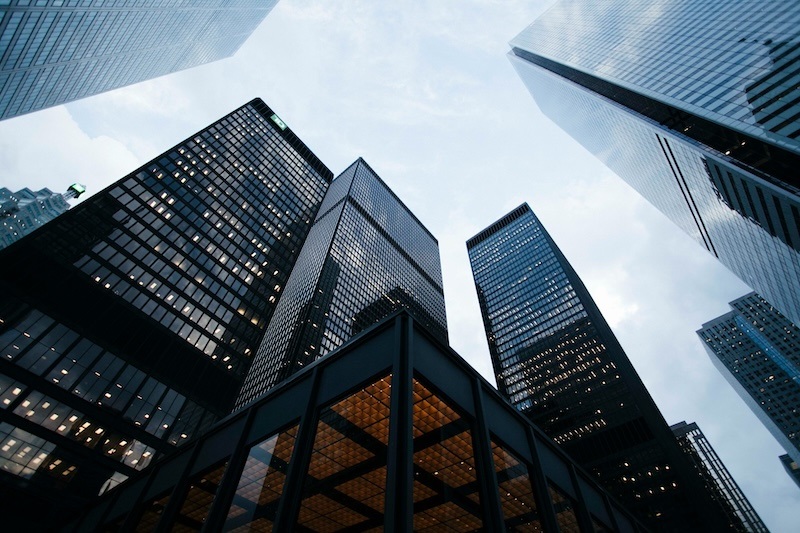
U.S. office-to-housing conversions again broke records year, as vacancies created by remote work help fill the need for affordable housing, according to a March 2026 report by RentCafe.
“Empty office buildings across the country are being reimagined as housing,” RentCafe’s Florin Petrut wrote. “Spaces once filled with desks and conference rooms are now being redesigned into rental apartments, giving new purpose to towers that no longer operate at full capacity.”
Office buildings now account for the largest building type being adaptively reused for housing—47% of all future adaptive reuse units—roughly 90,300 apartments out of 193,900 planned projects in 2026. That’s 28% more than 70,600 office-to-housing conversions in 2025, marking another record year.
“Financial pressure and government-backed incentives are also accelerating conversions in 2026,” according to the report. “With roughly one-third of U.S. office loans set to mature by 2027, many owners face mounting pressure to act on underperforming properties.”
To a lesser extent, hotels and industrial properties are being converted to housing with 18% and 16% of planned projects, respectively. Other building types including healthcare facilities, schools, retail and government buildings collectively account for roughly 19%.
New York tops the list of U.S. cities, with 16,358 rentals in the office-to-housing conversion pipeline, followed by Washington, D.C. (8,479 units), Chicago (4,360) and Los Angeles (4,340). Other cities in the top 10 are Atlanta, Cleveland, Dallas, Denver and Philadelphia.
Local governments are actively supporting conversions through incentives and regulatory changes. New York offers tax benefits amid zoning reforms, Los Angeles and Boston expanded adaptive reuse ordinances, Minneapolis and San Francisco updated code and permitting processes to streamline approvals, and Washington, D.C., moves forward with its Housing in Downtown initiative.
“What began as a response to excess office space is now a recurring feature of the housing landscape, particularly in dense cities where adding new supply can be difficult,” according to the report.
This has also led to newer office buildings being converted, from 2% a decade or two ago to 6.4% of planned conversions today. For adaptive reuse projects involving all building types, 7.4% of projects involve newer buildings, which suggest developers are willing to work with more modern facilities.
About The Author

KUEHNER-HEBERT is a freelance writer based in Running Springs, Calif. She has more than three decades of journalism experience. Reach her at [email protected].