In the NFPA and National Electrical Code process, a tentative interim amendment (TIA) is a formal and substantial change issued between editions of the NEC to correct an oversight or address an emergency safety issue that cannot wait. It is tentative since it has not been processed through the entire standards procedure and interim because it is only in effect between editions.
A TIA becomes a public input for the next NEC cycle and is processed as a normal proposed change. A number of TIAs were inserted into the 2023 NEC, two of which apply to variable-speed drive systems for swimming pools in Article 680 and the requirements for motors in 430.132. These TIAs were subsequently submitted to the 2026 process as public inputs, were accepted by Panel 17 and incorporated into the 2026 NEC.
Code verbiage
NEC 680.21 covers motors installed for swimming pools, and 680.21(C) requires ground-fault circuit-interrupter (GFCI) protection for swimming pool motors. There are two subsections located in 680.21(C). NEC 680.21(C)(1) states the following: “Any outlets supplying pool motors must have ground-fault protection complying with NEC 680.5(B) or NEC 680.5(C), as applicable.”
To comply with this subsection, you have to know the definition of an outlet in Article 100: “a point on the wiring system at which current is taken to supply utilization equipment.” The outlet could be a box, receptacle, fusible or nonfusible general-duty or heavy-duty disconnecting means, or any other electrical connection for the motor.
NEC 680.5(A) generally states that GFCI and special-purpose ground-fault circuit interrupter (SPGFCI) requirements in Article 680, unless noted otherwise, are in addition to those in 210.8, the location of most general GFCI requirements.
The requirements in Article 680 are specifically applicable to protection for swimming pools, spas, fountains and hydromassage bathtubs. NEC 680.5(B) covering 150V or less to ground states, “Where required in Article 680, ground-fault protection of receptacles and outlets on branch circuits rated 150 volts or less to ground must be provided with a Class A GFCI under the following conditions: (1) branch circuits rated 60 amperes or less, single-phase and (2) branch circuits rated 100 amperes or less, 3-phase.” NEC 680.5(C) covering above 150V to ground further states, “where required by Article 680, ground-fault protection of receptacles and outlets on branch circuits operating at voltages above 150 volts to ground, not exceeding 480 volts phase-to-phase, single- or 3-phase, must be provided with SPGFCI protection not to exceed 20-mA ground-fault trip current.”
The requirements in 680.5(B) and (C) and the original subject of the TIA process directly relates to the requirements in NEC 680.21(C)(2) as follows: “Variable Speed Motors with Adjustable Speed Drive. For a variable-speed pool motor employing an adjustable-speed drive, the ground-fault protection must not be installed between the output terminals of the motor drive and the motor.”
Variable-speed drives for pool motors are being installed in many new, remodeled and existing swimming pools. NEC 680.21(D) states the following: “Where a pool pump motor in 680.21(C) is replaced, reconditioned, or repaired, the outlet serving it shall comply with 680.21(C).”
The question that remains is, why does the NEC not permit a GFCI or SPGFCI to be installed between the variable-speed drive and the swimming pool motor? The best answer was located in an online search indicating that the VFD’s normal operation creates a type of electrical “noise” that a GFCI will mistake for a potentially dangerous ground fault and trip.
The VFD supposedly provides its own form of ground-fault protection for the motor. There are a number of reasons for this tripping involving a somewhat technical explanation on how a VFD actually works—it converts incoming AC power to DC and then back to a simulated AC waveform using a process called pulse width modulation. This involves rapidly switching power devices, such as insulated gate bipolar transistors, switched on and off at a very high frequency (typically 1 to 16 kHz). This fast switching process is part of the problem and causes common-mode noise and leakage current at higher frequencies. The higher frequency common-mode noise also causes capacitive-coupled currents with induction of this current into the motor and to the equipment grounding system.
Since variable frequency drives typically have built-in filters that intentionally clamp the common-mode noise to ground, the best location of a GFCI is at the input into and not between the VFD and the motor. A high-frequency GFCI (see “High-Frequency GFCIs” in the September 2025 issue of ELECTRICAL CONTRACTOR) will also help.
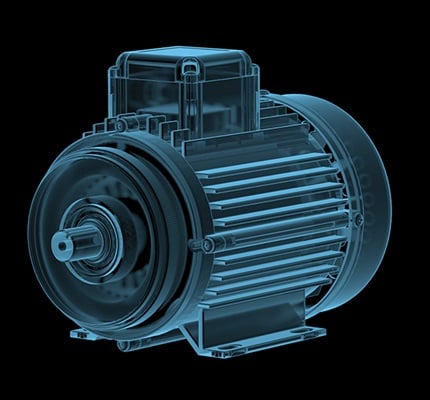
stock.adobe.com / Suranto
About The Author

ODE is a retired lead engineering instructor at Underwriters Laboratories and is owner of Southwest Electrical Training and Consulting. Contact him at 919.949.2576 and [email protected].