With increasing energy demand from more and more data centers, some companies are now developing microgrids to supply reliable power, as well as for resilience against outages due to weather. Data from the Center for Climate and Energy Solutions indicate that 4.4 gigawatts (GW) of microgrid capacity was installed across 692 sites by the end of 2022, and, according to the Department of Energy (DOE), U.S. microgrid capacity could hit 10 GW by the end of 2025.
The DOE considers microgrids “essential building blocks” for the future grid, particularly as long waits for grid connection are causing companies to seek alternatives, such as on-site generation in order to meet growing demand from cloud and A.I. operations.
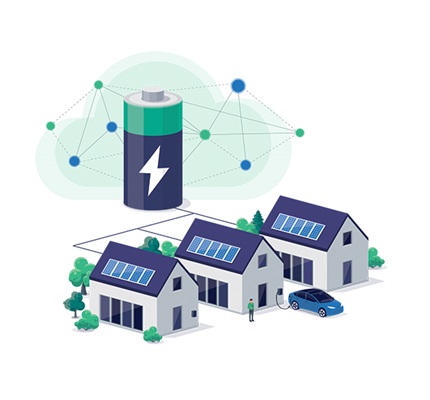
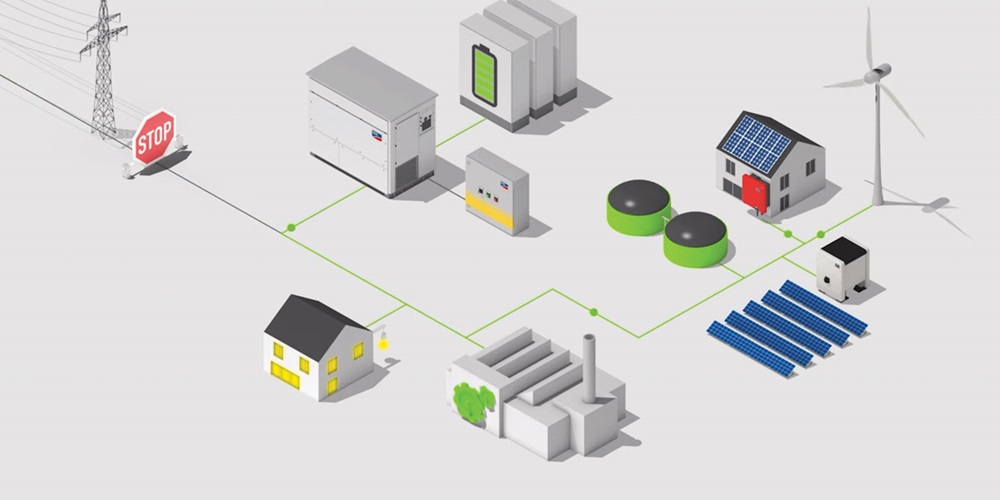
Designed for specific on-site needs, microgrids provide reliable power supply by combining on-site or behind-the-meter generation, energy storage and electrical load. But they face challenges, such as supply chain delays, lengthy permitting procedures, technological barriers, lack of regulatory support and cost. Integration for systems that draw from and supply electricity to the grid can be complicated because the U.S. grid was not built for two-way power flow.
While the Biden administration pledged $7.6 billion of federal investment for grid resilience and innovation projects, uncertainty about funding under the current administration amid cutbacks is spurring state-level initiatives.
- California established the Microgrid Incentive Program in 2023 to fund clean energy and community-scale microgrids in disadvantaged or vulnerable areas, with available funding of $200 million. Under this program, PG&E installed microgrids in communities affected by public safety power shutoffs that help prevent wildfires during high-risk weather. Standalone remote grids replace overhead lines in fire-prone areas.
- Texas lawmakers approved $1.8 billion in funding for microgrids at critical sites such as hospitals and water plants.
- Colorado launched the Microgrids for Community Resilience program to support projects that operate as single, controllable systems.
- Georgia offers a Gridovation initiative to expand access to resilient, cost-effective power.
“There is this tremendous pressure to get power faster, and the grid doesn’t react in days. The grid reacts in years,” said Marco Terruzzin, chief revenue officer for Energy Vault, Westlake Village, Calif., a company that develops, deploys and operates utility-scale energy storage solutions.
Nevertheless, various models are emerging. AlphaStruxure, Somerville, Mass., is building a microgrid with a 12-megawatt solar array to power the New Terminal One at JFK airport to distribute electric energy from solar, fuel cells. North Carolina has five smaller microgrid systems using hybrid solar, diesel, batteries for backup power, rooftop solar and storage, and even methane captured through hog waste. And Wake Electric Membership Corp., an electrical cooperative in North Carolina, developed the Eagle Chase microgrid in Youngsville to boost community resilience and reliability, but found a revenue source. The 300-kilowatt (kW) gas generator and 500-kW battery system provide power during outages and sell power to the regional electricity network, which covers its costs and allows it to support regional utility Duke Energy.
“This is a moment where generation technology and storage technology will make the difference, for community and also large economic development,” Terruzzin said.
About The Author

Lori Lovely is an award-winning writer and editor in central Indiana. She writes on technical topics, heavy equipment, automotive, motorsports, energy, water and wastewater, animals, real estate, home improvement, gardening and more. Reach her at: [email protected]