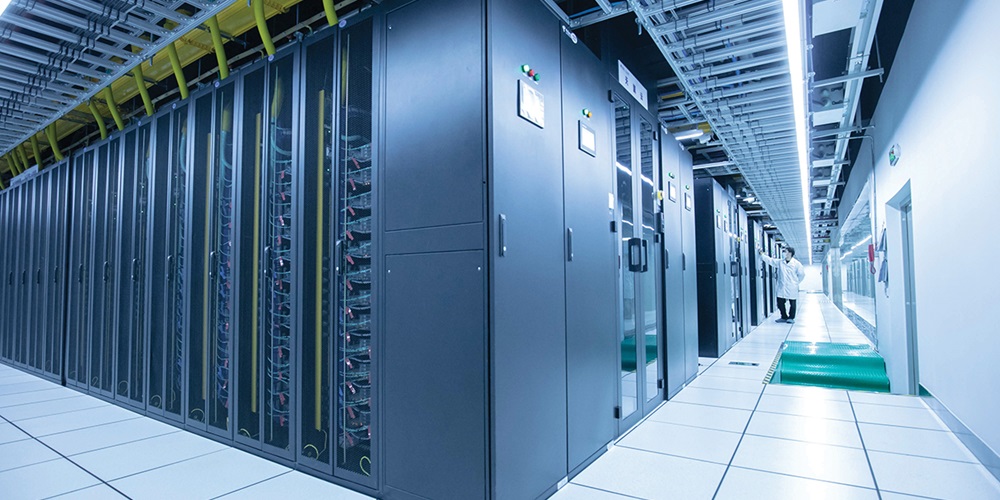
These days, hardly a week goes by without coming across a headline or two highlighting how new artificial intelligence (A.I.) data centers will drive up the need for new generation capacity, along with all of our utility bills. Some projections see the proportion of U.S. electricity consumption powering these facilities doubling in just the next five years.
Utilities in some regions are slowing or halting new agreements with data center owners as they look for ways to meet potential demand growth without raising bills throughout their service territories.
At the same time, developers and utility groups are studying ways to do more with less through the kind of demand side management programs that have proven successful among residential and commercial customers. But a question remains: how do you adapt a strategy of ramping power supplies down, and back up again, to an industry focused on stable, 24/7 operation?
Challenges in defining the problem
Behind the startling load-growth headlines there remains uncertainty over exactly how big a challenge A.I.’s rapid advancement poses to U.S. electricity supplies. For example, a 2024 Lawrence Berkeley National Laboratory study found data centers consumed 4.4% of total U.S. energy generation in 2023. A 2024 low-end estimate from the Electric Power Research Institute (EPRI) sees that figure rising to only 4.6% by 2030—though the group’s high-end estimate hit 9.1%, or twice today’s levels.
Projections are partially based on inquiries utilities receive from project developers that might never get built once companies fully price out total costs. So, building out generating capacity to meet demand at the high end of today’s estimates could leave utilities with very expensive stranded assets that could affect customer bills for decades.
Alternative approaches
One tactic some utilities are adopting involves creating data center-specific rate structures that require developers to commit to future power purchases regardless of whether a project is completed. This approach could help ensure other customers aren’t paying for new generation added only to support data center operations. Plus, it could protect customers from paying for unnecessary infrastructure down the road.
But this tactic still could lead to using resources that could have been more effectively deployed elsewhere. Utilities and developers are beginning to work together to rethink assumptions regarding how data centers run and whether adding flexibility to operations could help lessen their impact on utility grid resources.
These efforts are focused around reducing a data center’s electricity use during peak demand periods. It’s these times, during an August heatwave or a February winter storm or cold snap, when utilities have to fire up their most expensive generating resources—or add new generation if their current fleet isn’t up to the task. Current options now being studied include:
- Batch processing: Not every A.I. operation is the same. Users doing searches or needing help writing a memo or a troublesome piece of coding want responses right away. But behind-the-scenes work, such as indexing images and video for future searches or running simulations for drug research, can happen over time. Batching those tasks together and taking them offline during peak times can free up kilowatt-hours for the rest of us.
- Load shifting between data centers: The largest A.I. operators—called “hyperscalers”—have data centers around the globe. That kind of coverage can be a boon to both flexibility and operators’ efforts to match their workloads to available energy resources. Google has incorporated this capability as a way to reduce carbon emissions by shifting workloads across its network throughout the day to maximize the use of available renewable generation.
- On-site battery systems: Incorporating large-scale battery systems into their development plans can allow data centers to help stabilize the connected grid. Dedicated circuits can be switched to battery power during demand peaks to limit the need for new utility generation.
EPRI, which supports research efforts for electric utilities globally, expanded an effort it began last October to further develop data center flexibility. Called DCFlex, it’s focusing on three aspects of data center/utility business relationships, including how data centers can be designed as grid resources, how utility rate structures can support flexibility and how utilities can improve planning when it comes to forecasting where data center loads may grow.
Initially U.S.-focused, with participating members including utilities, regional system operators and major tech companies, the program was expanded in March to include French, Dutch and Greek participants. Europe, too, is experiencing grid challenges related to a rapid buildout of A.I. infrastructure. The goal is to establish a number of working research hubs to demonstrate strategies that enable more flexible operations and streamline the process for integrating new data centers into existing grids. Testing of these strategies is expected to continue through 2027.
stock.adobe.com / HAIYAN
About The Author

ROSS has covered building and energy technologies and electric-utility business issues for more than 25 years. Contact him at [email protected].