In last month’s article about national electrical code 120.7 on monitored and nonmonitored loads, I mentioned that there is an example in Annex D.15 in the back of the 2026 NEC dealing with load calculations for power control systems (PCSs). Remember that energy management systems were covered in NEC Article 750 in the 2023 NEC and previous editions and are now in new Article 130.
Load management
Article 130.30 provides load management requirements. Energy management systems monitor and control electrical loads, such as load shedding, power disconnection and ensuring that the energy management system will not permit a branch circuit, feeder or service to be overloaded.
Article 130, Part II with 130.50 through 130.80 contains additional requirements for PCSs that will provide controls preventing conductors and equipment from overloading. PCSs were inserted initially into Article 750 of the 2020 NEC based on UL 3141 and then to Article 130, Part II in the 2026 NEC. The real purpose of PCSs was to provide load control from different sources of power, such as from utilities, photovoltaics and battery sources to prevent overloading of circuits by monitoring loads.
With that in mind, NEC Annex D.15 provides the following example: “A new dwelling has a total service load of 29,040 volt-amperes (121 amperes at 240 volts) calculated according to Article 120, Parts III through VII. The available service from the electric utility is limited to 100 amperes. In order to accommodate the connected loads on the 100-ampere service, a power control system is used in accordance with 120.7.”
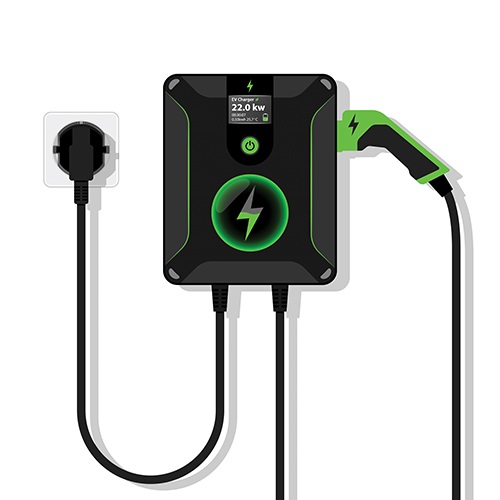
One of the examples provided applies to monitoring controlled and noncontrolled loads with 50A electric vehicle supply equipment (EVSE) with a minimum operating current of 0A and maximum of 50A. The EVSE is rated at 12,000 VA (50A at 240V) and is controlled by a PCS configured to monitor the service and modulate the demand when it exceeds the control setting. The control setting is established by a qualified person at 80A, based on the maximum 80% of the 100A overcurrent protective device protecting the service.
In this configuration, the PCS monitors controlled and noncontrolled loads, so the minimum operating current of the controlled load is used in place of the actual load. The noncontrolled loads are treated as specified in Article 120, parts III through VII. Remember, the total load before the application of the PCS is 29,040 VA (121A at 240V).
By applying the PCS, the noncontrolled load in accordance with Article 120 parts III through VII is 17,040 VA (71A at 240V). The controlled loads are treated at minimum operating current of the controlled loads of 0 VA (0A at 240V). The total load after applying the PCS of noncontrolled plus controlled loads is 17,040 VA (71A at 240V).
In other words, the EV charging system is only going to operate and charge when a minimum of the other loads are off or where the total load will not exceed the rating of the service, but it will also take battery systems, PV sources or other renewable sources into consideration. Based on the examples in NEC Annex D.15, the PCS will prevent overload based on whatever sources of power are available.
Smart stations
Another method of dealing with an EV charging load added to a service is by installing a smart EV charging station. These charging stations are equipped with advanced technology that allows them to communicate with each other and share power efficiently. By installing two smart charging stations from the same brand on the same electrical panel, both EVs can receive the necessary charge without overloading the electrical system.
As I also mentioned in last month’s article, there are two major changes in load calculations for dwelling units through the addition of new 120.13, which states the following: “The minimum unit load must be not less than 3 volt-amperes/ft2 for calculating minimum branch circuits required.”
The 3 VA per square foot is not new; however, the requirements for minimum unit loads for one-family, two-family and multifamily dwellings in 120.41 have changed from 3 VA per square foot to no less than 2 VA per square foot for general-use receptacle outlets, receptacle outlets in 210.52(E) for outdoor receptacles and 210.52(G) for receptacles in basements, garages and accessory buildings as well as for all lighting outlets in 210.70.
stock.adobe.com/antoniofrancois
About The Author

ODE is a retired lead engineering instructor at Underwriters Laboratories and is owner of Southwest Electrical Training and Consulting. Contact him at 919.949.2576 and [email protected].