Energy management systems have been a part of electrical installations for a long time. I used energy management in the early 1980s on residential and commercial installations to limit the sizes of services required for design-build projects. At the time, the National Electrical Code did not have a specific article that covered energy management systems (EMS) or power control systems (PCS).
At that time, we used NEC 220.60, Noncoincident Loads, which stated the following: “Where it is unlikely that two or more noncoincident loads will be in use simultaneously, it shall be permissible to use only the largest load(s) that will be used at one time for calculating the total load of a feeder or service.”
This noncoincident load provision permitted loads that could not be used at the same time to be excluded from the calculations. The problem with this concept and using NEC 220.60 was that the user could always opt out, hit a bypass mode on the units and use the entire load, thus overloading the system.
‘Energy Management Dreams’
NEC Article 750 covering EMS was inserted into the 2014 NEC to provide better oversight and control over load calculations and energy management. In my article “Energy Management Dreams” in the July 2024 issue of ELECTRICAL CONTRACTOR, I outlined the use of controllable thermostats and similar control of loads as well as EMS, all based on the 2023 NEC. I mentioned some of the requirements in NEC Article 750 based on the increased cost of electrical power and the use of EMS to cut power bills to a reasonable and affordable amount.
There are some major changes and developments in calculations and energy management systems in the 2026 code. The content of Article 750 has been moved to Article 130 to be closer to the requirements for branch circuit, feeder and service calculations in their new location in Article 120.
Noncoincident loads are now addressed in Section 120.6, which has been totally revised for clarity and detail, as follows: “For two or more noncoincident loads, it is permitted to use the single largest of these loads in the calculation of the total load. Determination of the largest noncoincident load must include treatment of any motor-operated and combination loads as specified in 120.11(A). Noncoincident loads are considered to be one of the following: (1) For feeders or services: Two or more loads that are unlikely to be in use simultaneously. (2) For branch circuits, feeders, or services: Two or more loads that are prevented from being in use simultaneously by listed equipment.”
As stated, the details in Section 220.61 of the 2023 NEC have been replaced with more instructive details.
Power control systems
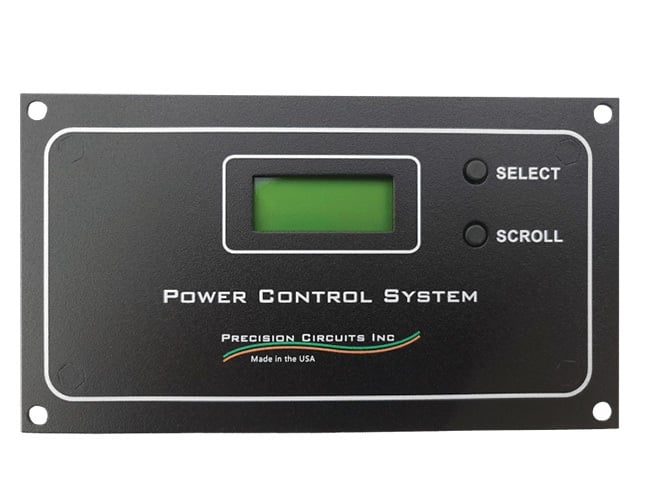
A new NEC 120.7 was inserted into the 2026 code covering PCS that also applies to dwelling unit calculations. This new text states that power control systems can be used for branch circuit, feeder and service load calculations. When used for load calculations, however, the installation must comply with NEC 120.7(A) through 120.7(C).
The PCS must comply with Part II of Article 130. The second requirement is that the power control setting must be determined by a qualified person and be set at no greater than 80% of the rating of the overcurrent protective device for the circuit(s) or circuits being monitored to provide for overload control. This requirement is not new to most electricians, since this same one applies to circuit breakers in panelboards or load centers.
The third requirement as provided in 120.7(C) is more complex and involves the actual load on the branch circuit, feeder or service as it may apply to controlled loads in 120.7(C)(1) or to noncontrolled loads in 120.7(C)(2). Any calculation of controlled load must be based on the monitoring by the PCS that provides overload control with one or both of the following: (1) If the PCS monitors only controlled loads, then the control setting of the PCS must be used for calculations and not the actual load. (2) If the PCS monitors controlled and noncontrolled loads, the minimum operating current (not the maximum current) of the controlled loads must be used for the calculation.
There is an example of this calculation in NEC Informative Annex D.15 in the back of the 2026 NEC as it would apply to a new dwelling with a total service load of 29,040 volt-amperes (121A at 240V) using a 120/240V single-phase system.
Due to the complexity of the load calculations 120.7 requires for monitored and nonmonitored loads for power control systems and an additional change in 120.13 and 120.41, next month's article will continue on this topic.
Precision Circuits Inc.
About The Author

ODE is a retired lead engineering instructor at Underwriters Laboratories and is owner of Southwest Electrical Training and Consulting. Contact him at 919.949.2576 and [email protected].