Ensuring hearing protection fits properly is critical to limiting noise-induced hearing loss (NIHL) in the workplace, according to a February 2026 safety and health information bulletin from OSHA.
To assist employers in workplace hearing conservation compliance, OSHA released new guidance on hearing protection fit testing (HPFT). HPFT measures the amount of noise reduction, also known as attenuation, a hearing protection device (HPD) provides. Since every worker’s ear canals are different sizes and shapes, individualized fit testing is crucial.
The Centers for Disease Control and Prevention’s (CDC) National Institute for Occupational Safety and Health (NIOSH) estimates that 22 million workers annually are exposed to potentially damaging noise at work. Approximately 20% of workers exposed in high-noise industries such as construction experience NIHL, according to a recent study published in the Journal of Safety Research.
The threshold for potential permanent hearing loss is repeated or prolonged exposure to noise at or above 85 decibels (dB), according to the National Institutes of Health’s (NIH) National Institute on Deafness and Other Communication Disorders (NIDCD). This is considered the maximum “safe level” for workplace noise exposure over the course of an eight-hour day, according to the Hearing Health Foundation. OSHA requires employers to implement workplace hearing conservation programs when employees are exposed to an eight-hour time-weighted average of 85 dB or greater.
The louder the sound, the shorter the amount of time it can take for NIHL to occur, according to the NIH. And the risk of hearing loss can increase due to factors such as proximity to the source, loudness of the noise and duration of exposure.
But HPDs can help safeguard against hearing loss, according to the NIDCD. Like any other personal protective equipment (PPE), HPDs should be regularly tested and maintained to ensure proper function and compliance.
While HPFT is not currently mandated under OSHA’s workplace noise exposure standards, the agency has incorporated it into its workplace hearing conservation program and emphasized that it is a valuable training tool.
OSHA recommends employers conduct initial fit testing before enrolling in a hearing conservation program, providing training and verifying attenuation. Annual fit testing should follow. As new HPDs are introduced, fit testing should be repeated. If a standard threshold shifts, fit testing should support follow-up procedures.
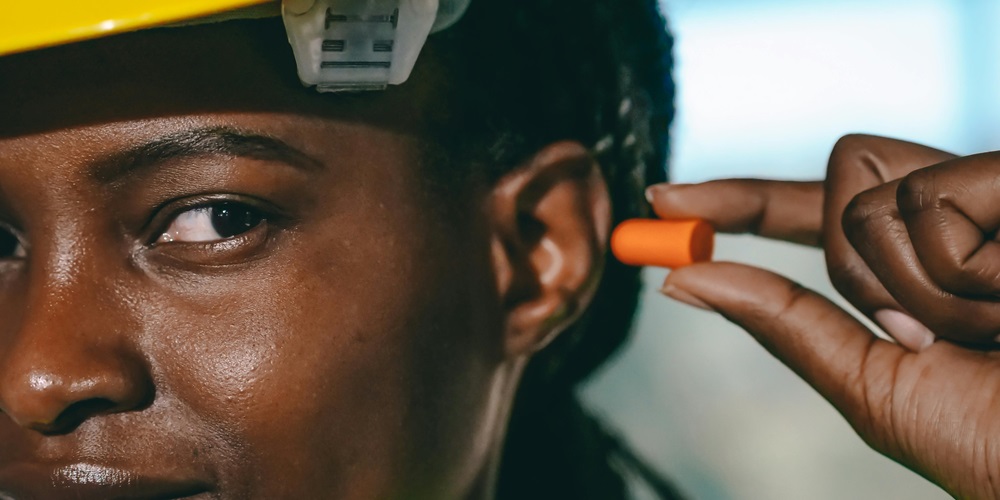
HPFT trains workers to know what a properly inserted earplug feels like in the ear, OSHA explained. Fit testing also enables employees to select the most effective and comfortable HPD for them, while also ensuring they can still hear important communication and warnings while working.
There are two types of HPFT systems employers can implement. Subjective HPFT systems require employees to respond to sounds played through headphones, establishing a baseline without hearing protection. Then the HPD is put on and testing occurs again. Objective systems measure sound levels inside and outside a modified earplug using microphones, which means it is not reliant on employee responses. While objective systems can quickly provide results, they may be limited to certain HPD brands or styles.
Instead of solely relying on HPDs, OSHA also encourages workplaces to prioritize elimination, substitution and engineering controls to reduce noise levels. This may involve methods such as reducing noise at the source, buying quieter machinery, properly maintaining machinery or lubricating to limit vibration, installing damping materials and isolating noise with physical barriers or acoustic treatments.
About The Author

Chertock is a poet and renewable energy and science journalist in the Washington, D.C., area. Contact her at [email protected].