Over the past few NEC cycles, there have been numerous changes to the requirements for electrical dwelling services from emergency disconnects outside of the home, surge protective devices, GFCI and AFCI protection and specialized devices. With the 2026 NEC fresh off the printing press, reexamining many of these changes from the past few cycles and looking at new changes in the 2026 NEC is a good idea. This refresh should ensure we are not overlooking previous changes and can implement any new ones.
Load calculations
Let’s start at the beginning with a look at NEC Article 120 (formerly Article 220) that applies to dwellings. NEC 120.5(A), dealing with calculations, has a new informational note that states DC “electrical systems are often described with a nominal voltage and a wide voltage band. For DC electrical systems with a wide voltage band, both the upper and lower limits of the bands are important considerations for load calculations.” A wide voltage band is a device or equipment that can provide a wider variable of DC voltages, such as 9V to 160V. This primarily applies to photovoltaic installations.
A major change that occurred in NEC 220.11 in the 2020 edition and in 120.5(C) in 2023 and 2026 that many people may have overlooked is the rewording for calculating the floor area of a dwelling. The first sentence of this section in all three editions is the same with no changes, as follows: “The floor area for each floor shall be calculated from the outside dimensions of the building, dwelling unit, or other area involved.” Changes to the second sentence occurred in all three cycles. Researching the history of the requirements for dwelling calculations reveals what has happened in the past three code cycles.
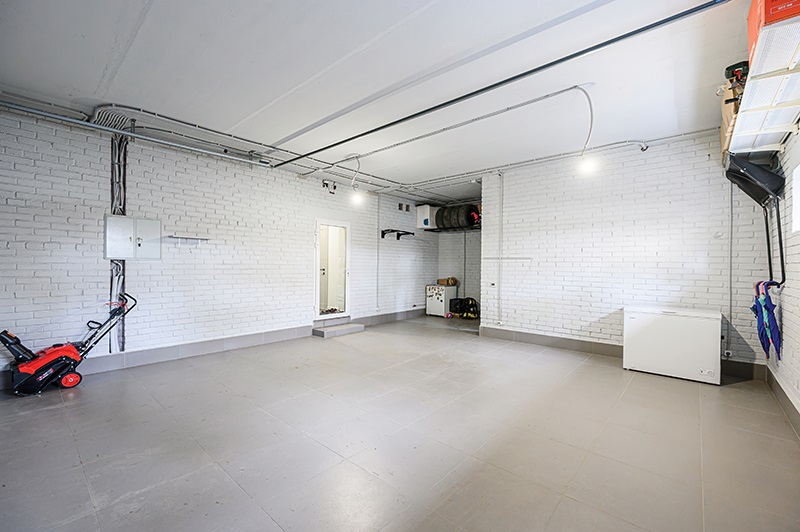
Section 220.11 in the 2020 NEC read as follows: “For dwelling units, the calculated floor area shall not include open porches, garages, or unused or unfinished spaces not adaptable for future use.” That same text was moved to 220.5(C) in the 2023 NEC and simply stated that “for dwelling units, the calculated floor area shall not include open porches or unfinished areas not adaptable for future use as a habitable room or occupiable space.” The word “garage” was no longer in the sentence for 2023, and a detached garage was never even mentioned until the 2026 edition. In 2026, the text reads as follows: “For dwelling units, the calculated floor area shall not include detached garages, open porches, or unfinished areas not adaptable for future use as a habitable room or occupiable space.”
So an attached garage must be included, but not a detached one. Since some garages are used for bedrooms, media rooms and more, they are often occupiable spaces and must be included in any load calculations. I bet many people missed that tiny one-word deletion and have not been including the garage in calculations for dwelling units.
Service equipment barrier
As an electrician and former electrical contractor, I am very happy about the requirement in NEC 230.62(C) that an identified barrier must be placed in service equipment. The purpose is to ensure there aren’t any energized and uninsulated, ungrounded service busbar or service terminals exposed to inadvertent contact between people with the service disconnect in the open position. In addition, when sliding off or removing the cover from service panelboards, the cover could easily come in contact with the energized utility conductor terminals. With the available fault currents being increased on many dwelling units, contact with energized utility company conductors or terminals can be extremely dangerous.
Surge protection devices
Surge protective devices are required by NEC 230.67 for all dwelling services and must be an integral part of the service equipment or located immediately adjacent to it. An exception in 230.67(A) states if the dwelling service supplies only feeders, the surge protective device is not required at the service but must be located at the load side of each feeder.
An example is where the service is located at a detached garage and feeders are installed to supply the dwelling or from a multimeter and multiple service disconnecting means with feeders to each dwelling unit. Where older equipment is replaced, the requirement for surge protection must also be provided. These surge protective devices must also have a minimum short-circuit current (withstand) rating of at least 10 kA.
Be sure to review the major and minor issues before construction or reconstruction work on dwellings begin.
stock.adobe.com / evgeniykleymenov
About The Author

ODE is a retired lead engineering instructor at Underwriters Laboratories and is owner of Southwest Electrical Training and Consulting. Contact him at 919.949.2576 and [email protected].