The Hazard Communication Standard (HazCom) is an integral part of OSHA’s safety regulations. It requires employers to inform their employees about hazardous chemicals they may be exposed to in the workplace. It should also be an integral part of safety and training programs. Let’s look at some of the highlights of the regulation.
According to OSHA, an effective program must contain the following: hazard identification, labeling, safety data sheets, employee training and program implementation.
1. Hazardous Chemicals Inventory and Assessment (Identification)
Create an inventory of all hazardous materials present in the work area. The inventory should include a list of all chemicals for a formal written record and the safety data sheet (SDS) on file for each hazardous chemical. If any SDSs are missing, obtain a new copy from the supplier.
2. Chemical Labels and Warning Signs
Containers of hazardous materials should be clearly labeled to identify their contents and provide appropriate hazard warnings. Chemical manufacturers and distributors are usually responsible for supplying the proper label on the chemical container. However, employers still must ensure all purchased containers are correctly labeled. Should any label become illegible, the employer will need to affix a new one to ensure the safety information can be read easily. These labels can be obtained directly from the supplier.
Additionally, if a chemical is transferred from one container to another, the employer is responsible for labeling the new one.
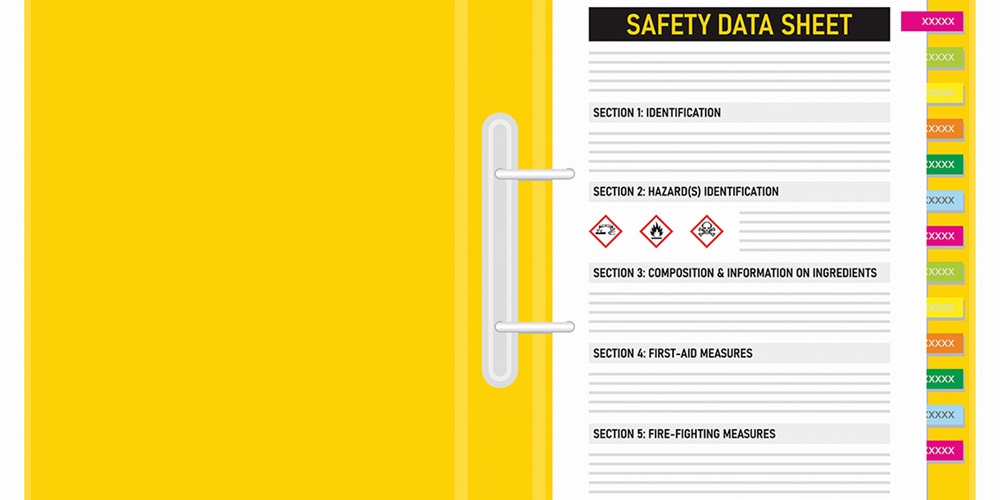
3. Safety Data Sheets
SDSs are designed to communicate hazard information to employers, employees and other personnel so they can work safely with hazardous materials and protect themselves from potential risks.
4. Information and Training
All employees who may be exposed to hazardous chemicals in the workplace must be educated and trained to work with them. This training should cover OSHA’s HazCom Standard requirements, locations of any chemicals and a written program that includes other relevant information on hazardous chemicals in the workplace.
In addition, employers and workers should be reminded to:
- Become more aware of workplace hazards.
- Read SDSs before working with any dangerous chemicals.
- Be cognizant of any errors that can lead to mislabeling, spills, injuries and other serious chemical-related incidents.
- Ensure that proper communication on chemicals and their hazards be regularly shared with the workforce.
5. Hazcom Program Implementation
The purpose of a HazCom program is to provide employees with accurate, up-to-date information about potential health and safety hazards that may be present in the workplace, and ensure they know how to protect themselves. All too often, we can become complacent to the hazards and precautions needed for safe handling of these chemicals, but others new to the job may not.
That is why the above steps are necessary, in addition to ensuring that all the labels affixed to chemical containers are readable and that the SDSs are current.
We often focus our safety programs on the obvious physical hazards associated with our work, such as fall protection, personal protective equipment, lockout/tagout and grounding. We don’t think of the ancillary precautions needed to ensure overall safety. These are the little things that can make or break a safety program, such as proper use and care of FR clothing, proper wearing of PPE, and yes, a comprehensive HazCom program that ensures employees are knowledgeable about and protected from the hazards they may encounter.
Implementing a comprehensive HazCom program ensures compliance with current OSHA rules and regulations while providing safety for workers.
Let this short article serve as a gentle reminder of the other hazards our employees face. More detail on these requirements can be found in OSHA’s Construction Standards (1926.59) and General Industry Standards (1910.1200).
STOCK.ADOBE.COM/WIJAS
About The Author

KELLY, president of Kelly Consulting & Mediation Services, has worked with utility industry leaders on safety, labor relations and human resources for more than 30 years. Reach him at 540-686-0118 or [email protected].