For decades, apprenticeship applicants have signed documents assuring that they understand the physical and mental requirements for performing electrical work. The statement they must sign appears in standards and on apprenticeship applications.
It reads: “I understand that I must be physically and mentally able to safely perform or learn to safely perform the essential functions of the job of an electrical worker in the type of program for which I am applying, either with or without reasonable accommodations; and that the necessary abilities typically include the following: repetitively lift and carry more than 50 pounds; climb and work from ladders, scaffolds, poles and towers of various heights; crawl and work in confined spaces such as attics, manholes and crawlspaces; and to write, read, hear, and understand instructions and warnings in English.”
While the pledge suggests applicants are in peak physical and mental condition, a smaller portion of young adults than in generations past can easily make this claim.
Falling short of demands
Numerous studies have confirmed that younger generations, with more technology at their fingertips, lead more sedentary lives. As generational groups, they have also tended to consume more heavily processed foods. Both factors contribute to obesity, which is said to prompt higher work injury rates and more lost sick days, costing employers millions in labor and insurance costs.
Only 2 in 5 young adults are weight-eligible and can report activity levels that would prepare them for basic training for the U.S. military, according to the Centers for Disease Control and Prevention. Even more concerning, many Americans gain weight and reduce activity levels as they age. Substance abuse, which impairs mental and physical health, affects multiple generations as well.
Preventing injuries
Rather than turn a blind eye, Wes Wheeler, NECA’s executive director of safety, initiated development of a guide intended to help those in the construction industry prevent physical injuries and illness. Co-authored by Maria Silva-Palacios, a former health and safety advisor/specialist for a large West Coast utility company, and Dorothy Riviere, a physical therapist with 20 years of post-injury and prevention experience, it is scheduled for distribution in 2026.
The guide will introduce users to the physical and economic consequences of injury and illness and how to prevent them, including the following:
- Soft tissue injury
- Variables related to injury, including how common injuries happen
- Kinetics and core strength
- The need for observing ergonomics suited to different settings
- Guidance on nutrition
Related costs
Silva-Palacios then referred to National Safety Council statistics. In 2022, costs related to work injuries totaled $167 billion. Driving these costs are musculoskeletal injuries and illness, ranked by 75% of employers as among the top two health conditions driving healthcare costs.
Silva-Palacios said musculoskeletal nonfatal injuries and illness accounted for 976,090 annual days away restricted or transferred (DART) cases, and 502,380 days away from work (DAFW) cases. The median number of DART days was 23, and DAFW days 14.
For contractors, DART and DAFW translate to scheduling challenges, lost wages, insurance claims and higher insurance rates, lost progress on projects with already compressed timelines and more.
“Besides employers, the other thing we must consider is educating young workers,” Silva-Palacios said. “Many electrical apprentices come in as recent high school graduates, and they have no idea how the work they will be doing will impact their bodies. They also have a higher injury rate than more seasoned electricians and linemen.”
“Linemanectomy” was a term Silva-Palacios first heard while working for the utility industry.
“I remember wondering what that meant,” she said. “It’s a term for linemen who have worked in the field 10–20 years, where pain has become very normalized. They understand the risks of being injured and what goes along with it. Not just the pain from the injury, but risk of addiction to medication, and the downtime. It affects not just the worker, but their family too. Those who have been in the field longer know to be more cautious.”
“That higher injury rate for younger workers goes for just about all industries, and anybody doing a new job,” Riviere said. “New employees are always at the highest risk for injuries. It’s why rehab providers provide job analysis of each job. This is an objective document of required function, defined and measured.”
Movement is key
Electrical work requires lots of physical movement, repetitive action, strength and endurance.
“Movement should be a key consideration as far as handling the work—the body is constantly changing to adapt to the task at hand,” Silva-Palacios said. “A lot of body parts and abilities hinge upon stability and mobility. The body must move and provide control through the use of multiple body parts that move and that remain still to stabilize.”
A body's most vulnerable parts are the back, knees and shoulders.
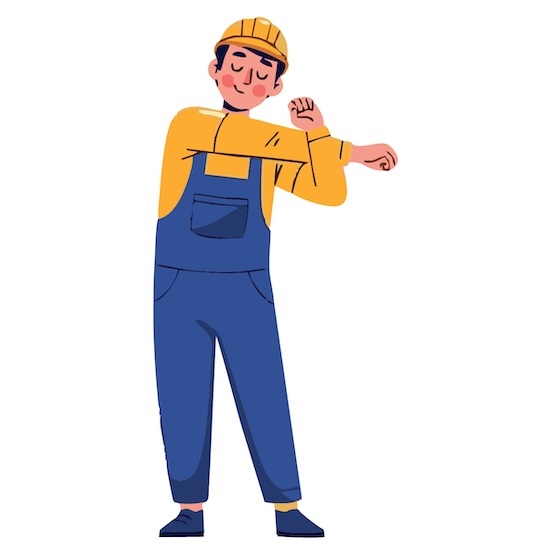
“In reality, to protect these areas, integrated preparatory movements must be completed in a holistic way,” Riviere said. “We’re suggesting the importance of dynamic stretching movement before work to get the body moving and warmed up. If you think of a tennis champion warming up or a quarterback doing a few plays before the game begins, this is performed before a day of work or workout.”
Benefits include improved range of motion, increased blood flow, increased comfort while performing tasks and reduced risk of injury. Static stretching, such as holding a hamstring stretch or reaching for toes,
she said, works to condition select areas. The benefits of these exercises are increased flexibility, reduced muscle tension and improved relaxation, which also helps reduce chances of injury and strain.
“This is really about proper exercise as preparation and as physical maintenance,” Silva-Palacios said. “There is no one-size-fits-all, so it’s important to take a holistic approach, realizing that all areas of the body must work together. Our bodies are like cars. They are designed to move. They are not meant to be parked.”
Instructors at the IBEW-NECA Technical Training Institute in Alsip, Ill., noticed apprentices losing physical stamina and strength during semesters of classroom training. They developed a morning exercise program enabling apprentices to walk/jog the campus perimeter and perform push-ups, squat thrusts, leg lifts and even yoga moves, such as holding the plank position.
The school also makes an outsized effort to communicate job expectations to apprentice applicants accepted into the program with an orientation that includes 30 minutes of warm-up exercise and one hour
of performing typical work moves, such as climbing ladders and scaffolding, crawling through holes and carrying 90 pounds of steel conduit.
As testament to regular conditioning, third-year students performing the exercises appeared less stressed. IN-Tech tests fitness functionality after apprenticeships are offered, but the strenuous orientation communicates expectations before they accept employment.
After the workout, the applicant must decide whether to sign on the dotted line and pay a $500 fee covering the cost of a general physical and industry-specific physical.
The more specific physical requires being able to lift certain weights to waist height, crawl through a 2-foot-by-2-foot square—necessary for entering ceilings—and feel comfortable climbing and looking down from a 30-foot scaffold.
“At orientation, some applicants walk away before paying the $500 fee,” said Gene Kent, IN-Tech executive director. “But those who stay on are likely to be successful and do OK because they know what’s expected.”
The bottom line: employers must accurately communicate the job description to applicants when offering employment, Wheeler said.
In keeping with safety regulations, employers can ask applicants to participate in pre-employment screenings, which can include drug tests, fitness tests and physical exams. But collective bargaining agreements can change this requirement. They can and often do stipulate that physical testing occur after employment is offered to avoid concerns over discrimination.
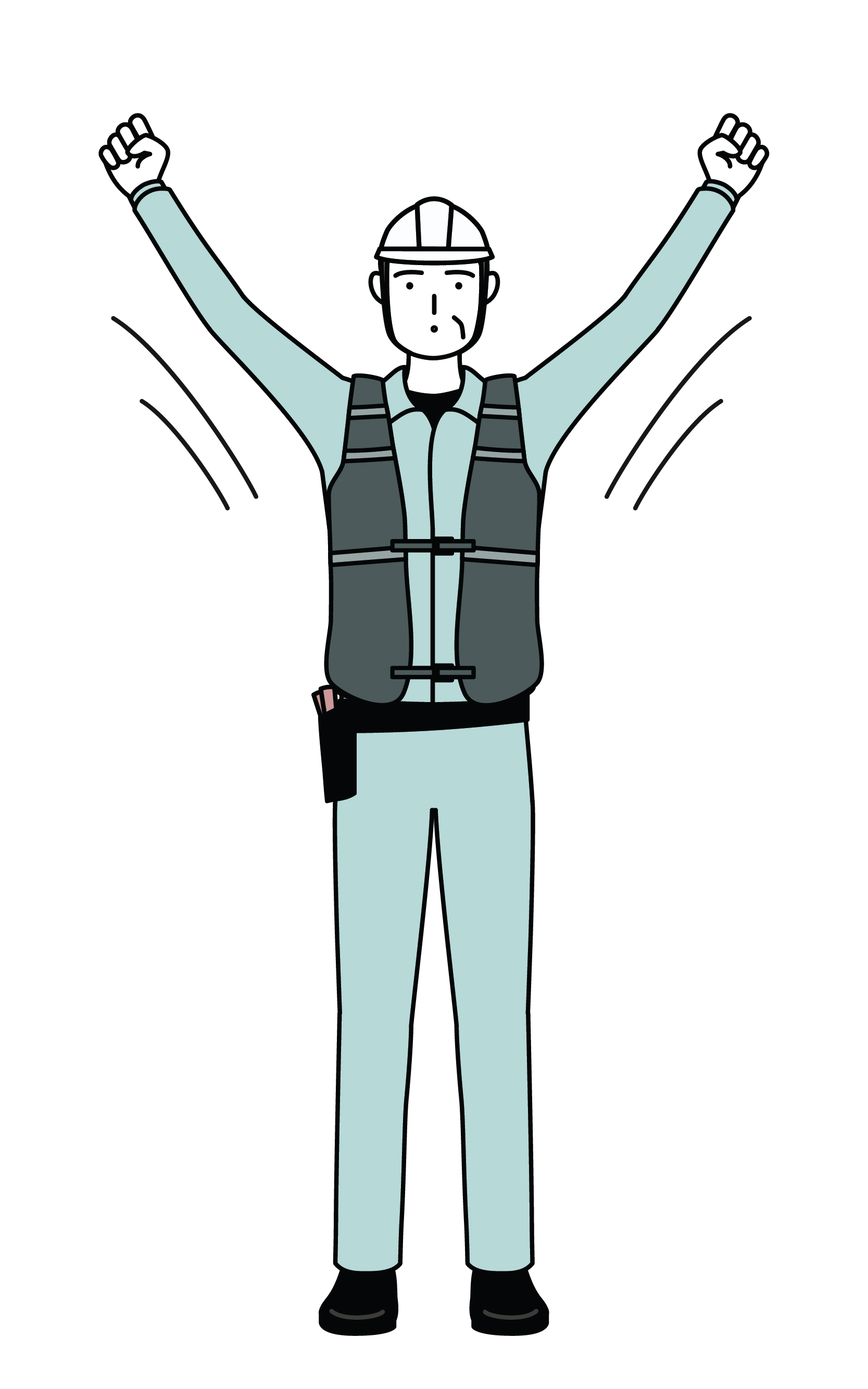
STRETCHES FOR BEFORE WORK
The goal is to warm up and loosen your muscles before starting physical work. Do not hold these stretches for too long or you might strain your muscles.
Back stretch:
- Stand up.
- Place your hands on your hips.
- Slightly arch your back.
- Hold the stretch for 10–15 seconds.
Shoulder stretch:
- Lift one of your arms straight in front of you.
- Hinge the arm across your chest.
- Hold the arm in position with the opposite hand.
- Repeat with the other arm.
Neck stretch:
- Sit or stand looking forward.
- Slowly turn your head to the right then to the left. Repeat 3 times.
- Aim your chin towards your chest and gently roll your head clockwise and then counterclockwise.
Pectoral stretch:
- Lean your arms and shoulders backward.
- Lace your fingers together.
- Pull your hands away from your back.
- Hold that position for 30 seconds.
- Inhale and exhale deeply to deepen the stretch.
Calf stretch:
- Stand up and hold your arms straight against the wall.
- Keep the heels on the ground and your legs straight.
- Slowly bend your arms to lean towards the wall.
Quadriceps stretch:
- Stand up straight (hold a chair for balance if needed).
- Bend one leg backwards, holding your foot with your hand.
- Using your hand, raise your foot higher to feel the stretch.
- Hold the stretch for 15–30 seconds.
- Repeat with the other leg.
SOURCE: GREG KNOWLES, ATI ELECTRICAL SUPPLY
Consideration of nutrition
Beyond conditioning, nutrition is key for health and fitness.
“Most fitness and health professionals state that nutrition likely plays a bigger role (as much as 70% to 90%) than exercise,” Silva-Palacios said.
The understanding traces back to a Loma Linda University study, she said, “but this is very common knowledge.”
Last summer, the U.S. Centers for Disease Control and Prevention released a different study confirming Americans age 1 and older consume ultra-processed food as 53% of their diet. For children up to 18, it’s 62%, according to dietary data collected from August 2021 to August 2023.
On a positive note, those latest consumption percentages were lower than in previous years, which suggests growing awareness of the importance of nutrition in relation to health and fitness, Silva-Palacios said.
STOCK.ADOBE.COM / ILHAMWALID
About The Author
.jpg?sfvrsn=a64b988b_1)
DeGrane is a Chicago-based freelance writer. She has covered electrical contracting, renewable energy, senior living and other industries with articles published in the Chicago Tribune, New York Times and trade publications. Reach her at [email protected].