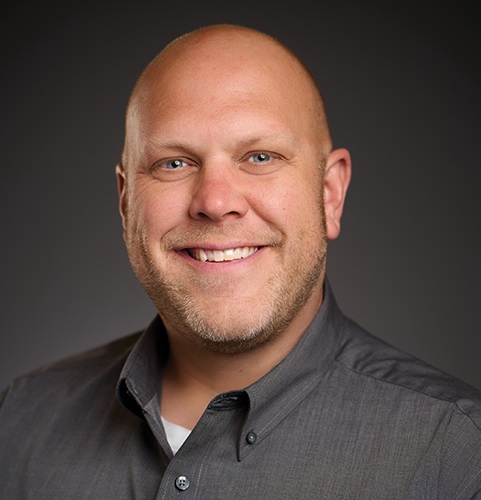
Josh Tonn’s prior expertise as a building and electrical inspector has greatly shaped his approach to safety. Tonn, senior safety specialist at Lemberg Electric Co. Inc., based in Brookfield, Wis., shares his story.
Tell us about your career journey.
I started my career in 2005 working for my father-in-law, who gave me my start as a maintenance electrician in a die-cast foundry. I went on to serve an electrical apprenticeship, focusing on residential, commercial and industrial wiring.
In 2014, I was hired as a commercial and residential electrical inspector for a local municipality. I eventually became the commercial building, HVAC and electrical inspector after attaining all my Wisconsin certifications to become a dual inspector.
Hired in 2024 by Lemberg Electric, I maintain my OSHA 500 certification as an OSHA-authorized trainer for the company. In addition, I represent the Wisconsin chapter IAEI [Independent Alliance of the Electrical Industry] as a board member and electrical code trainer, head chair of the Electrical Advisory Board for the electrical apprenticeship program at Moraine Park Technical College in Wisconsin and vice chair of the Milwaukee chapter NECA Safety Professionals Group. I am also a 2024 graduate of the NECA Safety Professionals Institute.
What safety practices have been particularly effective at your company?
Pretask planning is vital. It allows each worker to pause before the shift begins, think critically about the tasks ahead and identify potential hazards. I encourage our employees to view it as their “to-do list” for the day. By physically documenting their plan, they not only identify risks, but also find more efficient ways to perform their work safely.
Weekly safety meetings with management are another key component. Open communication from the top fosters a strong trickle-down effect throughout the company, reinforcing a culture of shared accountability.
Is there a specific injury or near-miss that changed how you thought about safety?
I entered the trade at a time when “safety culture” was not really part of the conversation. Like many, I once prioritized getting the job done over doing it safely.
One Saturday afternoon, I was working on a small project at home and was using my pocketknife instead of the proper tool for what I was working on. I became distracted and drove the knife blade through the palm of my hand, severing major nerves. It required extensive surgery and months of recovery.
At the time, I had just bought my first home, was newly married and our first child was only six weeks old. Not only did this injury prevent me from working and being active with my young family, but it also hit me hard financially, as I was out of work for several months. It taught me that every injury—no matter how small or personal—is 100% preventable.
What challenges do you face in managing safety responsibilities?
Human error and complacency are difficult to overcome. Even the most skilled and experienced workers can fall into routine and develop a false sense of security when things have gone smoothly for a long time.
Another challenge is finding broad but practical solutions that work for everyone. Each employee is different and has unique experiences, learning styles and needs. In a fast-paced, ever-changing industry, it takes effort to ensure everyone has the tools, training and attention they need to work proactively and safely in a capacity that works for them individually.
How do you encourage crews to take safety seriously on the job?
I believe the best way to promote safety is to lead by example and build trust. Open communication is key—it is important to connect personally with the crews, listen to their concerns and remind them that we all make mistakes. When workers feel heard and respected, they are more likely to speak up and take ownership of safety, not only for themselves, but for their teammates as well.
Reporting near-misses, incidents and injuries is also a critical part of maintaining a strong safety culture. Reporting is not about assigning blame—it is about learning and preventing the next potential injury. Every near-miss is a free lesson and an opportunity to correct hazards before someone gets hurt.
When employees report these situations, it gives us a means to identify trends, implement improvements and create safer environments for everyone. The more we talk about what almost happened, the fewer serious incidents we’ll face in the future.
Do you have any advice for other safety professionals?
Be present, be approachable and recognize good safety behavior. When workers see that management genuinely cares and celebrates safe decisions, it reinforces that safety is a shared value—not just a rule.
We spend one-third of our lives at work, which puts every worker at a high exposure for catastrophe. Every unsafe shortcut or overlooked hazard puts that precious time with family and loved ones at risk. Safety is not just a job requirement—it is a commitment to the people waiting for us at home.
josh tonn
About The Author

KUEHNER-HEBERT is a freelance writer based in Running Springs, Calif. She has more than three decades of journalism experience. Reach her at [email protected].