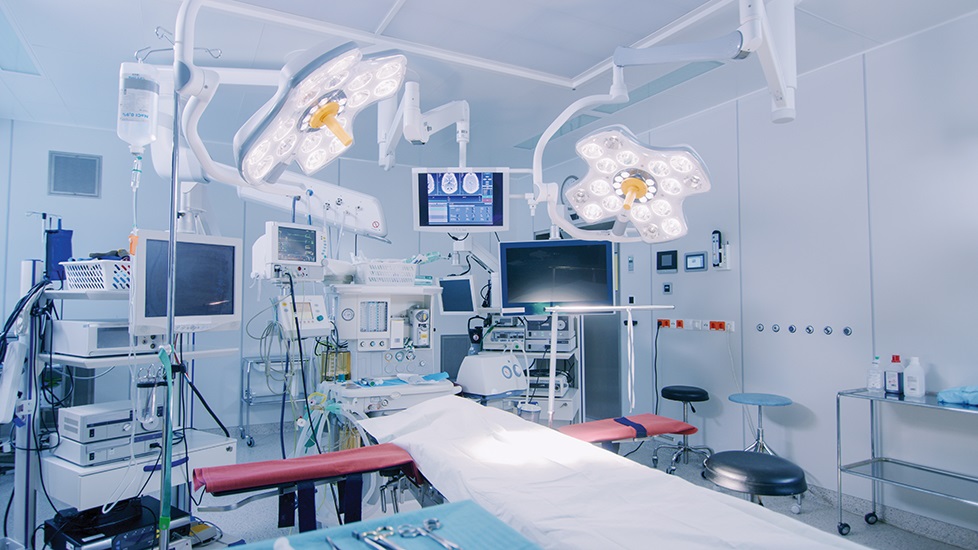
One of the most important parts of the electrical system for a hospital or similar healthcare facility is the essential electrical system (EES). These systems are covered in Part III of Article 517 in the NEC. The proper installation and maintenance of the EES ensures normal power is maintained to all the electrical equipment in the hospital and that emergency power is provided if the normal power fails.
Reliable power for patient care starts at the emergency power supply and is defined and classified in NFPA 110, Standard for Emergency and Standby Power Systems. An emergency power supply is defined as the source of electrical power of the required capacity and quality for an emergency power supply system. The emergency power supply system provides a complete functioning emergency power supply, such as a generator, coupled to a system of conductors, disconnecting means and transfer switch needed for the system to operate as a safe and reliable source of electric power.
Level 1 (Type 1) is a classification used where the system operation has a direct effect on life safety, and failure of the system will compromise the necessary level of safety.
This system is installed where failure of the equipment to perform could result in loss of human life or serious injuries.
A Level 2 (Type 2) is the classification where the operation of the system is less critical to life safety.
NEC 517.25 states that Type 1 and Type 2 essential electrical systems for healthcare facilities must comprise separate branches capable of supplying a limited amount of lighting and power, which is considered essential for life safety and effective facility operation during the time electrical service is interrupted for any reason.
The three branches
There are three branches of the EES: life safety, critical and equipment. The life safety branch provides power to equipment such as egress lighting, exit signs and marking, and alarm systems that facilitate safe evacuation when necessary. The critical branch provides reliable power for patient care functions. The equipment branch provides for building operation to allow a healthcare facility to continue operation.
Patient care space is defined in NEC Article 100 as any space of a healthcare facility where patients are intended to be examined or treated. The governing body of the healthcare facility designates the patient care space based on the type of care required.
There are four patient care space categories. Category 1 is a space in which failure of equipment or a system is likely to cause major injury or death of patients, staff or visitors, such as urgent care or an operating room. Category 2 is a space in which failure of equipment or a system is likely to cause minor injury to patients, staff or visitors, such as an inpatient bedroom or dialysis room.
Category 3 is a space in which the failure of equipment or a system is not likely to cause injury to patients, staff or visitors but can cause discomfort, such as an exam room or dental care. Finally, Category 4 is a space in which failure of equipment or a system is not likely to have a physical effect on patient care, such as a nurses’ area or supply room.
Power sources
NEC 517.30 requires EES be served by two or more independent sources or sets of power sources and sets of feeders designed to ensure sufficient reliability for effective facility operation consistent with the emergency operations plan. At least one power source must be on-site and sized to supply the entire EES.
The additional power sources are permitted to be either on-site or off-site. These can be generators (the most common), fuel cell systems (hydrogen-powered systems), energy storage systems (collects and stores energy from renewable resources) or a healthcare microgrid that may also supply nonessential loads. The healthcare microgrid can share distributed resources with the normal system. The last source obviously would be the electric utility supply source.
A safe electrical installation, proper maintenance and continuation of power for a hospital is extremely important to everyone. Next month’s article will continue with this discussion.
stock.adobe.coM/Gorodenkoff
About The Author

ODE is a retired lead engineering instructor at Underwriters Laboratories and is owner of Southwest Electrical Training and Consulting. Contact him at 919.949.2576 and [email protected].