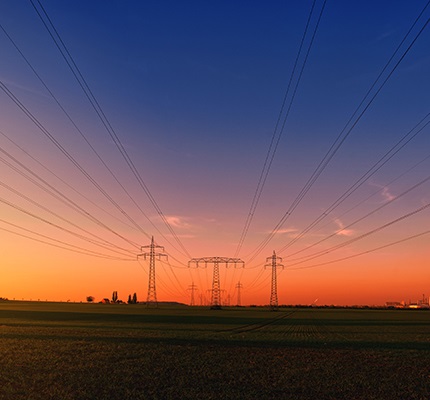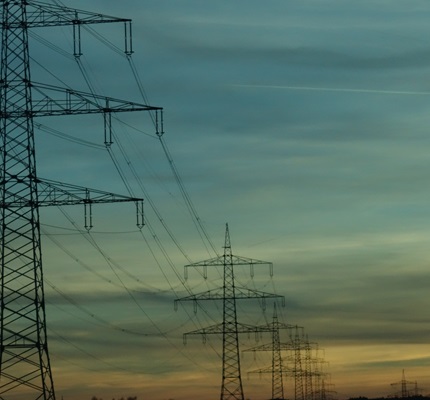
Every three years, the U.S. Department of Energy (DOE) releases a National Transmission Needs Study (NTNS), and the 2026 version was made available in July. The public comment period closes Sept. 7, so the final version could reflect changes. But July’s draft illustrates how political priorities and the electric utility market have shifted since 2023. The latest report continues to push for a speedier buildout of transmission capacity, but with an aim toward addressing congestion bottlenecks rather than boosting access to wind and solar resources.
Unlike the 2023 report, the new release avoids putting a number on how much new capacity is needed nationally, citing uncertainty in demand growth tied to the rapid rise of artificial intelligence (A.I.) data centers. In this way, it could be seen more as a snapshot than a roadmap, and possibly a way of sidestepping the renewable energy politics that have dominated generation and transmission planning for the last several years. But addressing the document’s identified needs could still help address many of the problems developers face getting fossil-free kilowatts across state and regional lines.
Looking back
When the draft version of the last NTNS was released in February 2023, ChatGPT as a public platform was three months old and renewablesfocused legislation had recently been signed. That report’s authors emphasized the need to expand transmission capacity to carry wind and solar power from Western states to Eastern load centers.
The 2026 draft drops this decarbonization focus, instead emphasizing transmission expansion to relieve currently existing congestion points and, longer term, support anticipated load growth contributed to in part by A.I. data centers and expanding domestic manufacturing.
“Congestion” in this context means the inability of existing transmission to deliver as much lowest-cost power as the market demands due to a lack of carrying capacity. As a result, grid operators must turn to closer, more expensive suppliers. This means electricity costs can actually fall for those upstream of the congestion during high-demand periods because their region is seeing an oversupply of electricity unable to make it through the bottleneck. Costs for those downstream of that point, though, will rise to what the least-expensive local generator is charging.
Relieving this congestion allows lower-cost power to flow freely to the customers who want it. Prices on either side of the former bottleneck then move closer together, so upstream prices can rise while downstream expense falls.
Tallying costs and benefits
The discrepancy in cost between either side of a congestion point is called the locational marginal price (LMP) difference. Nationally, congestion costs driven by LMP differences rose to $12 billion in 2024, according to the 2026 draft report, from $11 billion in 2023. But the real value in reducing congestion can be seen when severe weather hits and demand spikes. In 2022, when heat waves and winter storms caused natural gas prices to soar, congestion costs totaled $21 billion, according to the DOE.
The 2026 NTNS does a deep dive into where addressing congestion could have the biggest financial benefits, based on an analysis from the Lawrence Berkeley National Laboratory. In many cases, the 65 links (or “seams”) identified in this research line up with priority locations noted in 2023’s report.
Topping the list is the need to expand transfer capacity between Texas and neighboring states and between the Eastern and Western interconnections—the two regional grids that split the country roughly at the Rocky Mountains. Additionally, building new capacity between regional operators NorthernGrid and WestConnect in the Western United States and ISO New England and the New York Independent System Operator in the Northeast also could produce significant savings, according to the 2026 report.
Renewables could still benefit
While these and other identified needs are focused on reducing congestion and adding capacity to support growing data center demand, they aren’t the only possible benefits. Addressing these goals would also go a long way toward maximizing the use of the renewables that were the focus of the 2023 report, which this year’s release largely overlooks.
Several specific choke points called out in 2023 also show up in the new study’s priority list. These include the wind-rich Northern Plains, where two major regional transmission systems, the Southwest Power Pool and the MidContinent Independent System Operator (MISO) abut each other. Within MISO’s boundaries, existing insufficiencies preventing the most efficient use of planned renewables also are identified. The authors also note congestion challenges limiting California access to power resources in Wyoming—resources that are primarily wind- and solar-based.
So, while 2023’s decarbonization goals might be missing in the 2026 NTNS, addressing the congestion and demand growth the released draft identifies could still help support further expansion of wind and solar resources. Renewables are now less expensive to build than new natural gas generation. This makes transmission expansion a win/win situation, regardless of the technology generating the kilowatts traveling across those lines.
STOCK.ADOBE.COM/ Konco
About The Author

ROSS has covered building and energy technologies and electric-utility business issues for more than 25 years. Contact him at [email protected].
.tmb-art-li-th.png?Culture=en&sfvrsn=9278ce2b_1)