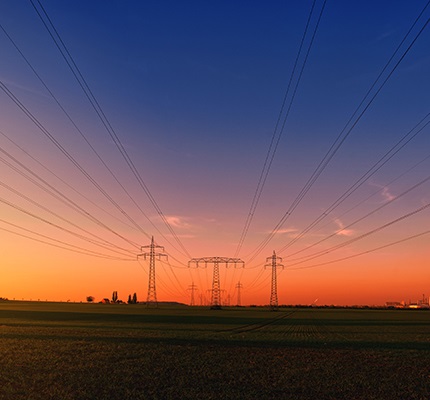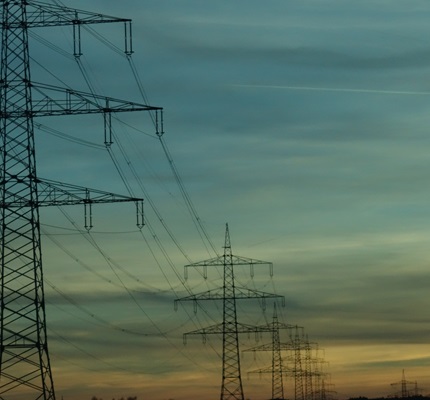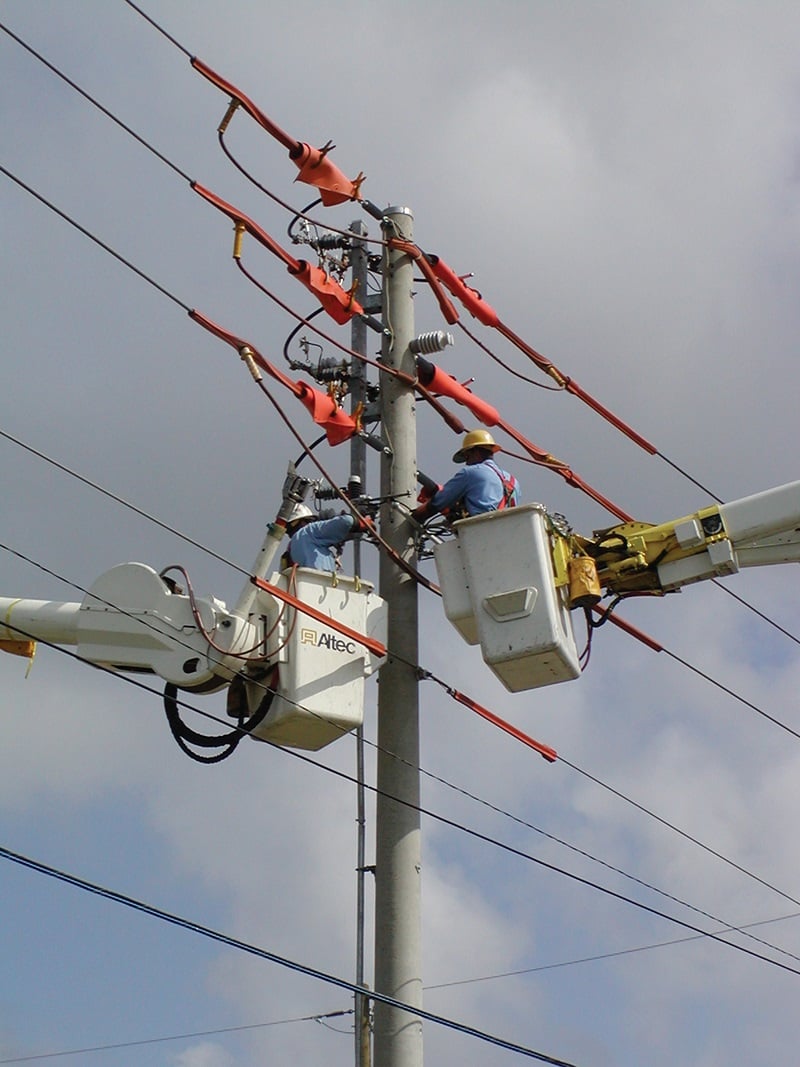
More electric utility companies across the country are replacing wood transmission and distribution poles with steel, concrete or a combination of alternative materials.
Duke Energy corp.
Steel and concrete poles can offer greater strength, durability and resistance to certain environmental conditions than traditional wood poles, said Daniel Maley, vice president, construction and maintenance for Duke Energy Corp., Charlotte, N.C.
“They are less susceptible to rot, insects, bird holes and some forms of weather-related deterioration, which can make them a better fit in areas where we need additional structural strength or longer-term resiliency,” Maley said.
Steel and concrete poles are also more resistant to high winds and severe weather and are well suited to areas such as coastal regions and higher elevations that regularly see these types of conditions, he said.
“The goal is not to replace wood everywhere across the transmission and distribution system but to use the right pole material in the right location based on engineering needs, environmental conditions and customer reliability benefits,” Maley said.
When it is beneficial to use steel versus concrete?
Steel poles are often a strong option where the utility needs high strength, consistent dimensions or taller structures with a smaller footprint, he said. They can be especially useful for transmission applications, constrained rights-of-way, river or road crossings, or areas where additional clearance is needed.
Concrete poles can be a good fit where durability, fire resistance, pest resistance, corrosion resistance and low routine maintenance are important, and where site access can accommodate the heavier material.
“In all cases, pole selection is driven by engineering analysis, site conditions, constructability, cost and long-term performance,” Maley said.
There are also broader benefits to replacing wood poles, he said. Stronger or taller poles can create opportunities to use larger power lines, install modern grid equipment, improve clearances or support line configurations that enhance reliability and capacity.
“Pole replacement is often part of a broader grid improvement strategy that can include line upgrades or replacement, stronger line designs, self-healing technologies, automation equipment and other upgrades that help reduce outage impacts and prepare the system for future load growth,” Maley said.
Upgrading wood poles to stronger steel or concrete in hard-to-access areas, including swamps, wetlands or mountainous terrain, can help avoid extended outages and shorten restoration times compared to extended outages while crews work to access these lines to make repairs, he said. Replacing end-of-service or vulnerable poles can help avoid future maintenance, reduce the likelihood of storm-related damage and improve service reliability for customers.
“While the upfront cost of steel or concrete can be higher than wood in some cases, the long-term value may come from fewer replacements, reduced maintenance needs, faster restoration in some storm scenarios and improved resiliency in areas exposed to severe weather,” Maley said. “Those benefits are evaluated on a project-by-project basis.”
Pole material selection should be driven by life cycle value, not just initial cost, he said. The best choice depends on local conditions, access, loading requirements, corrosion potential, storm exposure, maintenance needs and customer reliability goals.
“A stronger pole is most valuable when it is part of an integrated grid strategy that also considers conductor, hardware, vegetation, automation and future capacity needs,” Maley said.
FirstEnergy Corp.
While traditional wood poles have served the electric industry well for many years, newer pole designs can provide additional strength and durability, said Lauren Siburkis, program manager of transmission communications at FirstEnergy Corp., Akron, Ohio.
By using materials such as steel and laminated wood, utilities can build structures that are better able to withstand severe weather, heavy winds, ice and other environmental conditions, Siburkis said.
“For customers, the biggest benefit is improved reliability,” she said. “Stronger poles are less likely to be damaged during storms, which can help reduce outages and support a more dependable electric system. These materials can also last longer and require less maintenance over time, helping us make smart investments in the grid.”
Considering that different locations have different needs, using a combination of materials allows FirstEnergy to choose the best solution for each situation, Siburkis said.
For example, laminated wood poles can provide added strength while still maintaining a more traditional appearance that many communities prefer, she said. Steel poles offer excellent durability and can be especially useful in locations where stronger structures are needed.
“By having multiple options available, we can balance reliability, safety, cost, environmental factors and community preferences while building the strongest system possible,” Siburkis said.
Many newer transmission structures are designed to be stronger and more resilient than older poles, she said. Depending on the location and engineering requirements, they may be taller, have greater load-carrying capability or be designed to better withstand extreme weather conditions. These improvements help support the safe and reliable delivery of electricity to homes and businesses.
Modern transmission structures can also be designed to support upgrades to the electrical system, including new equipment and, where needed, additional transmission capacity, Siburkis said. This flexibility helps utilities meet growing energy needs while maintaining reliability. It also allows the utility company to incorporate newer technologies and equipment that can improve grid performance and resilience.
“FirstEnergy has been replacing aging transmission structures as part of its ongoing efforts to modernize the electric grid and improve reliability for customers,” she said. “This work is a long-term investment in strengthening the infrastructure that delivers electricity throughout our service area.”
FirstEnergy’s approach is to proactively replace transmission structures that have reached the end of their useful life or would benefit from modernization, Siburkis said. The utility company prioritizes projects based on factors including equipment condition, system needs, reliability improvements and long-term customer benefits.
“This work is part of our broader commitment to building a stronger, smarter and more resilient electric grid,” she said.
The grid is facing increasing demands from growing communities, evolving technologies and more frequent severe weather events, Siburkis said. Replacing aging infrastructure is one of the most effective ways electric companies can improve safety, reliability and resilience.
“Ultimately, every pole replacement project supports the same goal: delivering safe, reliable electricity that customers can depend on every day,” she said.
Valmont Industries Inc.
Utilities are looking beyond the traditional wood-versus-steel conversation and are asking which material, or combination of materials, best supports the long-term performance, resilience and capacity needs of that section of the grid, said Justine James, senior director of marketing, infrastructure for Valmont Industries Inc., Omaha, Neb., which manufactures transmission and distribution structures, including poles.
Steel is often selected because it’s engineered for the application and delivers consistent performance from pole to pole, James said. It isn’t susceptible to rot, insects or environmental damage, and it can be designed to meet demanding wind, ice, seismic and wildfire resilience requirements.
“That consistency is especially valuable as utilities invest in hardening their systems and building infrastructure that can support today’s needs while preparing for future growth,” she said.
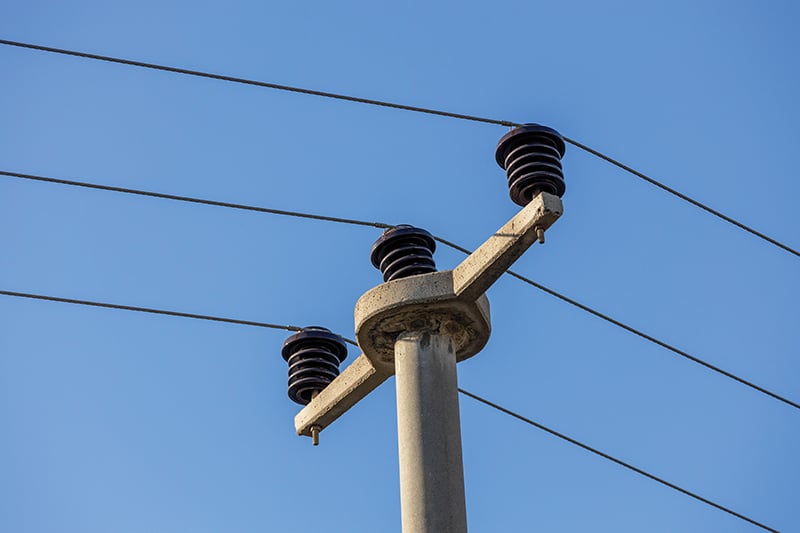
Concrete poles are commonly used where high strength and durability are needed, particularly on transmission lines or in coastal environments where exposure to the elements is a significant consideration, James said. Composite poles can be a strong solution in certain applications as well, offering benefits such as corrosion resistance, lighter weight for difficult-to-access locations and good performance in challenging environmental conditions. In many cases, utilities use a mix of wood, steel, concrete and composite poles across their systems to match the needs of each application.
“What are the decisions behind which alternative product to use? There’s no universal answer because every utility has different priorities,” she said. Service life, maintenance requirements, replacement cycles and system reliability all factor into the decision. “The decision usually comes down to the environment the pole will be installed in, the loading requirements, accessibility, maintenance expectations and the utility’s long-term asset management strategy.”
One advantage of Valmont’s engineered steel poles is the design flexibility they provide, she said. They can be manufactured to accommodate taller structures, longer spans, higher loading requirements and more complex equipment configurations when the application calls for it.
Valmont also works closely with utilities to design structures around their specific project requirements, rather than asking customers to adapt to a standard product, James said. That flexibility allows utilities to plan for future system needs instead of simply replacing what was there before.
As the grid evolves, utilities are asking more of every structure, she said. Additional conductors, communications equipment, automation devices and other technologies all increase loading requirements.
“Engineered steel poles can be designed to support those additional loads while meeting applicable industry standards,” James said. “That gives utilities more flexibility to increase capacity, incorporate new technologies and prepare for future system upgrades without replacing the structure again a few years later.”
“If a utility can reduce maintenance, avoid premature replacements or improve reliability after major weather events, those benefits add up over time,” James said. “Every system is different, but many utilities are looking at pole replacement as an investment in long-term resiliency rather than simply replacing aging infrastructure with the same material.”
Wood, steel, concrete and composites all have a role to play, depending on the application, she said. The important thing is matching the structure to the job and thinking beyond today’s immediate needs.
“With growing demand for electricity and more pressure to improve reliability, many utilities are planning for infrastructure that will serve them for decades,” James said. “Taking a long-term view, considering future loading, maintenance and resiliency, can make investments much more valuable down the road.”
Valmont Industries Inc., STOCK.ADOBE.COM/MdRayhan
About The Author

KUEHNER-HEBERT is a freelance writer based in Running Springs, Calif. She has more than three decades of journalism experience. Reach her at [email protected].
.tmb-art-li-th.png?Culture=en&sfvrsn=9278ce2b_1)