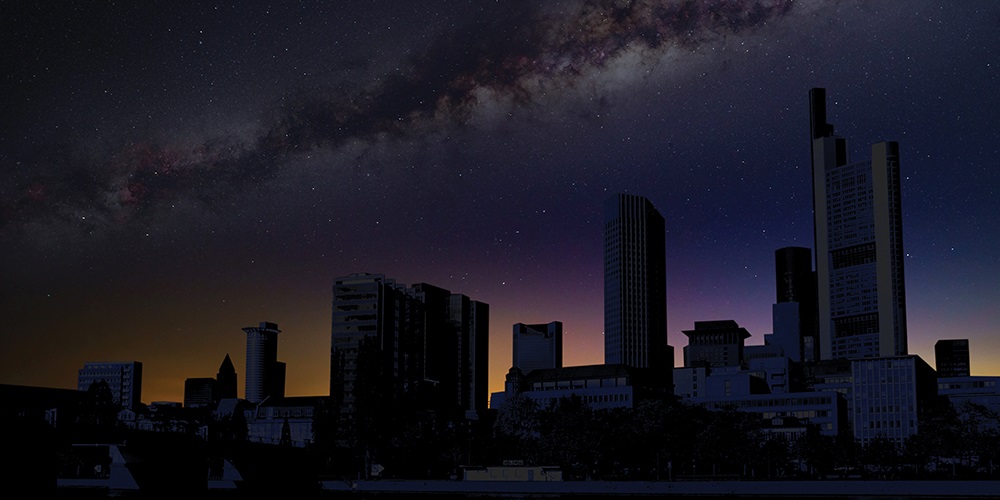
Sixty years ago this month, the United States and Canada were struck by an electrical power outage which, up to that point, was the worst ever experienced in North America.
On Tuesday, Nov. 9, 1965, the Great Northeast Blackout disrupted everyday life for everyone living and working in several Northeast states and two Canadian provinces. Striking at 5:27 p.m., for the next 13 hours it wreaked havoc with the lives of those 30 million people.
It left thousands of New York City commuters stranded in subway cars and trapped hundreds more in office building and department store elevators. As challenging as driving a vehicle in Manhattan might be in the best of circumstances, it proved far worse on that evening without traffic signals.
Luckily, since the telephone companies of that era used copper wiring from end to end in their systems and relied on battery backup in their central offices, everyone’s “landline” telephones continued to function. The blackout took TV stations off the air, but radio stations were still able to broadcast and avert general panic.
People took it in stride and turned it into a near-celebratory experience. The following year, an urban legend purported that nine months after the night of the blackout there was a marked uptick in births. (When fact-checked, that proved to be false.)
The speed of electricity in copper wires and cables is close to the speed of light, and it stops just as fast. The Great Northeast Blackout of 1965 commenced in a 4-second sequence of cascading overloads of transmission lines between the United States and Canada.
In the end, it was traced back to one single, poorly maintained breaker in a utility substation.
In the years since, there have been other significant outages. In 1977, for example, one short-lived blackout affected 50 million North American customers.
What can we learn?
In the six decades since November 1965, no major outage has made quite the same kind of impression on the general population as the Great Northeast Blackout. For it was with that unprecedented event that millions of Americans and Canadians first gained a sense of the perishability of utility-furnished electricity, conveyed to them over an out-of-sight “grid” largely unknown to them.
The 1965 blackout was caused by equipment failure, but since 2000, most blackouts have been caused by extreme weather. Between 2000 and 2023, 80% of the major power outages in the United States were caused by extreme weather. The experts classify major outages as incidents that affect at least 50,000 customers (residential or business) or disrupt service of 300 megawatts or more.
What is more concerning about the statistics related to extreme weather is the way they trended over that 24-year period. The U.S. suffered from twice as many major weather-related power outages in the last 10 years than in the first 10.
Whether the weather
A little over 1,000 outages, about six out of 10, were caused by high winds, heavy rain and thunderstorms.
Winter weather, including snow, ice and freezing rain, caused close to 400 of the outages, just shy of 25% of the total.
Nearly 250 outages were caused by tropical cyclones and hurricanes. While that number amounted to a smaller percentage (14%) of the overall number, these storms produced the longest-lasting outages of all.
A small share of outages (3%) was caused by extreme heat, which drove increased use of air conditioning, which in turn led to overloading power systems everywhere. Extreme heat plagued power systems in every geographic area of the country throughout the 24-year period under study.
While the effects of severe weather on the reliability of utility-furnished electricity have become more common over the past two decades, concern about A.I. data center power requirements has grown exponentially in just the last two years. Next month’s article will address that concern and propose how electrical service and maintenance contractors can protect their customers against power outages of every kind.
stock.adobe.com / luchschenF
About The Author

MCCOY is Beliveau professor in the Dept. of Building Construction, associate director of the Myers-Lawson School of Construction and director of the Virginia Center for Housing Research at Virginia Tech. Contact him at [email protected].

SARGENT heads Great Service Forums℠, which offers networking opportunities, business development and professional education to its membership of service-oriented contractors. Email him at [email protected].