You're reading an older article from ELECTRICAL CONTRACTOR. Some content, such as code-related information, may be outdated. Visit our homepage to view the most up-to-date articles.
Jim Dollard has an extensive background in codes and standards. If you have a query about the National Electrical Code (NEC), Jim will help you solve it. Questions can be sent to [email protected]. Answers are based on the 2014 NEC.
Cords run above ceilings
Our company recently renovated a local high school. We installed branch circuits and multimedia projectors in the classrooms. The drawings showed a specific detail of the support structure for the projector secured above the ceiling with a receptacle located on the support structure. The detail showed the power-supply cord being routed from the projector through a tube in the support to access the receptacle above the ceiling. The installation was flagged in the final electrical inspection, and we had to cut receptacles into the ceiling so the power-supply cord is plugged in below the ceiling. We have found many conflicting interpretations in our Internet research. In my opinion, the NEC is not clear on this. Are cords of all types prohibited above ceilings?
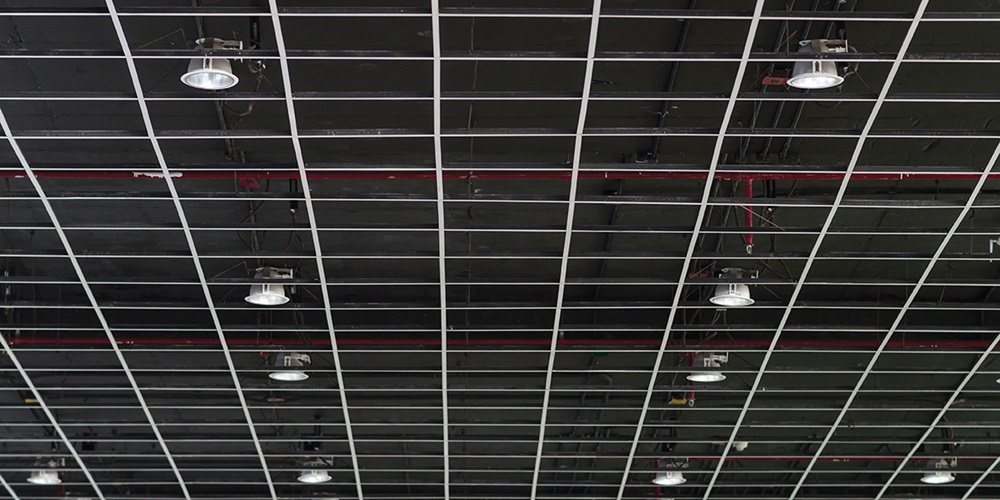
There has been considerable discussion on this issue, and the technical committee with purview over Article 400 has taken action in the Code-revision process to provide clarity in the 2017 NEC. Section 400.8 does not permit “flexible cords and cables” to be installed above ceilings. There is a misconception due to the fact that the text in 400.8 addresses only “flexible cords and cables” and does not include “cord sets and power-supply cords.” These are covered by two different product standards. The intent of the requirement in 400.8 is directed at all “flexible cords and cables,” and the choice of those words was not based on the title of the applicable product standard. This misconception is based on the fact that “flexible cords and cables” are addressed in UL 62 and “cord sets and power-supply cords” are addressed in UL 817.
The actions taken by the technical committee in the 2017 revision cycle clarify the NEC intent and provide clearer wording moving forward. The first action is to editorially relocate 400.8 to 400.12 for correlation with Chapter 3 sections for “uses not permitted” and to clarify in the parent text that “cord sets and power-supply cords” are covered in 400.12 (old 400.8). The second action is to add a new Informational Note to Section 400.1 Scope, to provide clarity as follows: “Informational Note: UL 817, Cord Sets and Power-Supply Cords allows the use of flexible cords manufactured in accordance with UL 62, Flexible Cords and Cables. Cord sets and power-supply cords are restricted in use by the requirements in Article 400.” The product standards interact with UL 817 making UL 62 inclusive, which means the 2014 NEC prohibits all “flexible cords and cables” and “cord sets and power-supply cords” from being installed in a ceiling.
Parking lot lighting and the NEC
We recently bid on a project that showed 115 outdoor lighting poles in a parking lot on the electrical drawings, but they were flagged as “Installed by Others.” While we did not get the job, we later learned that the intent was to have the local electric utility company install the lighting. How can the electric utility install lighting in a parking lot? What does the NEC cover and not cover?
The scope of the NEC in Section 90.2 outlines the venues and areas that are covered and not covered. First level subdivision 90.2(A) addresses what the NEC covers, and list item (2) includes “parking lots,” which encompasses parking lot lighting. The NEC scope is challenged in many different ways. There are electric utilities that creatively state they are “selling lumens” and are permitted to install parking lot lighting. That is in direct violation of Section 90.2.
Areas that the NEC does not cover are listed in first level subdivision 90.2(B), and list item (5) addresses installations “under the exclusive control of an electric utility.” The installations that are not covered include (a) service drops/laterals; (b) equipment on property owned or leased by the utility for the purpose of communications, metering, generation, control, transformation, transmission, or distribution of electric energy; (c) installations in legally established easements or rights-of-way; and (d) other recognized written agreements for the purpose of communications, metering, generation, control, transformation, transmission or distribution of electric energy where legally established easements or rights-of-way cannot be obtained. These installations are limited to federal lands, Native American reservations and others.
The NEC scope is clear. All electrical work in parking lots is covered in 90.2(A), while 90.2(B) does not include or mention parking lots. However, an electric utility can install parking lot lighting if it is installed in accordance with all applicable NEC requirements and other local regulations, which typically include a licensed electrical contractor, permits and electrical inspections.
Increased size of equipment grounding conductors
I am struggling to understand the intent and application of the NEC requirement to increase the size of an equipment grounding conductor (EGC). Is this just for voltage drop?
No, the requirement you are referring to is in first level subdivision 250.122(B). This is not limited to voltage drop and applies wherever ungrounded conductors are increased in size. This requirement applies only to “wire type” EGCs. Where a raceway, such as electrical metallic tubing is used as an EGC, 250.122(B) does not apply. As a result, any situation where an ungrounded conductor is “increased in size from the minimum size that has sufficient ampacity for the intended installation,” the Code requires the installer to determine the allowable ampacity of the ungrounded conductors in a given situation and choose the “minimum size” compliant ungrounded conductor. Where a larger ungrounded conductor is installed, the wire type EGC must be increased in size proportionately, according to the circular mil area of the ungrounded conductors. This requirement applies in all situations where the ungrounded conductors are increased in size.
Where larger ungrounded conductors are installed, there is a potential for future use on a larger overcurrent protective device, and the EGC may be undersized when that occurs.
Qualified person training
In a prebid meeting with an owner’s representative, we were informed that all people installing electrical conductors and equipment on that project had to be trained in NFPA 70E. The justification used was that the defined term for “qualified person” in the NEC included a note that referred to NFPA 70E. I think the owner is confusing NEC requirements with OSHA standards. I was not prepared at that time to engage them in a discussion on exactly what the NEC requires. A large portion of our workforce is trained in NFPA 70E but not all, and only those who are trained are called on to do energized work where it is truly justified. Is the owner correct? What type of training does a qualified person really need for us to comply with the NEC?
The definition of “qualified person” in Article 100 applies wherever this term is used in the NEC. An informational note follows the definition and sends the user to NFPA 70E, Standard for Electrical Safety in the Workplace, for electrical safety training requirements. It is informational only and is not an NEC requirement. First-level subdivision 90.5(C) states that informational notes are “not enforceable as requirements of this code.” Safety training is required for a “qualified person,” but NFPA 70E and applicable OSHA regulations cover specific electrically safe work practices.
It is imperative to recognize that the defined term “qualified person” applies only where the NEC uses the term. However, the defined term states that a qualified person “has received safety training to recognize and avoid the hazards involved.” That is a very basic concept, and all employers are required to train all employees in the recognition and avoidance of all workplace hazards. All employees will be required to be “qualified” persons with respect to the specific equipment and tasks performed, which may include NFPA 70E training.
In addition, a “qualified person” must have “skills and knowledge related to the construction and operation of the electrical equipment and installations.” For example, consider employees who work on panelboards, switchboards, branch circuits, feeders and utilization equipment at 600 volts and less. They must have skills and knowledge on all of the equipment they will work on or around. They must be familiar with, and have experience with, the construction and operation of the equipment. They must also have “skills and knowledge” on the installation, meaning they must understand the type of electrical system.
About The Author

DOLLARD is retired safety coordinator for IBEW Local 98 in Philadelphia. He is a past member of the UL Electrical Council, NEC Correlating Committee, NEC CMP-10, CMP-13, CMP-15, NFPA 90A/B and NFPA 855. Jim continues to serve on NFPA 70E as a Special Expert. Reach him at [email protected].