You're reading an older article from ELECTRICAL CONTRACTOR. Some content, such as code-related information, may be outdated. Visit our homepage to view the most up-to-date articles.
The development process of the 2017 National Electrical Code (NEC) has begun. In January, 19 Code-making panels (CMPs) held their “first draft” meetings to address roughly 4,000 public inputs (PIs). The NEC is primarily a reactive code that evolves through demonstrated need. In this cycle, a new trend puts the NEC in a more progressive role than in the past, and for good reason. Technology is moving quickly, and electricity plays a big part. This column looks at new rules being incorporated into the Code, some that address current needs and a few rules in anticipation of future needs.
The closing date for 2017 NEC PIs was Nov. 7, 2014. The total number of PIs at that time was 4,012. Changes in the Code are now referred to as “first revisions.” Proposed revisions that are not accepted are referred to as “resolved.” The total number of first revisions actually developed from the PIs was a variable until after the CMPs met, because the committees developed additional first revisions in the course of completing their work in the first phase of the process.
Consequently, the total number of first revisions after the first draft meetings ended up being 1,235. This is a significant amount of revisions for the committees to act on and process within a two-week time frame. Even though eight new articles were proposed, only four were incorporated into the 2017 NEC as a result of the work during the first stage of the development process. Let’s look at each proposed article that was accepted in the first round of panel meetings and the needs it addresses moving forward.
Article 425 —Fixed Commercial and Industrial Process Heating Equipment
This proposed article will cover fixed commercial and industrial process heating that employs electric resistance or electrode-heating technology. For the purpose of this article, heating equipment shall include boilers, electrode boilers, duct heaters, strip heaters, immersion heaters, process air heaters or other approved fixed electric equipment used for industrial process heating. NEC CMP 17 will have technical responsibility for this new article. (PI No. 879)
Article 555 —Marinas, Boatyards, and Noncommercial Docking Facilities
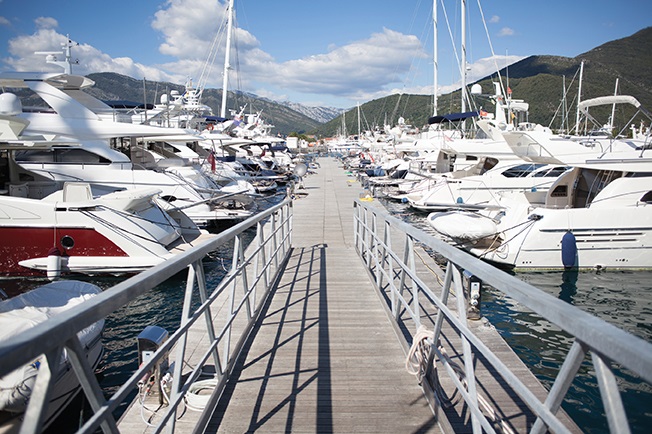
Although the proposed Article 554 (PI No. 1631) did not result in a first-draft revision to the NEC, CMP 19 acted favorably to expand the scope of Article 555 so that it covers boat-docking facilities at all residential dwellings. The article applies to areas comprising fixed or floating piers; wharves; docks; marinas; boatyards; boat basins; boathouses; yacht clubs; boat condominiums; docking facilities associated with single-family dwellings, two-family dwellings, multifamily dwellings, and residential condominiums; any multiple docking facility or similar occupancies; and facilities that are used for the purpose of repair, berthing, launching, storage or fueling of small craft and the moorage of floating buildings. (PI Nos. 1373 and 1374)
Article 691— Large-Scale Photovoltaic (PV) Electric Supply Stations
This proposed article will cover the installation of large-scale PV electric supply stations operated for the sole purpose of providing electric supply to the utility transmission or distribution system with an output power rating of no less than 5 megawatts alternating current (AC). Electric supply stations are locations containing the generating stations and substations, including their associated generator, storage battery, transformer and switchgear areas. Facilities covered by this article have specific design and safety features unique to large-scale PV facilities. NEC CMP 4 will have technical responsibility for this new article. (PI No. 3289)
Article 706— Energy-Storage Systems
This proposed article covers all permanently installed energy-storage systems (ESS), either stand-alone or interactive with other electric power production sources. It defines an ESS as a device or more than one device assembled together and capable of storing energy for future use. ESSs include, but are not limited to, electrochemical storage devices (e.g., batteries), flow batteries, capacitors and kinetic energy devices (e.g., flywheels and compressed air). These systems can have AC or direct current (DC) output for utilization and can include inverters and converters to change stored energy into electrical energy. NEC CMP 13 will have technical responsibility for this new article. (PI Nos. 4276 and 4219)
Article 712 —DC Microgrids
This proposed article will cover DC microgrids, which are defined within the article as power-distribution systems consisting of one or more interconnected DC power sources, DC-to-DC converters, DC loads and AC loads powered by DC-to-AC inverters. A DC microgrid is typically not directly connected to an AC primary electricity source, but some DC microgrids interconnect using one or more DC-to-AC bidirectional converters or DC-to-AC inverters. NEC CMP 13 will have technical responsibility for this new article. (PI No. 4027)
For more information and to view the proposed revisions, visit www.nfpa.org.
About The Author

Michael Johnston
NECA Executive Director of Codes and Standards (retired)JOHNSTON, who retired as NECA’s executive director of codes and standards in 2023, is a former member and chair of NEC CMP-5 and immediate past chair of the NEC Correlating Committee. Johnston continues to serve on the NFPA Standards Council and the UL Electrical Council. Reach him at [email protected].