Ensuring compliance with the National Electrical Code and the International Building Code (IBC) is paramount when designing and installing emergency electrical systems. These codes provide guidelines to guarantee the safety and reliability of crucial systems during emergencies. However, compliance doesn’t end with the NEC and IBC; professionals must also be familiar with other standards such as NFPA 101, NFPA 110 and NFPA 111. Misinterpretations or oversights can lead to significant pitfalls, compromising safety and code adherence. This article will explore some of the most common compliance issues that have occurred over the years during the design and installation of these critical systems.
NFPA 70, National Electrical Code
The NEC aims to safeguard people and property from hazards arising from the use of electricity. It typically provides minimum installation requirements to achieve this purpose. Occasionally, system performance affects installation methods, and the NEC establishes performance requirements directly tied to achieving its purpose.
Article 700 of the NEC is a prime example, covering systems that supply, distribute and control electricity for illumination or power during emergencies. Key aspects include system reliability, wiring methods, power sources and overcurrent protection. For instance, Section 700.5 requires that emergency system power sources have adequate capacity to safely carry all emergency loads expected to operate simultaneously. Transfer equipment must be automatic, identified for emergency use and approved by the authority having jurisdiction (AHJ).
International Building Code
The IBC focuses on the performance and design requirements related to emergency electrical systems. Chapter 10 addresses means of egress, including egress and exit illumination, while Chapter 27 specifies the electrical loads required to be connected to the emergency system. For example, Section 1008.3.5 mandates that emergency illumination levels shall be permitted to decline to a 0.6 foot-candle average and a minimum at any point of 0.06 foot-candles at the end of the emergency lighting time duration.
NFPA 101, Life Safety Code
NFPA 101 addresses construction, protection and occupancy features necessary to minimize threats to life safety during a fire. Chapter 7 establishes requirements for means of egress for new and existing buildings. Section 7.8 specifies that the means of egress shall be illuminated at all times the building is occupied, with emergency illumination provided for not less than 1½ hours in the event of normal lighting failure. Section 1030.6.2 requires a life safety evaluation complying with NFPA 101 for smoke-protected assemblies.
NFPA 110 and NFPA 111
NFPA 110 and NFPA 111 are standards for emergency and standby power systems and their alternate power sources. NFPA 110 covers performance requirements for emergency power supply systems, including classification, transfer switches, environmental considerations and maintenance. NFPA 111 addresses stored electrical energy in emergency and standby power systems, such as uninterruptible power supplies, central battery systems or other stored electrical energy.
Common compliance issues
Terminology confusion: A prevalent issue is the misuse of terminology. Engineers, contractors and AHJs often confuse emergency systems, legally required standby systems and optional standby systems. Although these systems may be connected to the same alternate power supply, they serve different purposes and have distinct requirements. Emergency systems are intended for immediate evacuation during emergencies. Legally required standby systems support first responders as they navigate the building during rescue efforts. Optional systems provide power for convenience purposes as specified by the building owner.
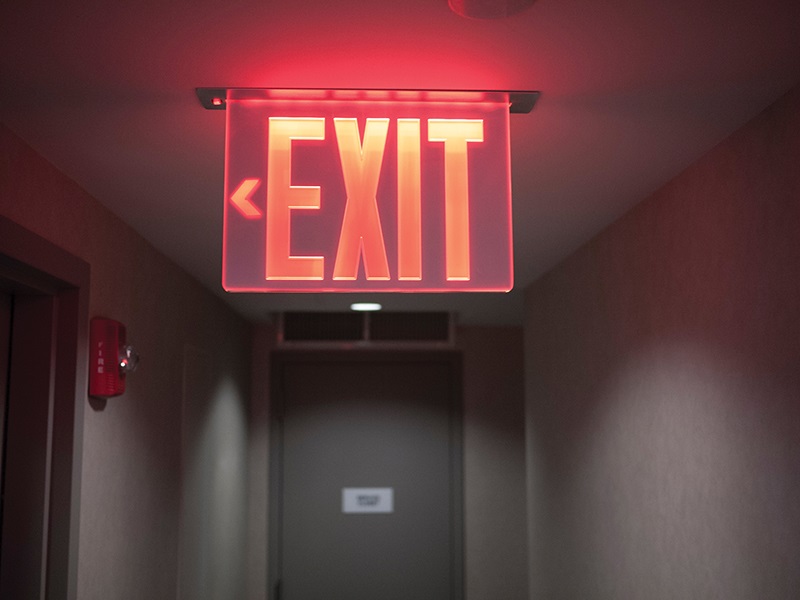
Permitted loads: The NEC details safety-related installation requirements for emergency systems, but does not provide a comprehensive list of required loads. For this information, refer to the IBC. Chapter 27 provides guidance on electrical loads required to be connected to the emergency system. For instance, Section 2702.2.6 mandates that exit signs be connected to the emergency system.
Selective coordination: Section 700.32 of the NEC requires selective coordination of all supply-side and load-side overcurrent protective devices for emergency loads. This ensures that a fault in one part of the system does not cause a complete system failure. Documentation of selective coordination must be available for those authorized to design, install, inspect, maintain and operate the system. Often, this documentation is incomplete or unavailable during inspections.
Emergency and egress illumination: While Article 700 of the NEC provides installation requirements for egress and exit illumination, the bulk of performance requirements are covered in Section 1008 of the IBC. Compliance with both codes is essential to ensure adequate illumination during emergencies.
Testing under load: Section 700.3 of the NEC requires emergency systems to be tested under maximum anticipated load conditions. The AHJ must witness commissioning, and testing should simulate power failure to verify that emergency and egress lighting operates as required. The premises must be dark enough during testing to allow the AHJ to properly check mandated illumination levels as specified in IBC Section 1008.2.1.
Best practices for compliance
To avoid these pitfalls, consider the following best practices:
- Engage qualified professionals: Ensure all personnel involved are knowledgeable in the NEC, IBC, NFPA 101, NFPA 110 and NFPA 111. Understanding when to consult the local AHJ is also crucial.
- Conduct thorough plan reviews: Meticulously review designs to identify potential compliance issues before installation. Even if local jurisdictions do not mandate electrical plan reviews, they may offer them as a fee-based service.
- Stay updated on code requirements: Codes and standards are periodically updated; staying informed helps maintain compliance. Remember, it is not just the NEC that governs these installations, so regular training on all the connected codes and standards will be necessary.
- Maintain documentation: Keep comprehensive records of system design, installation, testing and maintenance. This documentation should be readily available for inspection and future reference.
- Regular testing and maintenance: Establish a routine schedule for testing and maintaining of emergency systems to ensure functionality during emergencies.
Conclusion
Compliance with all applicable codes and standards is critical for the safety and effectiveness of emergency electrical systems. Understanding the requirements, as well as common pitfalls, can mitigate noncompliance issues and enhance safety. Remember, the overarching goal of these systems is to ensure safety and save lives.
Tim Bird / stock.adobe.com
About The Author

Kyle Krueger
Executive Director of Codes and StandardsKRUEGER is NECA’s executive director of codes and standards. He has worked in the electrical industry for over 25 years as an inside wireman, authority having jurisdiction and educator. Kyle currently represents NECA on the NEC Correlating Committee, Code-Making Panel 3, NFPA 72 Correlating Committee, NFPA’s Electrical Section Executive Board and the UL Electrical Council. Reach him at kkrueger@ necanet.org.