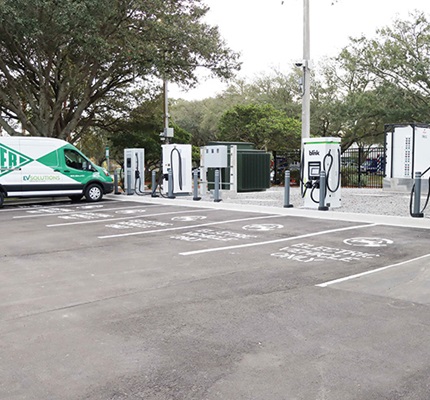
Electric vehicles are not the only mode of transportation undergoing infrastructure modifications to support charging and mobility. Helicopters and heliports throughout the United States are also attempting to go electric, and infrastructure to support this effort is underway in many locations, including New York City.
New York City is upgrading two of its existing Manhattan heliports to accommodate next-generation electric vertical takeoff and landing aircraft. City officials anticipate that commercial passenger service could begin this year, pending federal approvals.
The U.S. Department of Transportation and the Federal Aviation Administration have launched the Advanced Air Mobility and Electric Vertical Takeoff and Landing (eVTOL) Integration Pilot Program, selecting eight demonstration projects across 26 states to accelerate the commercialization of next-generation aircraft. The initiative is designed to help safely integrate electric air taxis and other advanced aircraft into the National Airspace System while providing the FAA with operational data needed to develop future regulations.
Flight demonstrations will evaluate a broad range of applications, including urban and regional passenger transportation, cargo delivery, emergency medical services, autonomous flights and offshore energy support. Participating organizations include the Port Authority of New York and New Jersey; transportation departments in Texas, Utah, Pennsylvania, Florida and North Carolina; the state of Louisiana; and the City of Albuquerque. Together, these pilot projects represent one of the nation's largest real-world test environments for advanced air mobility and are expected to shape the future deployment of commercial electric aviation.
In New York, the city’s Economic Development Corp. has directed operators of the East 34th Street Heliport and the Downtown Skyport near Wall Street to install the electrical infrastructure necessary to support electric aircraft.
Preparing the facilities involves considerably more than simply adding charging stations. Operators will need to work closely with electric utilities, aircraft manufacturers and existing helicopter service providers to determine each site's electrical capacity, charging requirements and operational layout. The upgrades are expected to include increased electrical service, dedicated charging equipment and accommodations for multiple aircraft platforms.
Industry leaders increasingly describe the current period as a turning point for advanced air mobility. As federal certification progresses and supporting infrastructure comes online, communities that begin planning today could be among the first to realize the benefits of commercial electric air taxi service.
While widespread adoption will depend on regulatory approval, infrastructure investment and public acceptance, New York City's preparations illustrate how major metropolitan areas are moving from concept to implementation as electric aviation edges closer to commercial reality.
About The Author

ROMEO is a freelance writer based in Chesapeake, Va. He focuses on business and technology topics. Find him at www.JimRomeo.net.