The 2026 National Electrical Code permits multiple services and systems to be installed for buildings or structures under specific conditions. Small buildings, such as dwelling occupancies, are typically supplied with only one service from a utility, while large ones often have needs that force the design to include more than one service. Some of the factors that result in the latter are provided in 230.4(A).
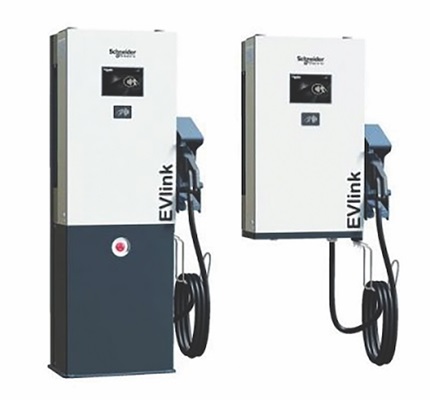
Another service could be installed on the premises, but not necessarily on or at the existing building or structure served. For example, at a motor fuel dispensing facility with or without a convenience store, there is a growing demand for installing electric vehicle supply equipment and EV fast chargers. This evolution usually results in additional service being installed on the building or structure to supply the EV charging loads. In this case, the additional service would be permitted under 230.4(D), which provides allowances for additional service to facility needs for different voltage characteristics on the same property, such as for EV charging loads and equipment operating at higher voltages.
How many services?
Section 230.4(E) indicates that where a building or structure is supplied by more than one service—or any combination of branch circuits, feeders and services—a permanent plaque or directory shall be installed at each service disconnect location that denotes all other branch circuits, feeders and other services supplying that building or structure and the area served by each. Additional requirements for service disconnects are also sometimes triggered when more than one service and service disconnecting means is installed at a building or structure, such as the service disconnect locations, grouping and so forth.
This article takes a closer look at a common problem that should be addressed in the design phases of projects related to adding electric service to an existing building or structure, especially if installed on the same premises. An example of this is if two services of different voltage characteristics supply a single building or structure. If a 480Y/277V, three-phase, 4-wire service and a 120/240V, three-phase, 4-wire delta-connected service supply the same building, they must be grounded using the same grounding electrode system.
When an AC system is connected to a grounding electrode in or at a building or structure, the NEC requires the same electrode be used for grounding conductor enclosures and equipment installed at that building or structure. When more than one service, feeder or branch circuit supplies a building, they must be connected to the same grounding electrode(s). The reason is to ensure that the same grounding potential is established among all grounded systems and conductive equipment installed in a single building or structure. This requirement can be satisfied by bonding two or more grounding electrodes or grounding electrode systems together as specified in 250.50 and 250.58.
As indicated above, there is a gap in the NEC that should be closed relative to additional services installed on the existing buildings or structure served and the new services installed on the premises for EV charging loads. The additional new service is sometimes located right next to the existing one suppling the building or structure.
However, in some situations, the new service and utility transformer are installed freestanding and remote from the building or structure supplied by the existing service. In these cases, the premises could very likely end up with a service supplying the existing building at one nominal voltage, and the equipment’s voltage requirements could be much higher for supplying EV fast chargers. These fast EV chargers often require 480V, three-phase power and significantly high kilovolt-ampere transformer capacity to supply the new charging loads.
The new service and associated transformer, often at a different and higher voltage, will require a grounding electrode. This new power source will typically have a grounded secondary. If installed at the existing building or structure, the common grounding electrode requirements in Section 250.58 apply. The grounding electrode for the new service should be either the existing grounding electrode system, or a new grounding electrode must be bonded to the existing grounding electrode system.
Two or more individual electrodes effectively bonded together are considered a single electrode and meet the common grounding electrode requirements in 250.58. The reason is very elementary and has to do with rendering all electrically conductive equipment and parts to be at or near the same potential to reduce electrical shock hazards. This is the main performance objective of bonding, as can be seen in the definition of the term and in the performance text in Section 250.4.
stock.adobe.com / petovarga
About The Author

Michael Johnston
NECA Executive Director of Codes and Standards (retired)JOHNSTON, who retired as NECA’s executive director of codes and standards in 2023, is a former member and chair of NEC CMP-5 and immediate past chair of the NEC Correlating Committee. Johnston continues to serve on the NFPA Standards Council and the UL Electrical Council. Reach him at [email protected].