The 2026 Super Bowl Halftime Show caught the world’s attention with Bad Bunny’s performance on a football field transformed with elaborate sets to portray the culture and history of Puerto Rico.
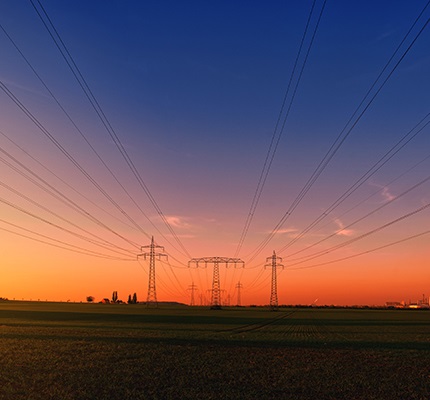
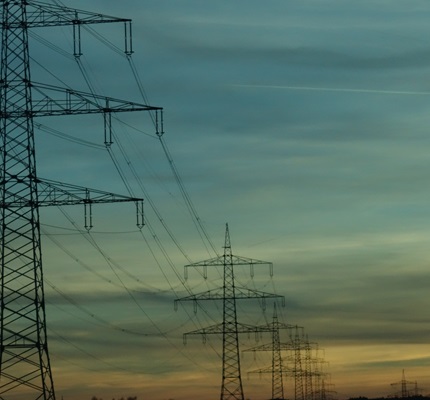
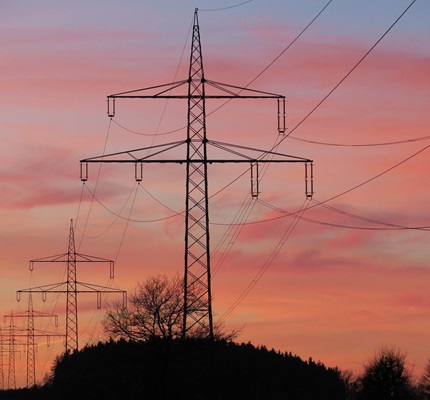
After striding through street scenes depicting men playing dominoes, vendors selling tasty foods and women building cinder block homes, Bad Bunny sauntered into a sugar cane field studded with mock power poles and transmission lines.
Climbing a power platform, he sang “El Apagon” (The Black Out), with lyrics suggesting the fragility of young love and the unreliability of Puerto Rico’s power grid.
Bad Bunny, also known as Benito Antonio Martínez Ocasio, was in his early 20s in 2017, when Hurricane Maria killed nearly 3,000 Puerto Rican residents and left the island without power for 11 months—the longest power outage in U.S. history.
Fortunately, efforts are underway to improve Puerto Rico’s power grid.
Hurricane Maria precipitated the establishment of a utility consortium to update and operate the Puerto Rican Electric Power Authority. The idea was to improve electrical service to the island’s 3 million residents and businesses, through regular tree trimming, innovative microgrids and hardening off of infrastructure with steel and concrete poles.
In 2021, Canada-based utility ATCO Ltd. partnered with Houston-based Quanta Services to form a joint venture called LUMA Energy LLC. The electric utility now serves the island and continues to build a more resilient electrical grid.
Two years ago, there were just three NECA contractors originating from and based in Puerto Rico. Now there are six, thanks to the Southeastern Line Constructors Chapter (SLCC), which continues to recruit island contractors and provide assistance with all aspects of business, including safety training, operations, administrative education and labor relations.
All of the SLCC NECA contractors perform work for LUMA through a contract negotiated by IBEW 222 and LUMA. Their work is expected to increase over the years.
“They [the new SLCC NECA contractors] stand with Bad Bunny,” said Stephen Gaines, SLCC NECA chapter executive. “He is a local success story they enjoy watching achieve and inspire others on the island to do the same. He’s also their cultural icon. But the Super Bowl show didn’t demonstrate the current levels of training and professional standards being employed by linemen and apprentices now working in Puerto Rico.”
In the stylized performance, the Super Bowl performers wore straw hats and hung from the mock power poles, suspended by hip harnesses. At one point they even swung upside down with feet pointing skyward.
Obviously, IBEW apprentices and journeymen generally avoid such moves. They also wear full body harnesses and hard hats in keeping with OSHA safety standards.
“When it comes to handling electrical power, apprentices and journeymen must go through formalized training,” Gaines said. “The utility will not allow people to work otherwise.”
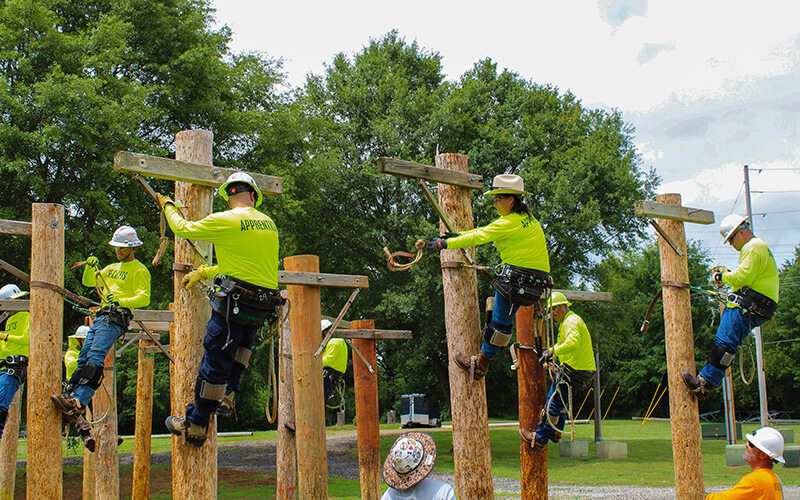
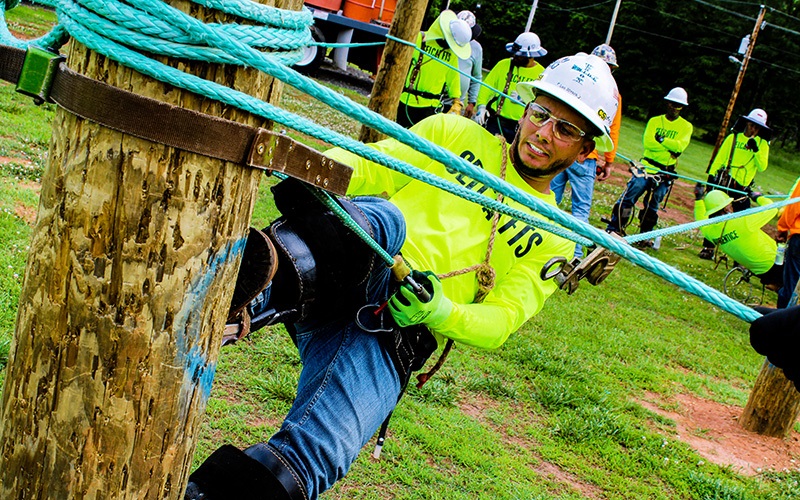
Puerto Rican apprentices receive instruction during Field Training Classes at the SELCAT facility in Newnan, Ga. Photos provided by SELCAT.
In 2022, Southeastern Line Constructors Apprenticeship & Training (SELCAT) started training Puerto Rican residents. The SLCC NECA-IBEW 222 program starts with two weeks of field training classes for up to 30 Puerto Rican residents at the SELCAT facility in Newnan, Ga., after they have completed all entry requirements for class.
Instruction covers electrical theory, safe climbing, maneuvering from elevated positions on wooden and metal structures, pole-top rescue, OSHA safety requirements and other preparation for industry-required certifications.
Apprentices later receive an additional 7,000 hours of hands-on training and full-time employment with Puerto Rican-based SLCC NECA contractors.
Much of that instruction takes place at the SLCC NECA-IBEW 222 satellite Field Training School in Puerto Rico. The facility features classrooms, administrative offices and a pole yard stocked with bucket trucks and other heavy equipment.
“It’s like a small city, simulating all aspects of what an apprentice would be exposed to in the field—including the metal and concrete poles, cross arms, transformers, single- to three-phase conductors, and more,” Gaines said.
The campus recently acquired a Tempest Trainer system, which energizes lines to simulate real-world conditions.
The school also employs multiple state-of-the-art simulators to teach crane and digger derrick use. The devices feature realistic vibrating controls that provide feedback necessary for learning crane and digging operations.
Puerto Rico’s power problems won’t go away overnight. However, Gaines said, “We’re in a consistent pattern of training apprentices. We’re cultivating a well-trained workforce to address our contractors’ needs and to help provide reliable power services to Puerto Rico.”
About The Author
.jpg?sfvrsn=a64b988b_1)
DeGrane is a Chicago-based freelance writer. She has covered electrical contracting, renewable energy, senior living and other industries with articles published in the Chicago Tribune, New York Times and trade publications. Reach her at [email protected].