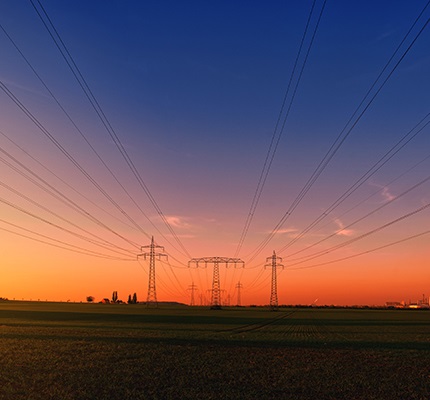
Damage to power grids and other critical infrastructure caused by wildfire, hurricanes, tornadoes and other natural disasters is expected to more than double to $460 billion in average annual losses globally by 2050—but leveraging artificial intelligence can enhance infrastructure resilience against such disasters.
Indeed, integrating A.I.-powered solutions for hazard mitigation and vulnerability reduction alone by 2050 could save roughly $70 billion in costs caused by disasters each year, about 15% of projected average annual losses—in conjunction with other resilience measures, according to Deloitte’s June 2025 report, “A.I. for Infrastructure Resilience.”
Moreover, with improved A.I. capabilities, savings could exceed $110 billion annually, the authors contend.
“Digital twins, for example, can simulate and stress-test infrastructure designs, which can lead to more disaster-resilient assets,” the authors wrote. “A.I.-powered predictive maintenance can help prevent technical failures and ensure operational continuity. For instance, applied to an offshore wind turbine, it has the potential to reduce downtime by 15%, and increase annual revenues by up to 6%.”
A.I. can also play an important role in hazard mitigation, according to the report. Real-time surveillance of forests with IoT sensors and satellites can help detect wildfires early enough to suppress them before they are uncontrollable.
“Despite this enormous potential, the path to widespread implementation of A.I.-enabled resilience in infrastructure systems is challenging,” the authors wrote. “Obstacles include technological limitations, financial constraints, regulatory uncertainty and institutional inertia.”
Stakeholders, including policymakers, infrastructure operators, technology companies, financial institutions and insurance companies, should work together to realize A.I.’s potential to enhance infrastructure resilience, according to the report.
“Coordinated and decisive action across stakeholders is important to help build infrastructure systems that are prepared for the challenges of a changing world,” the authors wrote. “By forging an ecosystem that is resilient to disruption and reinforced with A.I. across the phases of resilience—planning (prevent), response (detect and react), and recovery—a safer, smarter and more resilient future awaits.”
About The Author

KUEHNER-HEBERT is a freelance writer based in Running Springs, Calif. She has more than three decades of journalism experience. Reach her at [email protected].
.tmb-art-li-th.png?Culture=en&sfvrsn=9278ce2b_1)