You're reading an older article from ELECTRICAL CONTRACTOR. Some content, such as code-related information, may be outdated. Visit our homepage to view the most up-to-date articles.
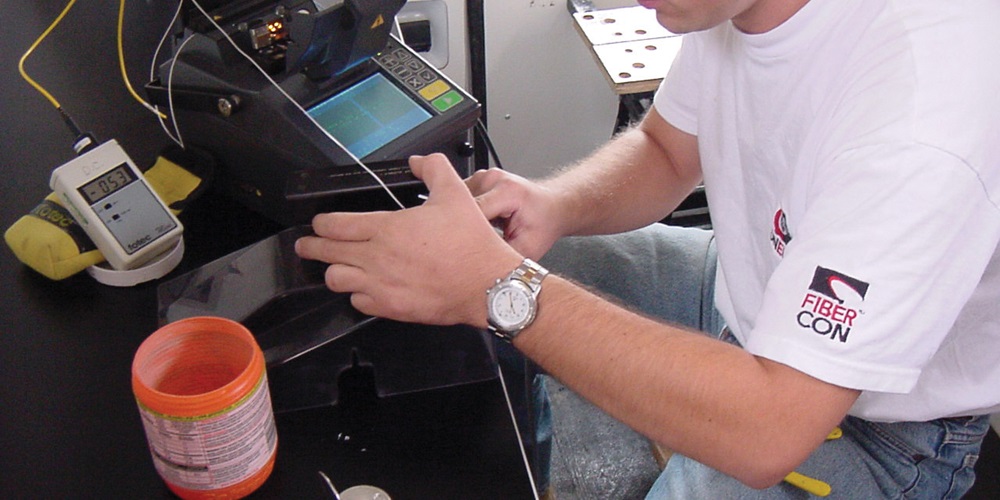
In the last issue, I wrote about the practice of splicing two fibers with a fusion-splicing machine. This month, I discuss some secrets that experienced splicers have learned—often the hard way.
To begin, it’s important to ensure all of your tools are in good condition. The simplest tools, such as cable strippers and fiber strippers, can cause problems by breaking or nicking fibers that can cause breaks during the splicing process.
If you are used to making terminations, you are probably used to stripping only a short length of fiber, but with fusion splicing, you may need to strip much longer lengths, typically several inches. You also need to be careful not to break fibers when stripping, because the fiber lengths must be long enough to fit into the splice trays after splicing. If you break the fiber a couple of times, it may not fit. Depending on which works best for them, fusion-splicing veterans use different types of strippers. It is worth trying different types to see what works best for you.
The fusion-splicing machine and its fiber cleaver require regular maintenance and cleaning. The electrodes that fuse the fibers need adjustment and periodic replacement. The blade in the cleaver will wear out and need replacement. Splicer and cleaver maintenance and repair may require a trained technician at a repair center. Such service can take time, so if you wait until the last minute to inspect it, a technician may not be able to finish the work before your deadline.
If you are new to splicing, get to know your tools and splicing machine. Set up in a quiet office or lab with some fiber, your tools and the splicer instruction manual. If the manufacturer has online videos, watch them multiple times to learn the basics and pick up the subtleties.
Keep a copy of the instruction manual for the cleaver and the splicer. If the instruction manual is online, print a copy or download it to your mobile device, and keep it available for reference when using the tool in the field. This can be very important if you have problems with the equipment.
Splicing machines are automated, so they do most of the work for you. But it is necessary to choose the proper program for the type of fiber you are splicing. Different types of fiber require different programs, and the manufacturer has worked hard to develop programs that produce the best splices. To choose the proper program, you need to know what kinds of fiber you are splicing, and you need to know how to change the machine’s programs.
Another secret to successful splicing is proper fiber cleaving; the fibers must be perfectly cleaved to get a good splice. Most fusion splicers come with a manufacturer-recommended cleaver, which should provide many good cleaves if properly handled and maintained. Do not drop it or bang it around. Clean it regularly. Most of these types of cleavers do not require “technique,” but they require following procedures precisely, so read the instructions carefully.
After you cleave the fiber, use lint-free wipes and a special fiber cleaner or lab-grade isopropyl alcohol to clean it. Do not use medical alcohol because it’s mostly water, which will harm fiber. After cleaning, do not lay the fiber on a table—instead, place it immediately into the splicer so it does not get dirty.
Once you make the splice, protect it by fitting a splice protector. The most common type is a tube covered with heat-shrink plastic tubing. The splice machine will have a heater to shrink the protector over the splice. Because it’s a tube, it must be slipped over one of the fibers being spliced before starting the five steps listed above. Nothing is more frustrating than making a good splice, realizing you forgot the splice protector, having to break the splice and do it again. Some protectors clamp over the fiber, but the shrink types are most common, probably because they are the best.
When you have your tools and equipment ready and have reviewed the procedures, start practicing. Remember there are five steps: strip, clean, cleave, splice and protect. It’s important to follow the steps carefully. Practice until the process is second nature to you.
When you feel you have become proficient, carefully clean all of your tools and equipment, and pack it all away so it will be ready for the next job. Remember to charge the unit before you take it into the field.
About The Author

HAYES is a VDV writer and educator and the president of the Fiber Optic Association. Find him at www.JimHayes.com.