You're reading an older article from ELECTRICAL CONTRACTOR. Some content, such as code-related information, may be outdated. Visit our homepage to view the most up-to-date articles.
The year 2020 has long been anticipated as the year that the smart home would become mainstream. However, according to a January 2016 report, “2016 Is the Year Smart Home Technology Will be Mainstream,” published by Coldwell Banker Real Estate LLC, things appear to be moving faster than once expected.
Based on a survey of some 4,000 U.S. adults, the report reveals that homeowners are more willing than ever to pay extra to “smart stage” their homes. Some 45 percent of Americans own, or plan to invest in, smart-home technology in 2016. Of people who do not currently have it, 27 percent say they will incorporate it into their lives in 2016.
Of people who either already have smart-home technology or plan to invest in it in 2016, 36 percent do not consider themselves to be “early adopters.” Furthermore, 70 percent of people with smart-home technology said that purchasing their first smart-home product made them even more likely to purchase others.
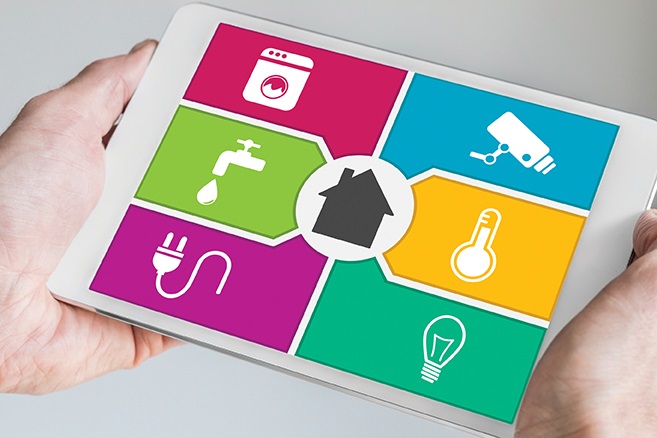
What do survey participants consider to be included in smart-home technology? The following were the top four responses:
- Security systems (locks and alarm systems) (63 percent)
- Temperature control systems (thermostats and fans) (63 percent)
- Lighting systems and bulbs (58 percent)
- Safety systems (fire detectors, carbon monoxide detectors, night lights) (56 percent)
According to 76 percent of respondents, having only one category of smart technology in a home is not enough to be considered a “smart home.” Furthermore, 60 percent reported that a home needed to have at least three categories of smart products to be considered a “smart home.”
While conventional wisdom has suggested that younger homeowners are the only ones interested in smart-home technology, survey results suggest otherwise. In fact, in at least one category, older homeowners are adopting the technology faster than younger ones. Specifically, 40 percent of those over 65 who own smart-home products currently have smart-temperature products, while only 25 percent of millennial homeowners (ages 18 to 34) own such products.
Income and education don’t seem to play differentiating roles in the growing interest of home technology. In fact, interest seems to be universal. Of those with incomes $50,000–$75,000, 25 percent are adopting home technology, and, of those with incomes $75,000–$100,000, 26 percent are adopting home technology. In addition, 27 percent of college graduates are adopting smart-home technology, while 26 percent of those with only some college are adopting smart-home technology.
For more on this topic, see this month's Technology column.
About The Author

ATKINSON has been a full-time business magazine writer since 1976. Contact him at [email protected].