You're reading an older article from ELECTRICAL CONTRACTOR. Some content, such as code-related information, may be outdated. Visit our homepage to view the most up-to-date articles.
Whether a one-man shop or multidivision contracting company with hundreds of employees, electrical contracting companies and electricians need trucks.
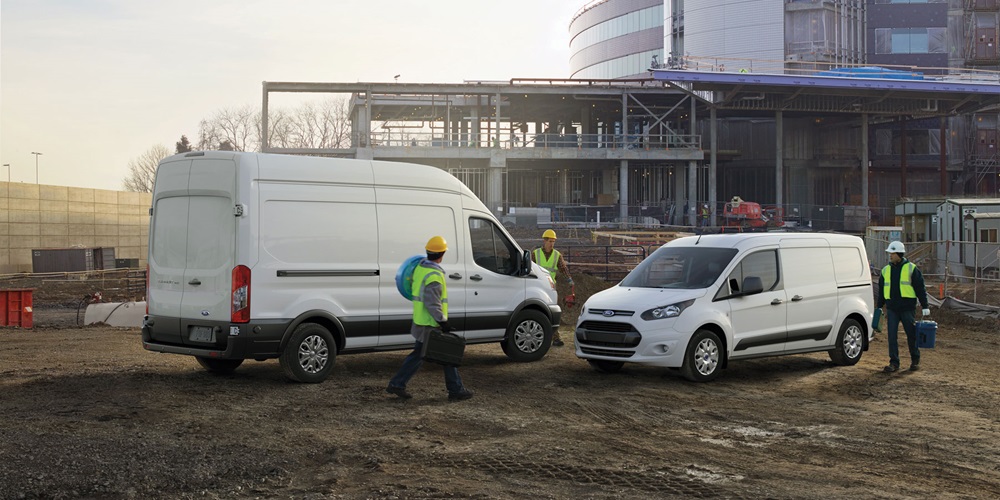
Vans remain the most popular choice for electricians. However, options have changed with both European-style, full-size vans and compact models gaining popularity. Low-cab-forward (LCF) trucks with a box van provide more cargo space and stand-up room, and pickup trucks still have a place in many electrical fleets.
Ford, General Motors (GM), RAM, Daimler, Nissan and Isuzu aggressively market commercial trucks to the electrical industry. Four manufacturers accepted ELECTRICAL CONTRACTOR’s invitation to provide information about their commercial service trucks.
“The most obvious trend is the move toward European-style, full-size vans,” said Yaroslav Hetman, brand manager at Ford for Transit, Transit Connect and E-Series trucks. “Ford introduced the Transit full-size van to the North American market in June 2014, and in less than six months, it had supplanted the venerable Ford E-Series as the best-selling van.
“Why? Transit offers up to 46 percent better fuel economy than E-Series and traditional American vans. It provides best-in-class gas-engine maximum cargo capacity that’s up to 75 percent more than the largest E-Series van. Because it is 300 pounds lighter than E-Series, Transit can provide greater payload, as well as fuel-economy improvements. There is a big push by customers to be able to right-size their vehicles for specific needs. In the past, customers were forced to make tradeoffs because of available vehicles’ limitations. With the introduction of a wider range of vans, it’s easier for customers to get exactly the vehicle needed for a particular application.
“We took the right-sizing possibilities further with the new Transit full-size van with a best-in-class 58 configurations directly from the factory, including van, wagon, chassis cab and cutaway variants. Adding all the potential upfits available, there are infinite possibilities for creating a vehicle customized for any given application.
“With Transit, electricians and electrical contractors can design exactly the vehicle they need for their specific applications. In fact, we created an entirely new website to help customers figure out the exact configuration to meet their needs: www.transitbodydecoder.com. For right sizing, the Transit Connect compact commercial van provides up to 149 cubic feet of cargo space in a vehicle that also has a tight turning radius (as low as 36.1 feet) and up to 28 miles per gallon [mpg] in highway fuel economy.
“Transit and Transit Connect offer many advantages over previous generation vans and even pickup trucks, since they enable electricians and other tradespeople to stand up straight in the back, creating a mobile workshop and providing ample space for a lot of gear. For applications where a truck is preferable and for increased towing capabilities, customers can choose from the F-150 up through Super Duty pickups. For upfitting, customers have the choice of either using our network of ship-through upfitters near the Ford Kansas City Assembly Plant [KCAP], where every Transit is built, or upfitters who work with local Ford dealers,” Hetman said.
GM offers plenty of options, as well.
“Over the past three years, General Motors has worked to offer leading fuel efficiency and technology, such as the availability of OnStar, Commercial Link, and top safety features, in every fleet and commercial vehicle,” said John Schweg-man, GM director for commercial products. “GM cargo vans are the best fit for the needs of the electrical market due to the suitability for upfitting to meet the needs of their business. In the van category, GM offers the Chevrolet Express Cargo and the Chevrolet Express Passenger. The nimble Chevrolet City Express is another option to consider. With an EPA-estimated 24 mpg city and 26 mpg highway, as well as 122.7 cubic feet of customizable cargo space, the City Express was designed to capably provide products and services for the financially minded customer.”
Schwegman discussed situations where pickup trucks might be a better choice.
“A pickup may be preferred over a van because of its towing capabilities,” he said. “Additionally, trucks are also easier to drive in heavily populated areas. A truck may also be preferred because, depending on the model, it may deliver better fuel economy. Some may also find it easier to load and unload cargo from the truck’s bed and back seat.”
GM truck offerings include the Chevrolet Colorado, the GMC Canyon and the GMC Sierra, all available in 1500, 2500HD and 3500HD models.
“The decision between choosing gasoline or diesel—as it is with other vehicle choices—comes down to individual customer needs,” Schwegman said. “The need for a larger, more capable truck will typically lean in favor of a diesel solution. While it’s true they offer better fuel economy and long-term durability, the capability and economy also comes with a significantly higher upfront cost.
“Natural gas models are available on trucks such as the Chevrolet Silverado 2500/3500HD, and demand for such vehicles is increasing. At this time, GM hybrid trucks are not available.
“For a small electrician purchasing one or a few trucks, the best choice is [a] specialized truck that fits the needs of the business, considering cab design, price and engine/fuel economy. A large electrical contractor operating a fleet of trucks should consider the above factors, and also review available technology, such as OnStar and 4G LTE.
“For the past six years, there has been a steady increase in new truck purchases for use in the electrical market,” he said.
Nick Cappa, spokesperson at RAM Truck, discussed current van trends.
“There is a rapid movement to efficiency and right-sized vans and away from V8-powered, rear-wheel-drive vans with very little interior space and low fuel economy,” he said. “Cargo van availability has made an incredible move towards more cargo space and better fuel efficiency while segmenting the market into small and large van offerings.
“For example, the RAM ProMaster offers impressive fuel economy with a 3.0-liter EcoDiesel and gas V6 with 285 horsepower, both tied to an exclusive front-wheel-drive system providing traction in all environments. In the electrician’s world, it is hard to beat a van due to the security of cargo, and upfit shelving and racks. However, a pickup’s towing capacity, oversized cargo, large utility beds and alternative use as a family vehicle could impact the decision.
“RAM Commercial has a full line of trucks, chassis cabs and vans: RAM ProMaster City (small van); RAM ProMaster (full-size van); RAM ProMaster chassis cab (class 2); three RAM pickups in 1/2-, 3/4- and 1-ton models; and larger chassis cab options.
“Upfits are available through RAM dealers, and we have bailment pools that keep stock of popular upfits. The largest percentage of upfits are done by third parties or the upfitters themselves. We have developed relationships with a number of upfitters, which are housed in a dedicated RAM Commercial Upfit Center, which is located next to the RAM ProMaster plant to expedite the installation and shipment to customers. Mopar does offer some upfits.
“Sales splits between gasoline and diesel depends greatly on segment: about 15 percent diesel in the large van segment and RAM 1/2-ton EcoDiesel, and around 80 percent in heavy-duty segments. RAM doesn’t offer a CNG van, but does offer a 1-ton CNG pickup. We do not offer a hybrid commercial vehicle,” Cappa said.
According to Brian Tabel, executive director of marketing at Isuzu Commercial Truck of America, his company’s trucks aim to make life easy for the customer.
“Isuzu LCF can provide a truck with increased payload, increased body length capability, greater fuel economy and a lower cost of ownership. While vans and pickups certainly have their place and application, an Isuzu LCF truck can provide a more versatile work truck, many times at an initial cost that is not that different (evaluating cost versus benefit received) than the cost of a working pickup, larger Euro-style van or cutaway van.
“Many electricians are attracted to Isuzu LCF trucks because of their versatile design which allows a variety of upfitting options, including utility bodies of steel, aluminum or fiberglass and stake bodies with hardwood or steel construction. Enclosed utility bodies have become very popular for their versatility and security, and they can be easily outfitted with shelving, drawer organizers, conduit carriers and wire spools, allowing the contractor to organize their workspace. Isuzu partners with a number of leading body manufacturers. Specialty bodies and contractor specifications can be coordinated, designed and upfitted through a local Isuzu dealer.
“Isuzu offers N-Series trucks with two diesel engines and a gasoline engine that is CNG or LPG capable; engine choices that provide the most efficient operation for owners’ specific applications. Isuzu diesel engines are B20 biodiesel capable. Isuzu diesels have proven fuel-economy savings and can provide fuel efficiency without the cost of more expensive hybrid technologies. Ninety percent of Isuzu diesel engines are still in service and operation.
“Isuzu provides class 3 through 5 LCF trucks in a wide range of GVWRs with two cab configurations, standard cab and crew cab. Current Isuzu diesel models are the NPR, NPR-HD, NQR, and NRR in GVW ranges from 13,000 pounds to 19,500 pounds GVWR. Gas models include the NPR, NPR-HD and NQR in GVW ranges from 12,000 pounds to 16,500 pounds GVWR.
“Working trucks require maintenance, and support is a key component of lifecycle operation and the total cost of ownership. To sustain the durability of Isuzu’s performance capabilities, our nationwide dealer organization provides numerous maintenance and support programs to assist owners in realizing maximum vehicle uptime,” Tabel said.
About The Author

GRIFFIN, a construction journalist from Oklahoma City, can be reached at [email protected].