As electricians, we own tools that cut wire and cut and deburr conduit. We also have tools that remove insulation from conductors. But let’s face it—without stripping the conductor insulation at the termination points, they aren’t going to be much good for anything!
Stripping wire forms a large part of any electrician’s skill set. And with so many options available, what are the right tools to choose? Large ones, small ones or powered ones? This article will discuss different types of wire strippers and how to make the best choice for the job.
Smaller conductors
Many of us (myself included) prefer a set of wire strippers that do nothing other than cut and strip wires. Sycamore, Ill.-based Ideal Electrical’s 45-120 T-Stripper wire strippers fall into this category. They will cut and strip wires ranging from 10–18 AWG solid and 12–20 AWG stranded. The handles are thin, comfortable and spring-loaded—all of which are a blessing when using them for a long time. The strippers also have looping holes for bending conductors to fit around device screws. Several additional models are available for different wire ranges. Simply put, they are light, nimble and simple—precisely what’s needed without over-complicating the tool.
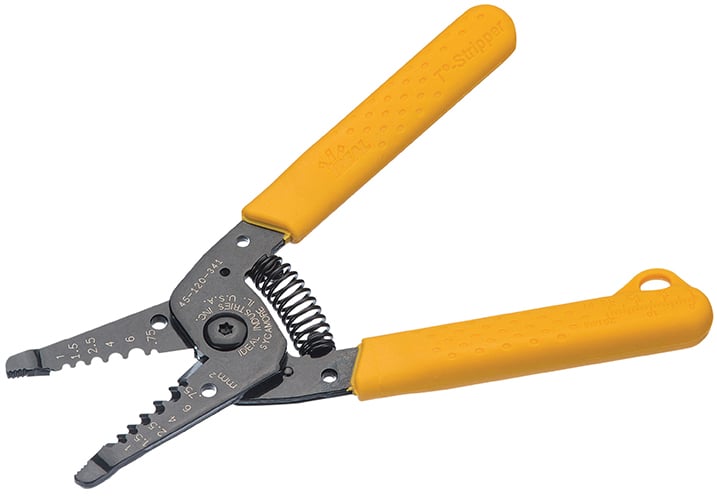
Ideal Electrical's 45-120 T-Stripper
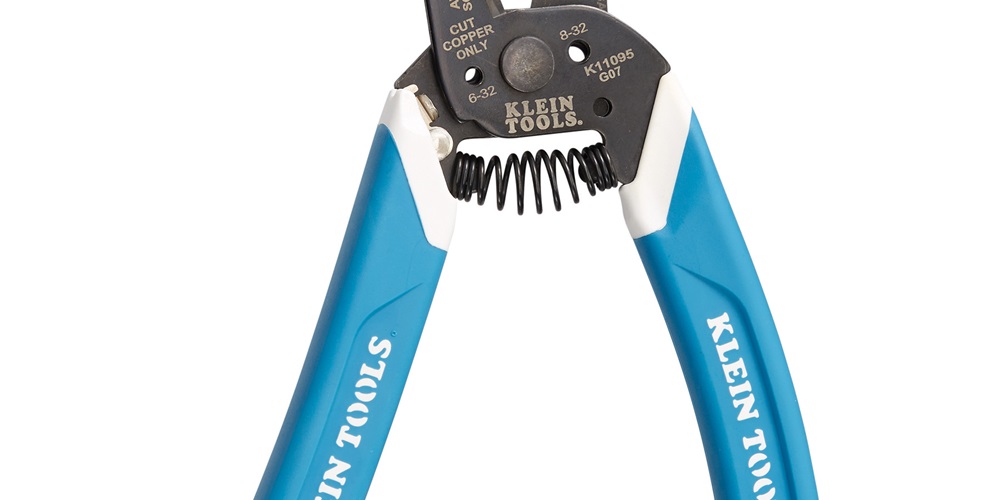
Having said that, ergonomics play a large part in tool design today. Many electricians prefer tools with handles that are slightly bent to fit the contour of the hand. Klein Tools, Lincolnshire, Ill., offers the K11095 Klein-Kurve wire stripper/cutter, which is a fitting example of a tool that has been improved over time. The handles are slightly curved to provide some ergonomic relief, and the comfort grip extends further up the tool to prevent hands from contacting the metal of the stripping head. These strippers also have a greater range of conductor stripping to accommodate common wire ranges. They will cut and strip conductors from 8–18 AWG solid and 10–20 AWG stranded. In addition, this tool has screw shearing holes capable of cutting 6–32 and 8–32 screws to a particular length. These two screw sizes are the most common for devices, plates and fixture mounting fasteners. These strippers are also available in different wire ranges to suit what is most common for a particular installation.
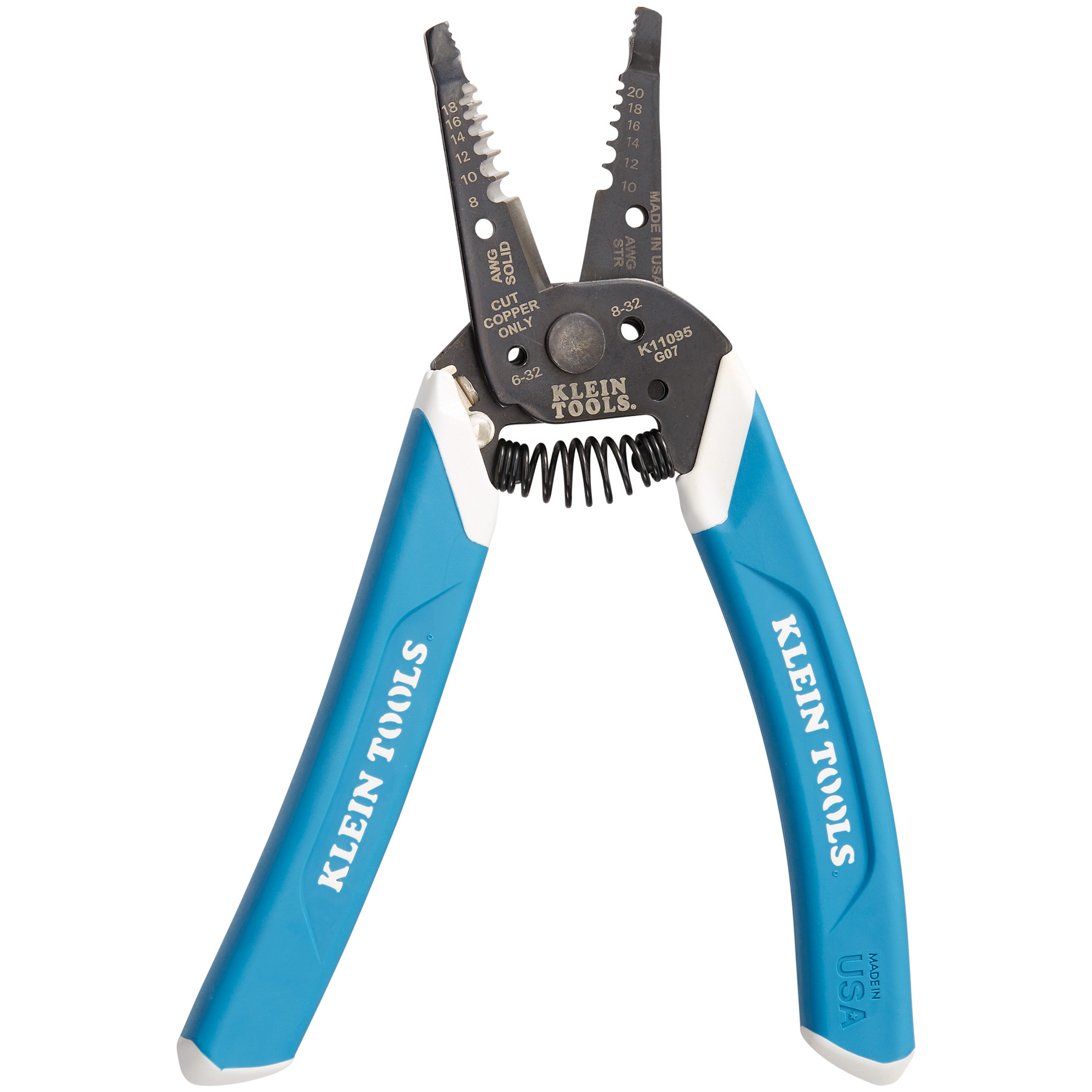 | 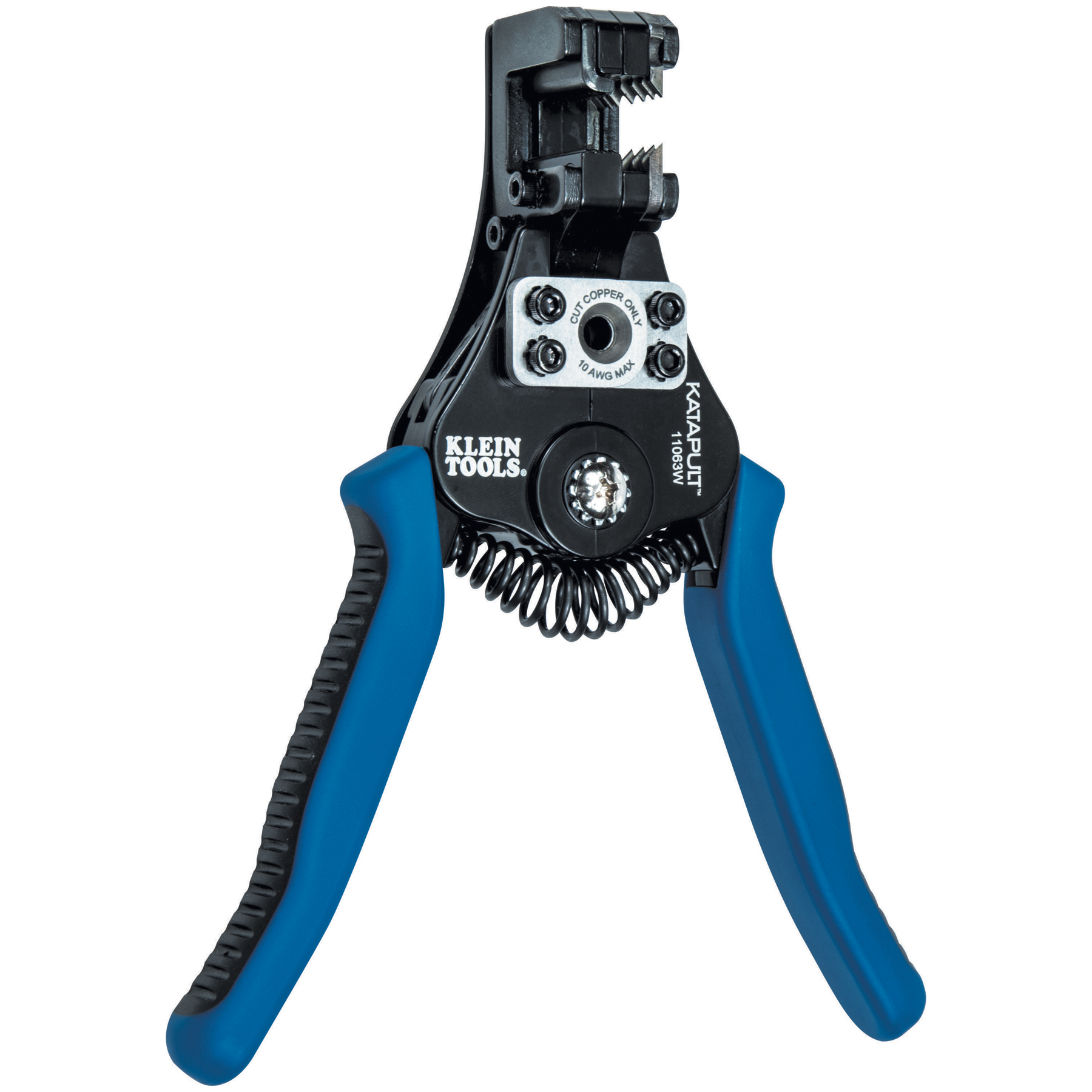 | |
Klein Tools’ K11095 Klein-Kurve | Klein Tools’ 11063W Katapult |
Automatic wire strippers
While most of us prefer manual wire strippers, there are instances where an automatic one would be extremely useful. Installations such as control panel wiring or branch-wiring panels require speed, consistency of strip length and accuracy. Klein Tools’ 11063W Katapult wire stripper and cutter is a great tool to have if you are doing any quantity of repetitive wire stripping.
In lieu of inserting the wire into the appropriate cutting slot of traditional wire strippers, then using the tool to slide the insulation off the end, this tool does it all in one smooth motion. One side holds the wire (gently so as not to compromise the insulation that will remain on the conductor), while the proper size hole on the other side of the tool cuts and pulls the insulation off. The stripper can remove up to 1 inch of insulation, suitable for most applications. In addition, the parts of the tool that come into contact with the wire are replaceable. It is very convenient not to have to replace the entire tool, just the wearable parts.
For those of us working strictly in panels (specifically control-type panels), Panduit, Tinley Park, Ill., offers an automatic wire stripper with a few added features. The ST-100 wire cutter and stripper is self-adjusting, meaning users do not have to insert it into a particular stripping hole based on wire size. Simply insert the cable into the tool up to the point of the adjustable stop and squeeze. The adjustable stop provides the consistent and accurate strip lengths needed to install conductors into a breaker, terminal block or installation of a ferrule or wire spade. The stripping blades do not require tools to change out and the handle allows for blade storage. Another advantage of this tool is that it strips the wire head-on, rather than from the side like other automatic strippers. This is a must-have tool for anyone working in control panels.
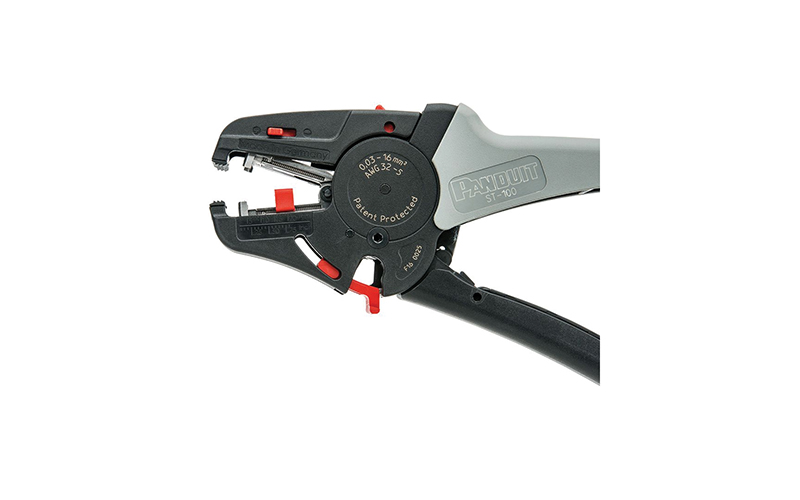 | 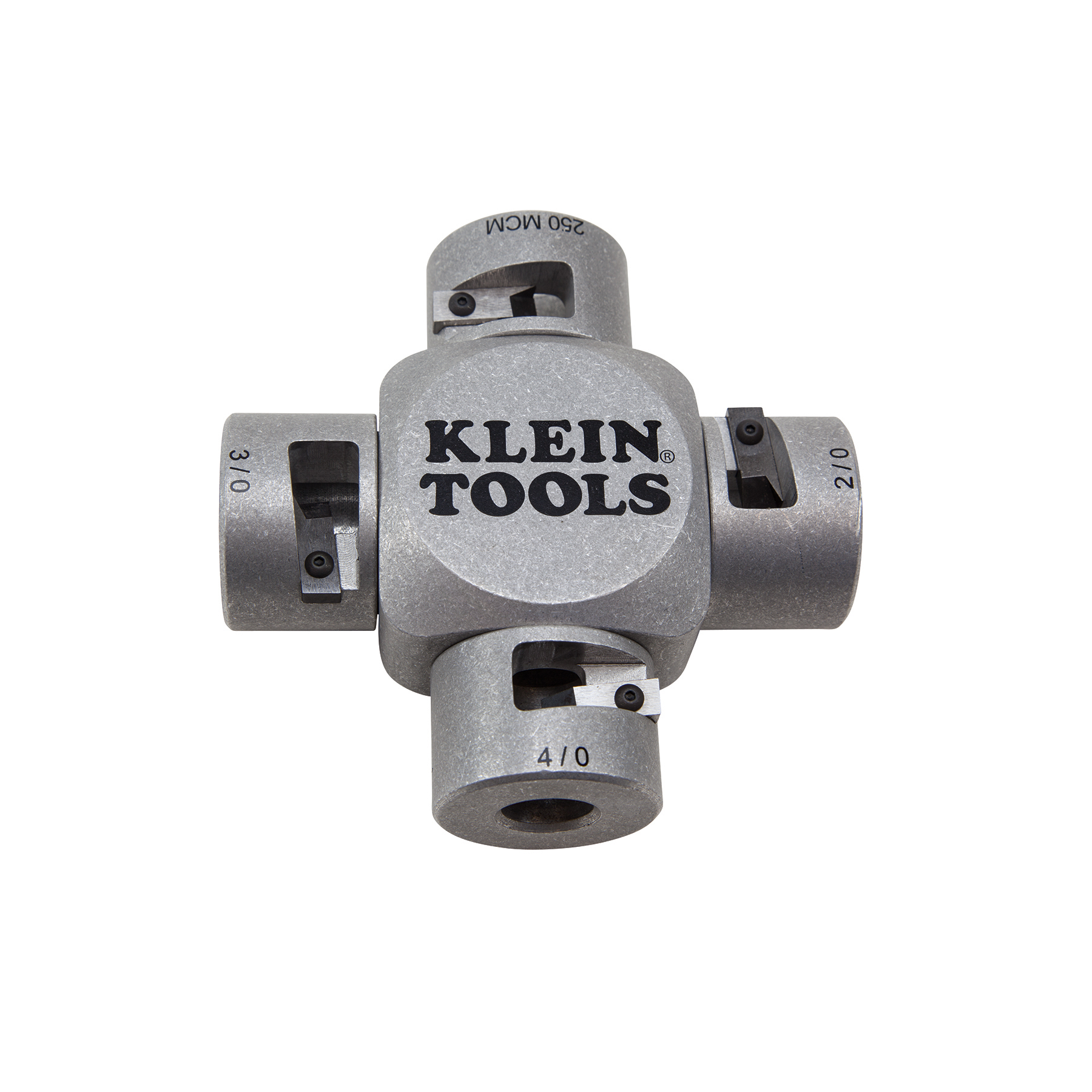 | |
Panduit Pan-Term self adjusting | Klein Tools large cable |
Stripping larger conductors
For most of us, when it comes to stripping larger conductors, we usually just pull out our razor knives (which is fine if we are careful and do not score the wire—that just adds a multitude of issues!) to remove the insulation. But there are products that help us safely and efficiently remove insulation from larger wires.
Klein Tools offers a manual tool with its 21051 large cable stripper. Looking something like an “X,” this one tool can strip four common larger wire sizes—2/0, 3/0, 4/0 and 250 kcmil. Quicker, safer and more precise than using a razor knife, simply insert the cable into the appropriately sized hole and twist until you have the required amount of insulation removed. Model 21050 is also available for cable sizes of 350, 500, 600 and 750 kcmil. Both models offer replacement blades, so the entire tool need not be replaced when the blades get dull. It is a compact tool to own when stripping large wire for panels or gear.
Milwaukee Tool, Brookfield, Wis., offers a cable stripper kit based on the company’s M18 tool platform. The 2935CU-21S kit is battery-powered and improves the efficiency and safety of stripping larger conductors. The set includes an impressive array of bushings, which enables users with this kit to strip cables ranging from 1/0AWG CU through 750 kcmil CU THHN/XHHW. It has a compact right angle design that allows this tool to be used in tight spaces (in a panel can interior, for example). To use it, simply select the correct bushing, set the gauge to the desired depth (up to 3 inches) and insert the cable into the open end of the tool. The tool’s trigger is also variable-speed, which gives us the ability to control the strip.
Milwaukee Tool also offers kits for stripping aluminum THHN/XHHW and RHW/RHH/USE cables. If you already use this platform, it makes sense to keep using the same battery platform you already have. This is a must-have power tool to provide safe, efficient and consistent strips in large wire.
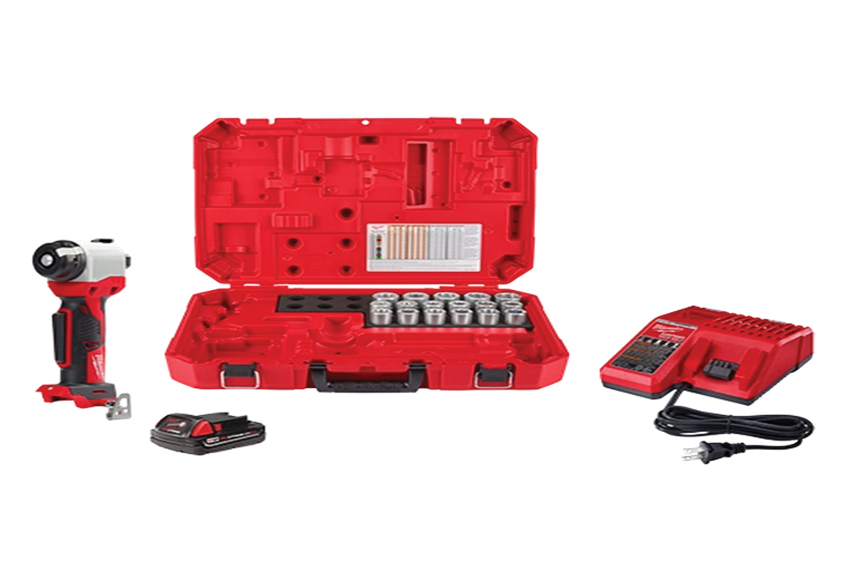
Milwaukee Tool M18 cable stripper kit with bushings
Additional considerations
Since many of us have an impact drill in our arsenal, it makes sense to design a tool that will work with an impact drill to strip wire. Milwaukee Tool recently released a line of wire strippers meant to be inserted into a impact drill to strip the most common branch wire sizes—8 AWG through 14 AWG. By using a power tool to do the work, this takes the pressure off wrists over years of stripping wire, reducing the effects of repetitive strain injuries such as carpal tunnel syndrome.
To use these, simply select the stripper size based on the wire you need to strip, set the strip length (the shank of the tool has laser-etched markings to assist from ½–1½ inches), insert the wire and, a second or so later, it’s stripped. This can also be paired with the 48-32-6400 wire nut twister, making the efficiency and overall long-term hand-saving benefits ever greater. The 48-32-6406 4PC solid wire stripper set will quickly become a staple for any electrician.
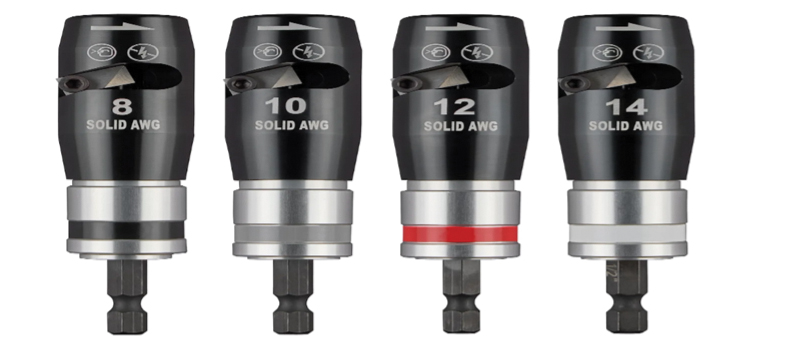
Milwaukee Tool 4PC solid wire stripper set 48-32-6406
Care
Wire-stripping tool care is no different than any other kind of maintenance. Keep the tools in a dry location to prevent rust. Periodic coating with some type of rust prevention/lubrication (WD-40, for example) will help keep the tools operating as they should. It is also imperative to keep the cutting/stripping teeth sharp.
Do not attempt to cut something the tool was not designed for. For instance, most strippers are meant to cut or strip soft metals such as copper or aluminum. Cutting materials such as steel will ruin the cutting surfaces. We also should not attempt to file or grind the blades when they become dull or nicked, as this could damage the blade or change the actual angle. It is better to replace them at that point. Many manufacturers offer replacement blades and parts, and it certainly would be prudent to keep a spare set close at hand to keep your strippers in tip-top condition.
Finally, treat stripping tools with the same respect as other tools. Store them in a tool bag or box—they do not belong in the truck bed or haphazardly launched into the gang box at the end of the day. Either of these scenarios could result in damage to the tool, and it won’t operate properly when needed.
Conclusion
Wire stripping may seem like a simple task, but the right tool can make a big difference in efficiency, safety and workmanship. From lightweight handheld strippers to automatic models and heavy-duty cordless options, there is a range of tools to suit any job.
While they may not get the spotlight like drills and benders, stripping tools are essential for clean terminations and smooth workflow. Investing in the right wire stripper and taking care of it reflects professionalism, protects the conductors’ integrity and makes our job easier and safer.
milwaukee tool | Ideal Electrical | klein tools | Panduit