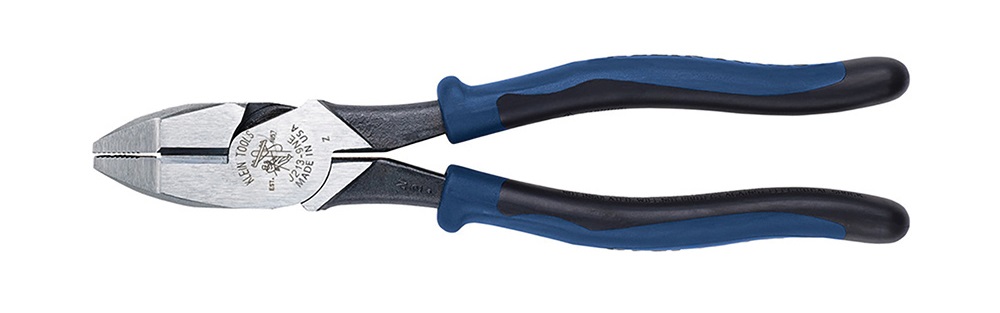
There is, perhaps, no tool more synonymous with the electrical trade than lineman’s pliers. Every electrician owns a pair, and most of us carry and use them daily. Lineman’s pliers are involved in more tasks than almost any other hand tool in our arsenal.
Because they are so familiar, however, they are often overlooked as the unsung heroes they are. Many of us tend to grab the first pair seen on the shelf or replace our worn-out pliers with whatever looks similar to what we currently own. But considering how often these pliers are used, as well as how hard we work them, there is good reason to be more intentional when making choices. Subtle differences in size, balance, cutting performance and grip design can noticeably affect what matters the most—comfort, efficiency and longevity.
This article takes a closer look at general considerations when selecting lineman’s pliers and how brand loyalty fits into the equation, as well as some specialty pliers.
General considerations
Considering all the advances in technology, how has a simple pair of pliers managed to stay relevant? Early lineworkers needed a single, durable tool to grip heavy conductors, cut wire, twist together splices and survive harsh environments. It is that same rugged versatility that make the tool valuable to every electrician, no matter where they work. Durability is a huge concern.
At first glance, most lineman’s pliers look the same. Performance, however, is defined by the details. Look for a pair with aggressive cross-hatched teeth that will improve the jaws’ grip. Cutting edges are where quality differences become quite obvious. Better steel and induction-hardened cutters (found on premium models) maintain their sharpness after hundreds of cuts.
Be sure to notice the pivot point. Sloppy joints reduce the cutting power and increase hand fatigue, while precision-machined pivots transfer force efficiently.
Size and handle composition should also be considered. Most commercial and industrial electricians favor 9-inch models, which provide additional leverage, reducing hand strain when cutting larger conductors. The 8-inch pliers provide a good balance between control and power, making great choices for residential or service electricians, as they are more lightweight and nimble.
Traditional dipped handles are slim and lightweight, providing some comfort, but are prone to hardening, cracking or peeling over time. Newer comfort grip handles help to reduce vibration and improve overall control, balancing grip security with long-term comfort during repetitive work.
Many also have additional useful features. Fish tape pulling channels help to improve grip when pulling fish tapes. Pliers with integrated crimpers are also available to crimp ground sleeves or terminals. Reaming noses can help to remove the rough edges of cut conduit. While these features are not meant to replace specialized tools entirely, they minimize tool changes and increase efficiency.
No single pair of pliers will fit every trade niche. Choosing the right pair begins with understanding how the tool will be used.
The ones you know
For many electricians, Lincolnshire, Ill.-based Klein Tools’ lineman’s pliers are the gold standard. The journeyman series pliers are built from high-quality tool steel and feature hot-riveted joints that result in smooth action and no handle wobble. The plier head and cutting knives are induction-heated, resulting in on-the-job toughness and durability.
The knurled jaws provide a reliable grip when twisting conductors or holding smaller pieces of hardware, but are not so aggressive that they wind up damaging everything they touch. The cutting knives are also precision-machined to ensure clean and crisp cuts even on finely stranded wire, mule tape or jet line.
The journeyman series uses a robust dual material that improves grip and strikes a good balance between comfort and durability—a welcome feature after long days of repetitive cutting and twisting.
Milwaukee Tool, Brookfield, Wis., has started producing hand tools heavily focused on ergonomics and cutting efficiency. The 9-inch, comfort-grip, high-leverage lineman’s pliers are designed to reduce hand strain during the repetitive cutting and twisting tasks common in commercial and industrial jobs.
The high-leverage design places the pivot point closer to the cutting edge, increasing mechanical advantage. That means noticeably easier cuts through conductors. The cutting edges are hardened for durability, and the knurled design of the jaws provides a secure grip on almost any material.
Where this tool really differentiates itself is in the handle design. Its shape is ergonomic and comfortable, and the grip uses a layered material design that reduces vibration and improves control. For those who spend entire days roughing in or making up dozens of boxes, that difference in comfort is very noticeable by the end of the shift.
These pliers have a slightly more modern and refined feel, making them a popular choice for those who prioritize ergonomics without sacrificing durability.
Channellock, Meadville, Pa., also makes a well-regarded product.
Specialty pliers
What about specialty lineman’s pliers? Most electricians have a tool for everything, and all those single tools come with weight and decreased efficiency. There is a recent trend of combining several tools into one, which limits the number we have to carry.
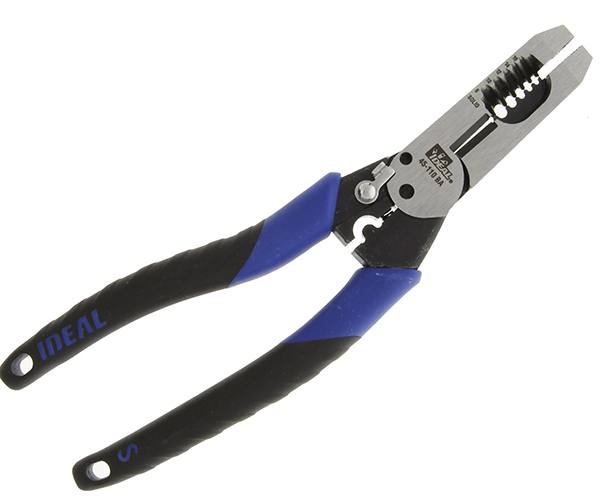
Ideal Electrical's forged heavy-duty wire stripper
While not specifically marketed as a pair of lineman’s pliers, Sycamore, Ill.-based Ideal Electrical’s model 45-110 forged heavy-duty wire strippers are a multiuse tool. They combine a wide, heavy-duty nose with precision stripping holes (No. 8–No. 16 solid or No. 10–No. 18 stranded) that allow users to strip and twist conductors without the hassle of swapping tools. The nose is also slimmer than a traditional pair of lineman’s pliers, making it great for reaming the cut ends of conduit.
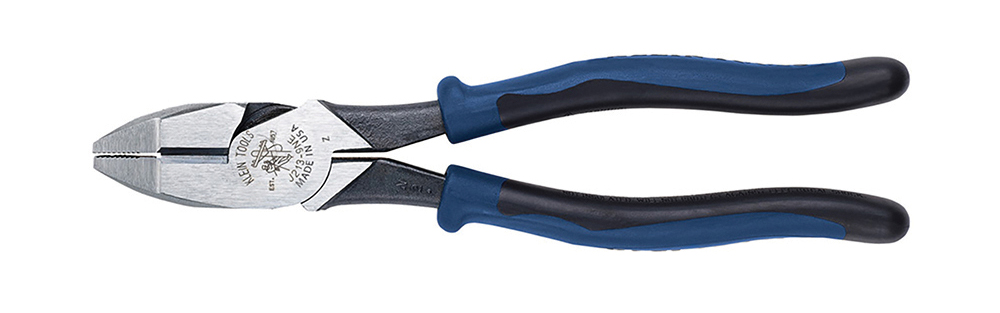
Klein Tools' 9-inch journeyman pliers
The convenient features continue, with integrated cutting holes for trimming 6–32 and 8–32 screws and a built-in terminal crimper. The handles are ergonomic and feature textured comfort grips for all-day comfort. There is an integrated tethering hole for extra security when working at heights. This is a great tool for any electrician looking to lighten their loadout and increase efficiency.
What about those of who prefer a more refined and elegant pair of pliers? Knipex, Buffalo Grove, Ill., offers 9½-in. high-leverage lineman’s pliers manufactured with a distinctly European design philosophy—maximize efficiency through precision engineering. These pliers feel lighter and more controllable than traditional American designs, but they still deliver impressive cutting power.
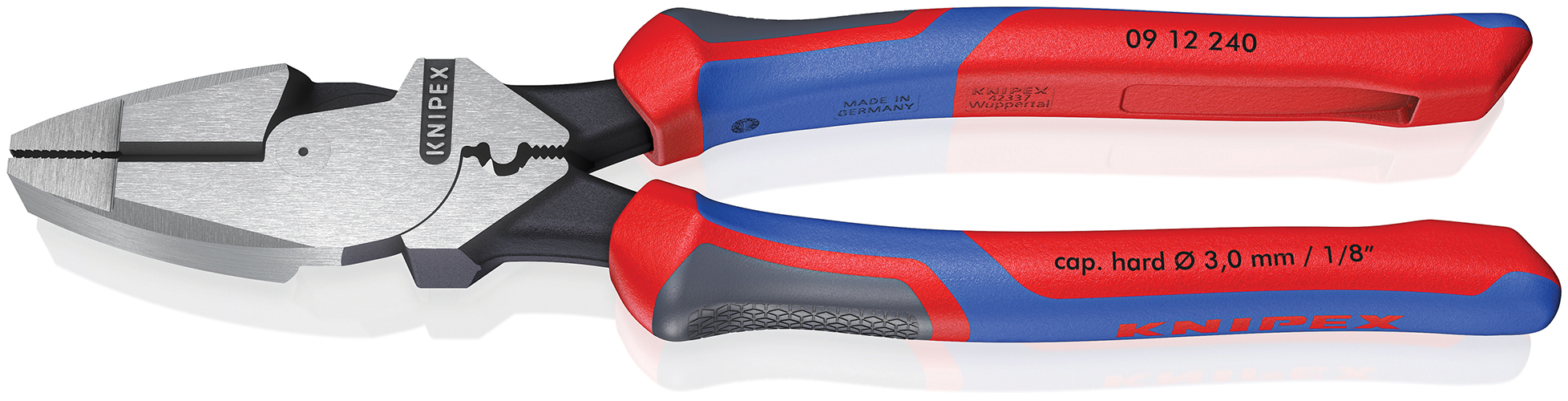
Knipex's 9 1/2-inch high-leverage lineman's pliers
The cutting edges are precisely ground and exceptionally sharp, which allows cleaner cuts with minimal effort. The joint design is tight and smooth, resulting in excellent control during detailed work. The jaw geometry is slightly different from a traditional pair and may require some getting used to. But once familiar with it, grip and control are exceptional, especially for panel work and precision terminations.
This precision elegance does come at a cost—Knipex lineman’s pliers tend to command a higher price. But for those who appreciate refined performance, precision cuts and reduced hand strain, this tool offers an attractive alternative to more traditional designs.
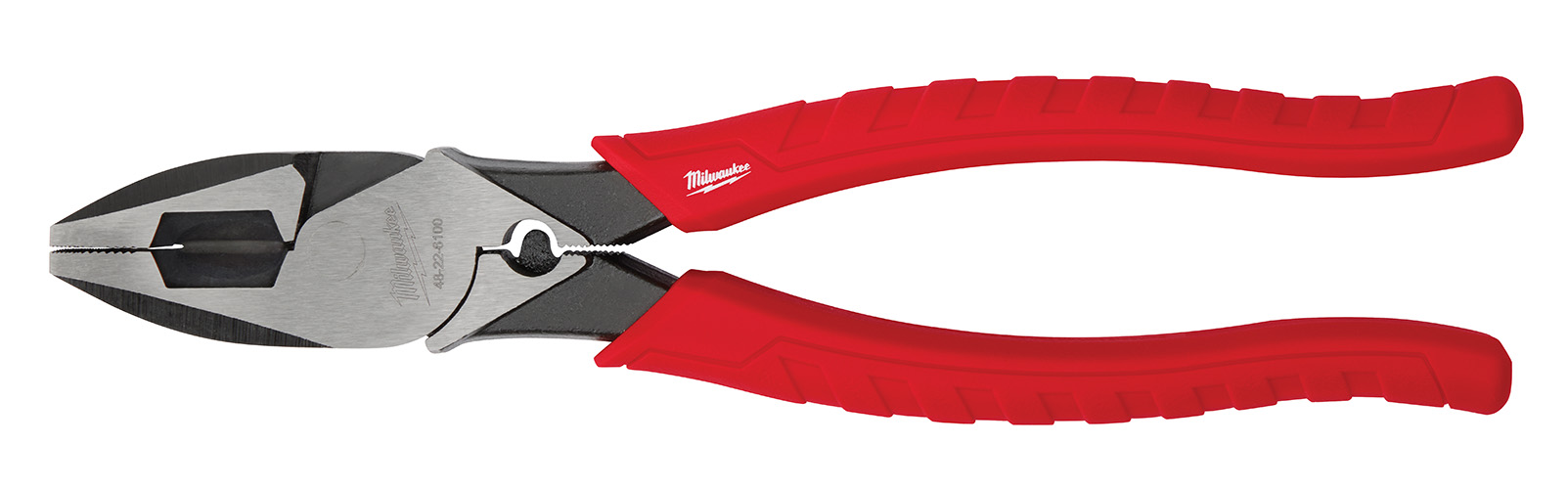
Milwaukee Tool's 9-inch comfort grip high-leverage lineman's pliers
Final thoughts
Lineman’s pliers may be one of the simplest tools in our toolkit, but they are also one of the most important. No single pair is perfect for every electrician. Residential work, commercial rough-ins, industrial maintenance and even panel work all place different demands on our tools. Size, grip preference and the type of material the tool will be used with daily all should influence our decision.
Klein Tools | Ideal Electrical | Milwaukee Tool | Knipex