
By Jon Fingland, Trimble
For electrical contractors, profitability can often hinge on how fluidly information moves from estimating into project execution, job costing and billing. A detailed estimate establishes the baseline plan, but contractors still need an efficient way to carry that information forward as job scopes evolve, field expenses mount and invoices are issued.
For smaller contractors especially, moving project and financial information becomes more costly as the business scales. More work means more labor hours, purchase orders, receipts, invoices and cost decisions to manage. Unlike generic accounting systems built around bookkeeping workflows, Trimble Financials starts with the way contractors already think about the business: by project. That project-first approach helps keep estimating, costs, billing and financial performance connected, making it easier to see how each job is performing and where margins may be slipping.
Trimble Financials™ was built to address this exact gap. Designed specifically for small-to-midsize construction businesses with annual revenues up to $10 million, it delivers a construction-first approach to financial management. It supports project workflows from initial proposal through closeout while tracking expenses by job, phase and cost type.
For electrical contractors, one of the biggest advantages is the connection between estimating and financial management.
Turn Your Estimate Directly Into a Proposal
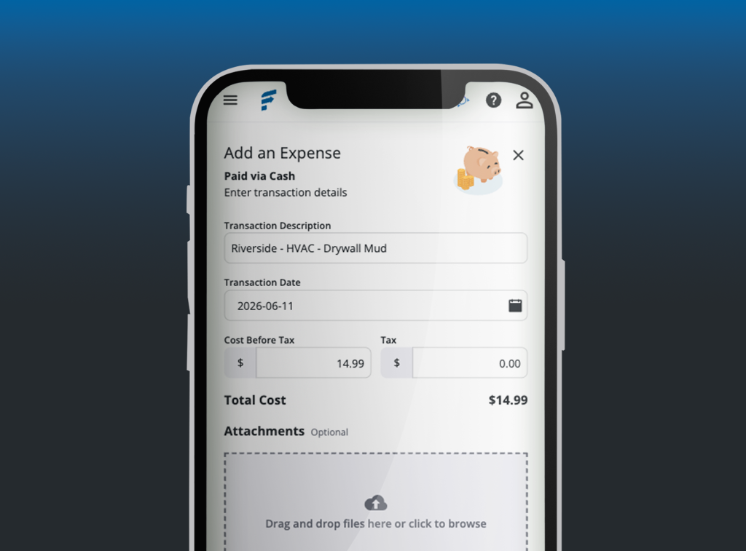
An estimator using Trimble Estimation MEP can build detailed bids containing the materials and associated labor required for the work. Rather than requiring office staff to manually re-key that estimate into an accounting system or proposal template, those estimate lines import directly into Trimble Financials. Changes made within the estimating tool reflect automatically in the proposal, preserving data integrity and eliminating double entry.
However, real-world electrical projects rarely stay confined to the original scope. Trimble Financials allows users to append broader project costs to the proposal without altering or overwriting the original Estimation MEP data.
Consider an electrical contractor hired to install a new bank of coolers in a warehouse. The estimate may account for the electrical materials and labor associated with the installation, but the project may also require crews to cut a trench through the existing concrete floor to run conduit.
That means additional costs for a concrete saw, labor for the trench work and a masonry subcontractor to patch and seal the floor. These additional equipment, labor and subcontractor line items can be added directly into Trimble Financials alongside the original electrical estimate.
The result is a complete, accurate proposal that reflects the true project scope, while allowing estimators to remain focused inside their purpose-built estimating software.
Convert Accepted Proposals into Live Jobs
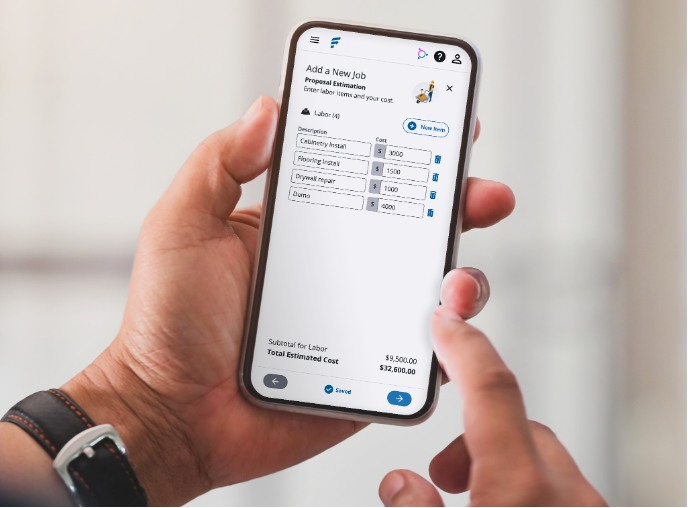
Once a customer signs off, proposal data must convert into actionable project structure. Trimble Financials simplifies this transition by turning an approved proposal into an active job with a single click. The proposal line items immediately become the job's cost structure for tracking ongoing progress.
This structural continuity resolves a major friction point for trade contractors: entering the same job data into multiple systems. Traditional approaches often require employees to maintain separate spreadsheets or manually reconcile project, accounting and field records. Those fragmented processes can consume administrative time and increase the risk that costs are coded incorrectly or overlooked.
A project-centered workflow links real-time expenses to the exact scope that generated them. Contractors can compare actual spending against estimated budgets as work unfolds, rather than waiting until the end of the month.
For an electrical contractor, this process makes the original estimate more useful after the bid has been won. The material, labor and other cost assumptions established during preconstruction become part of the financial structure used to manage the project.
Streamline Billing and Maintain Cash Flow
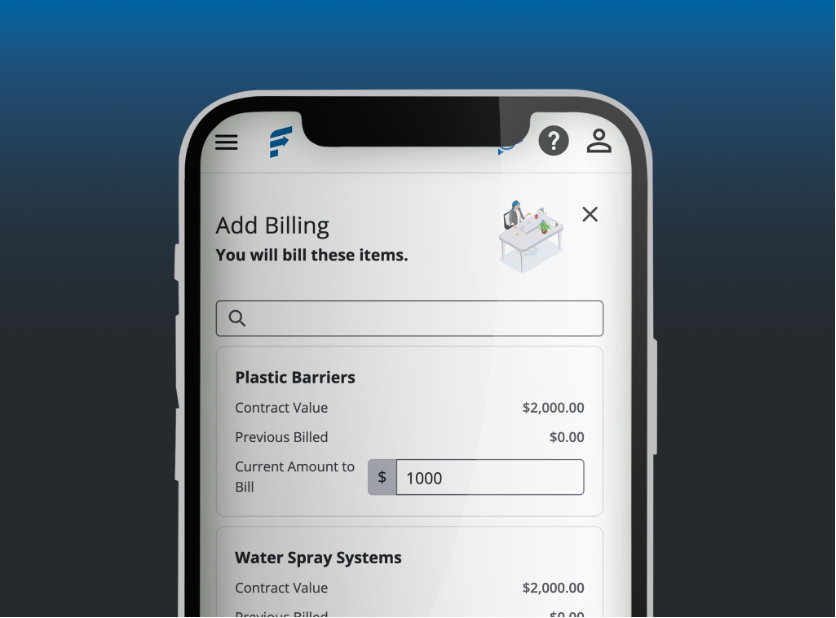
Billing is another area where connected project and financial information can save time.
Billing becomes faster and far more reliable when built on connected project data. Trimble Financials provides clear visibility into estimated budgets, actual expenses incurred and amounts previously billed by line item and cost category.
Rather than rebuilding project data during billing cycles, owners or administrative teams can work directly from the underlying job structure. The platform supports customizable billing schedules and progress invoicing. Invoices automatically feed into the project-level cash-flow dashboard, offering real-time visibility into paid, current and overdue receivables
For an owner or project manager, it’s now easier to answer several fundamental questions without assembling information from multiple spreadsheets:
- How much did we budget?
- How much have we spent and billed?
- What is our actual margin today?
Financial dashboards provide instant visibility into estimated versus actual costs across individual jobs or the entire company.
Built for the Way Trade Contractors Work
Generic accounting software can handle baseline tasks, but trade contractors need financial visibility broken down by project, phase and cost type. They may also need to account for retainage, labor production, committed costs, change orders and varied billing schedules. When those requirements are not supported naturally, contractors often create additional spreadsheets and manual processes to fill the gaps.
Trimble Financials takes a project-first approach designed around construction workflows. It also integrates with Trimble solutions for estimating, project management, performance tracking and employee timekeeping, helping connect information across office, field and financial operations.
Trimble Financials delivers a construction-first approach designed around operational workflows. By connecting estimating (Estimation MEP), field operations (Traqspera) and financial tracking, contractors eliminate administrative rework. The result is less time spent managing spreadsheets and a clearer, actionable view of project profitability while there is still time to protect margins.
For lean businesses, fewer handoffs and less duplicate data entry can mean more time spent managing projects and customers. More importantly, contractors gain a clearer view of how the work they estimated is performing financially while there is still time to act.
Trimble Financials is just one part of Trimble’s connected portfolio for growing electrical contractors. Start with the tools your business needs today, then connect estimating, project management, materials, labor tracking and more as you grow, without having to start over with your technology. Explore Trimble's solutions for growing electrical contractors.