Want to make safety a purposeful career? Don’t just focus on compliance—safety is an essential function to bring workers home to their families in one piece.
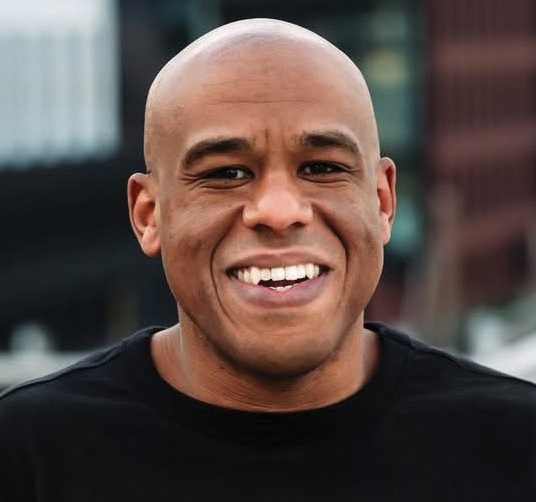
That’s what drove Michael Anderson to the profession. With more than 15 years of leadership experience in the construction and utility industries, Anderson now serves as vice president of safety at Hooper Corp., DeForest, Wis. At Hooper, he leads the strategic development and execution of safety programs that prioritize compliance, innovation and a proactive safety culture.
What sparked your interest in the safety profession?
My entry into the safety profession wasn’t planned. I initially intended to pursue law school, but an elective course in occupational safety introduced me to the fundamentals of risk management and regulatory compliance. I was immediately drawn to the analytical and preventative nature of the work.
Over time, I came to see safety as more than compliance—it’s an essential function that protects lives, preserves operational continuity and enhances overall job performance. That realization transformed what was once a backup plan into a purposeful career.
What safety practices have been particularly effective?
Several key practices have proven highly effective in reducing incidents and improving safety engagement:
Integrated preproject planning: We bring safety into the planning phase by involving all stakeholders, including project management, operations and support services, to assess scope-specific hazards, develop mitigation strategies and align expectations before mobilization.
CSRA Energy Wheel implementation: This tool developed by the Construction Safety Research Alliance has improved our hazard recognition by categorizing energy sources and focusing crews on high-consequence exposures. It enhances JHA discussions and critical task reviews.
Driver behavior monitoring with Samsara telematics tools: We are starting to use telematics data to proactively coach drivers, identify at-risk behaviors and provide corrective feedback. This will lead to measurable improvements in fleet safety performance.
Leadership selection and evaluation: We’ve formalized craft leadership interviews and initiated annual foreman evaluations. This ensures field leaders are aligned with safety expectations and capable of influencing crew behavior through both technical competency and interpersonal leadership.
Is there a specific injury or almost-injury that changed how you thought about safety on the job?
Yes. Early in my career, while working in industrial manufacturing, I responded to a severe traumatic amputation incident. The employee lost most of his arm due to a failure to control hazardous energy during maintenance. I later transported his family to the hospital.
That personal involvement and the emotional toll on his family deeply impacted how I view safety. It drove home that incidents aren’t statistics—they are life-altering events. That experience shifted my approach from focusing solely on compliance to emphasizing human-centered risk management and proactive hazard control.
What challenges do you face in managing safety?
One of the most persistent challenges for our industry is the generational workforce transition. As experienced employees retire, they take with them years of tacit knowledge. Meanwhile, emerging leaders are being promoted faster and with less mentorship. This knowledge gap affects hazard recognition, decision-making under pressure and leadership capability. Bridging that gap requires structured mentorship, competency-based assessments and continuous development pathways.
Another challenge is managing safety across dispersed project sites, each with varying scopes, subcontractors and client expectations. Maintaining consistent safety standards in such environments demands scalable systems, robust communication and empowered field leadership.
How do you encourage crews to take safety seriously on the job?
We focus on cultural integration, embedding safety into daily workflow rather than presenting it as a standalone initiative. Crew engagement improves significantly when safety is linked to personal values, family, health and career longevity, not just policy adherence.
We also emphasize leadership modeling. Field leaders are expected to demonstrate the behaviors we want to see, like using personal protection equipment, conducting thorough pretask planning and stopping work when needed.
Additionally, we’ve implemented performance reinforcement systems that recognize and reward safe practices in real time, creating a positive feedback loop.
Do you have any other advice for safety professionals?
First, focus on field engagement. Data, policies and systems matter, but they’re only as effective as your credibility with the people executing the work. Spend time in the field, listen without judgment, and treat every conversation as an opportunity to learn.
Second, develop operational literacy. The most effective safety leaders understand not only regulations but also how the work is performed. That context enables better risk identification and more practical solutions.
Lastly, pace your career. Master foundational roles before advancing. Learning how to conduct thorough incident investigations, lead meaningful tailboards and build trust with craft workers will serve you well as you progress into higher-level roles. Safety leadership is earned through consistency, not titles.
MICHAEL ANDERSON
About The Author

KUEHNER-HEBERT is a freelance writer based in Running Springs, Calif. She has more than three decades of journalism experience. Reach her at [email protected].