There are certain tools that become almost an extension of our hands. We tend to not think about them much because they are always in the pouch, sitting in the gang box or on the side of a cart. The simple level is one of these tools. Whether we are bending conduit, setting switchgear or hanging strut, having a dependable level can make the difference between an installation that simply works and one that looks professional.
In many ways, a level is one of the simplest tools, but it can also reveal a lot about the quality of the installation. Crooked conduit runs, tilted boxes and uneven racks all stand out immediately on a finished project. The customer may not understand load calculations or voltage drop, but you better believe they can tell if something is crooked!
Most of us probably own several types of levels. Some are designed for specific tasks, while others can be used more generally. Certain applications call for different styles, sizes and features. So let’s talk about some common levels and some practical considerations for selecting and maintaining them.
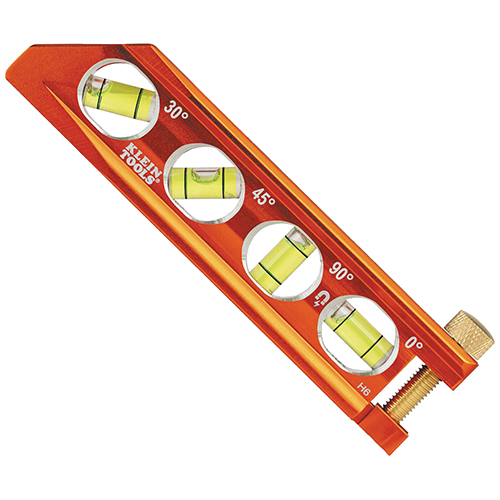
Klein Tools Accu-Bend 4-vial level
Conduit-bending levels
When it comes to conduit work, accuracy matters. A small error at the start of a conduit run can quickly turn into a major problem by the end. Conduit-bending levels help produce accurate bends. They attach directly to the conduit by magnets or a thumb screw, which enables users to monitor the bend throughout the process. While this principle sounds relatively simple, it can greatly improve consistency, especially on offsets and 90-degree bends.
Lincolnshire, Ill.-based Klein Tools’ Accu-Bend 1-vial level is an example of less is more. It just works. The level features a single bubble that can be used in two ways. One method is to secure it to the end of the conduit on the vertical plane when bending 90 degrees to ensure we do not over- or under-bend the conduit. The other way to use it is on the horizontal plane when we bend offsets. Attach it to either side before bending the angle on the first bend, and when you roll the conduit 180 degrees, the level provides a level reference to make sure we do not “dog” the bend and send it into outer space.
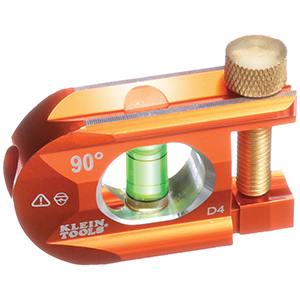
Klein Tools Accu-Bend 1-vial level
The Mag Dog 4 conduit-bending level from LevTech, San Antonio, takes conduit bending to another level (pun definitely intended). Where most conduit-bending levels feature a single fixed vial, this one differs because the vial is adjustable to the four most common angles (0, 30, 45 and 90 degrees). That enables the user to use the level as a reference throughout the bending process to ensure angle accuracy. It has a thumb stud to attach it to conduit, and it includes four strong rare earth magnets along the length for attachment options.
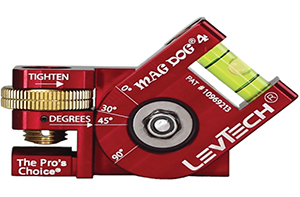
LevTech Mag Dog 4 conduit bending level
The vial is viewable from three sides, which gives users expanded viewing options. The thumb stud is embedded within the level so it cannot fall out and become lost. Another useful feature of this tool is that the vial is field-replaceable. Simply remove the brass screws at the end of the vial and put in one of the replacements.
Torpedo levels
If conduit-bending levels are specialty tools, then the torpedo level is the everyday workhorse. Few tools get used more often throughout the workday. They are used for leveling boxes, checking conduit runs, mounting disconnects and much more.
There are a few features we should look for in a good, solid torpedo level. First is magnet quality. Strong magnets allow the level to be securely attached to anything metal, which frees up our hands.
Another key feature is vial visibility. Job sites are not always brightly lit, and high-visibility vials make a noticeable difference, especially in mechanical rooms, crawlspaces or unfinished buildings.
Durability is extremely important with torpedo levels because they tend to take a beating. They get dropped off ladders, rattle around in pouches with other tools and are exposed to dirt, dust and moisture.
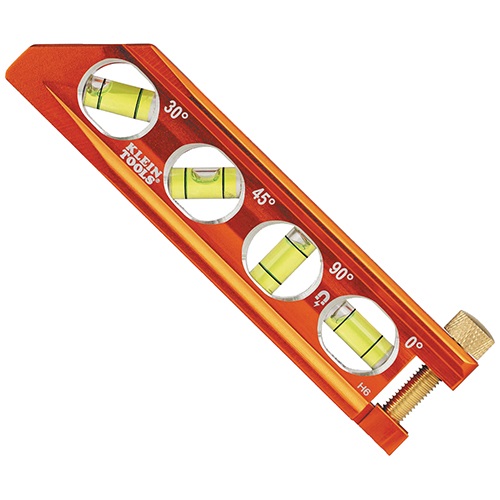
Klein Tools’ Accu-Bend 4-vial level has four different high-visibility vials (0, 30, 45 and 90 degrees) that give it a ton of versatility on the job site. The vials are also viewable from the top of the level in addition to the standard side viewing ports. The level has four rare earth magnets installed in a track to prevent them from falling out of the tool. As an added bonus, the tool also features the same thumb stud as its smaller single vial relative to allow it to be used as a conduit-bending level.
Milwaukee Tool, Brookfield, Wis., has taken a bit of a different approach to torpedo levels with its 9-in. torpedo level with lighted vials. The vials are lit by LEDs and feature white high-contrast surrounds that make it very easy to see the readings clearly in poorly lit environments. The level has two vials (0 and 90 degrees) and has three rare earth magnets to keep it securely attached to the working surface. The rubber wall grip on the back side of the level keeps it from sliding on smooth surfaces when doing tasks such as leveling trim plates.
Miscellaneous levels
What do we do when a conduit-bending level or a torpedo level just isn’t enough? Maybe we are setting large sections of switchgear, installing a large concrete in-ground pull box or we need to project a level line across a long distance. Luckily, there are options for these situations, too.
Based loosely on its Mag Dog conduit-bending level design, LevTech introduced the Xtreme Laser Dog 8. Roughly the size of a set of playing cards, the level features a bright red laser that is extremely accurate even at 100 feet. This makes it a great tool to use when installing conduit or even lining up the tops of boxes along a wall. The unit also uses a movable level vial that can be adjusted to eight popular settings (ranging from 0 to 90 degrees). In addition, the level has V grooves and rare earth magnets on two sides that allow for multiple mounting options. And just like its smaller cousin, the level comes with a replacement vial in case it becomes damaged.
Milwaukee Tool’s MLBXC48 starter set is designed for those who want just about every level one would need, all in one package. The set includes 48- and 24-in. aluminum box levels to assist in leveling larger items such as switchgear, panels or large boxes. Both levels feature bubble vials that are large, super bright and have contrasting white surrounds that make them very easy to see.
But the best part of the kit (in my opinion) is the 10-in. torpedo level. It contains two bubble vials set up like the larger box levels, but the torpedo also features an adjustable level with marked increments to set at any angle. In addition, the torpedo has a V groove on the bottom with rare earth magnets.
Care and other considerations
Taking care of levels properly can greatly extend their lifespan and maintain accuracy. A hard impact can crack the vial or knock the level out of calibration. While some damage is unavoidable on a busy job site, carelessly tossing the level into a gang box or leaving it loose in the back of the truck or van only increases the likelihood of problems. Levels should be stored in some type of protective case (preferably a rigid one) and kept in a dry location separate from the other tools when not in use.
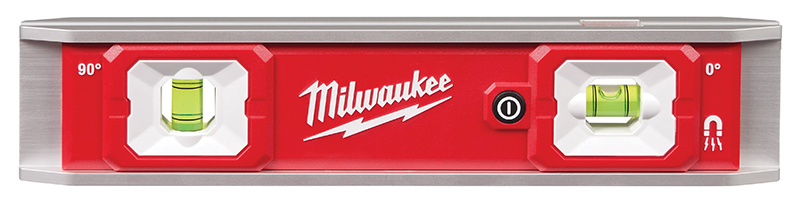
Milwaukee Tool 9-in. torpedo level
Keeping the magnetic surfaces clean is another simple, but important, task. Dirt, metal shavings and other debris can reduce holding strength and cause the level to fall and become damaged. Wipe down the level with a rag every so often to remove any foreign substances. Levels should also be periodically checked for accuracy. A quick comparison against a known level surface will reveal whether the tool is still calibrated correctly. This simple check only takes a moment but will prevent major headaches later on.
Keeping the level level
Levels may not be the flashiest tools, but they do play a significant role in producing clean, professional installations for electrical contractors. Uneven strut racks, out-of-level equipment and crooked conduit runs all stand out immediately on a project. It is those details that often shape how customers, inspectors and other trade workers view the quality of the overall work.
Remember, levels provide a measure of quality control that help us consistently produce installations we can be proud of. The key is to understand which type of level best fits the type of work being performed.
Klein Tools | LevTech | Milwaukee Tool