Beyond pulling and terminating conductors, there is perhaps no more vital role for an electrician than conduit installation. Without the conduit in place, how would we get conductors where they we need to go? Bending conduit requires consistency and accuracy to ensure proper protection for the conductors and a visibly pleasing end product. Conduit bending technology has advanced to provide us with tools that now allow for more consistency bend-to-bend and faster installations.
Hand benders
Klein Tools, Lincolnshire, Ill., makes a bending product with an angle stop with its iron conduit bender with Angle Setter. Designed to accurately repeat bends, the adjustable stop can be placed at 10, 22.5, 30 or 45 degrees (that have been adjusted for spring back). The angle stop sits in small notches in the bender track and features angle alignment grooves that line up with the angle notches in the bender. The stop is also removable, which is a great feature for when a few additional degrees are needed.
Additional features include bold, raised markings for quick and easy conduit alignment and a wide foot pedal that is comfortable and stable. The bending track and hook are also designed to prevent the conduit from rolling and twisting as it is bent. The bender is available in ½ inch, ¾ inch and 1 inch, with the ½ inch and ¾ inch also available with an aluminum head. Ideal Electrical, Sycamore, Ill., is seen as synonymous with bending branch conduit. Their bender shoes are available in either lightweight aluminum or strong iron, both of which include raised bending and precision marks that are easy to read, along with a flat hook that provides stability when starting a bend. | 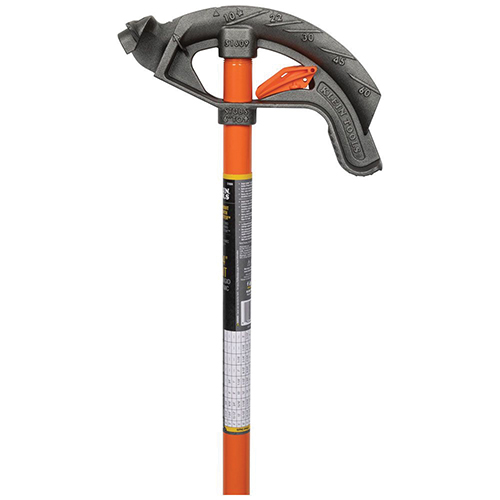 | |
Klein Tool’s iron conduit bender |
Ideal Electrical has recently released its Guardian bender that takes consistency and efficiency to a new level. The bender shoe is available with a strong ductile iron head that will stand up to the abuse of a job site and features a bend correction hole built into the head for those minor angle tweaks that are sometimes necessary. The bender also features a textured handle for improved grip and is now bolted to the head—so users don’t have to tighten up the handle.
The most notable feature is the integrated adjustable angle stopper. Designed to be placed at the most commonly used angles—22, 30, 45, 60 and 90 degrees—the stopper takes the variability out of bending by physically stopping the conduit from being bent further (or less) than needed. Simply slide the stop to the desired angle and bend the conduit until it stops. This is a useful feature for repeated bends and newer electricians still refining their bending skills. The bender is available in ½-inch and ¾-inch EMT versions.
Powered large conduit benders
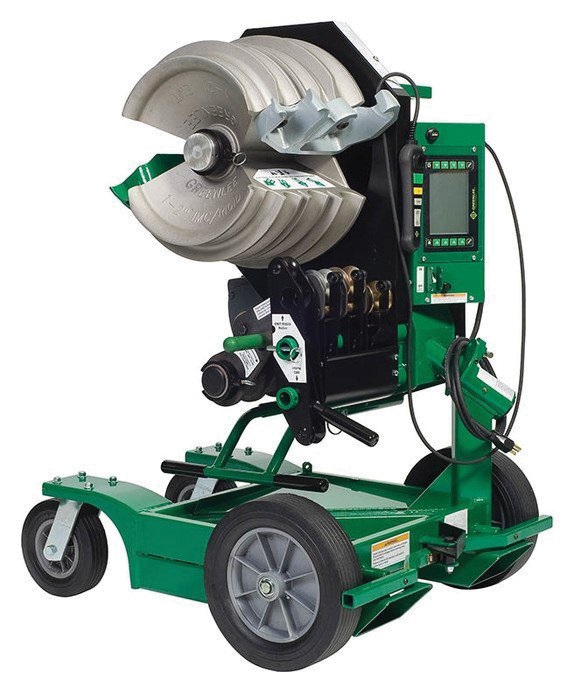
Rockford, Ill.-based Greenlee’s 855GX is an advanced programmable bender that focuses on ease of use and speed. The tool is mobile and features rubber wheels and integrated forklift slots that allow the bender to easily be moved from location to location. The bender will bend from ¾-inch to 2-inch rigid conduit and from 1-inch to 2-inch EMT or IMC all in one shoe. This greatly reduces the time needed to swap shoes back and forth. The shoe also features smart sensors that know what diameter and type of conduit is being bent and automatically factors in spring back for any angle.
The features continue with a pendant controller and an LCD interface that allow users to easily program, save and transfer multiple bends using a USB drive. That makes this bender an outstanding tool for jobs with several different types or quantities of bends. Another interesting quality is that the head is rotatable to bend on a horizontal plane, rather than the traditional vertical plane. This is extremely useful for when a large offset or long 90-degree bend is needed so the end of the conduit will not impact the floor as its being bent. PVC-coated, rigid conduit shoes, sized ½–2 inches, are available for that conduit system.
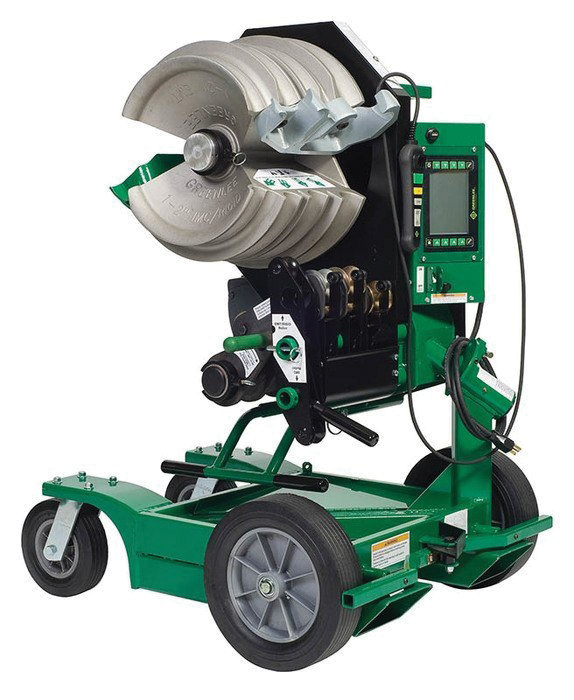 | 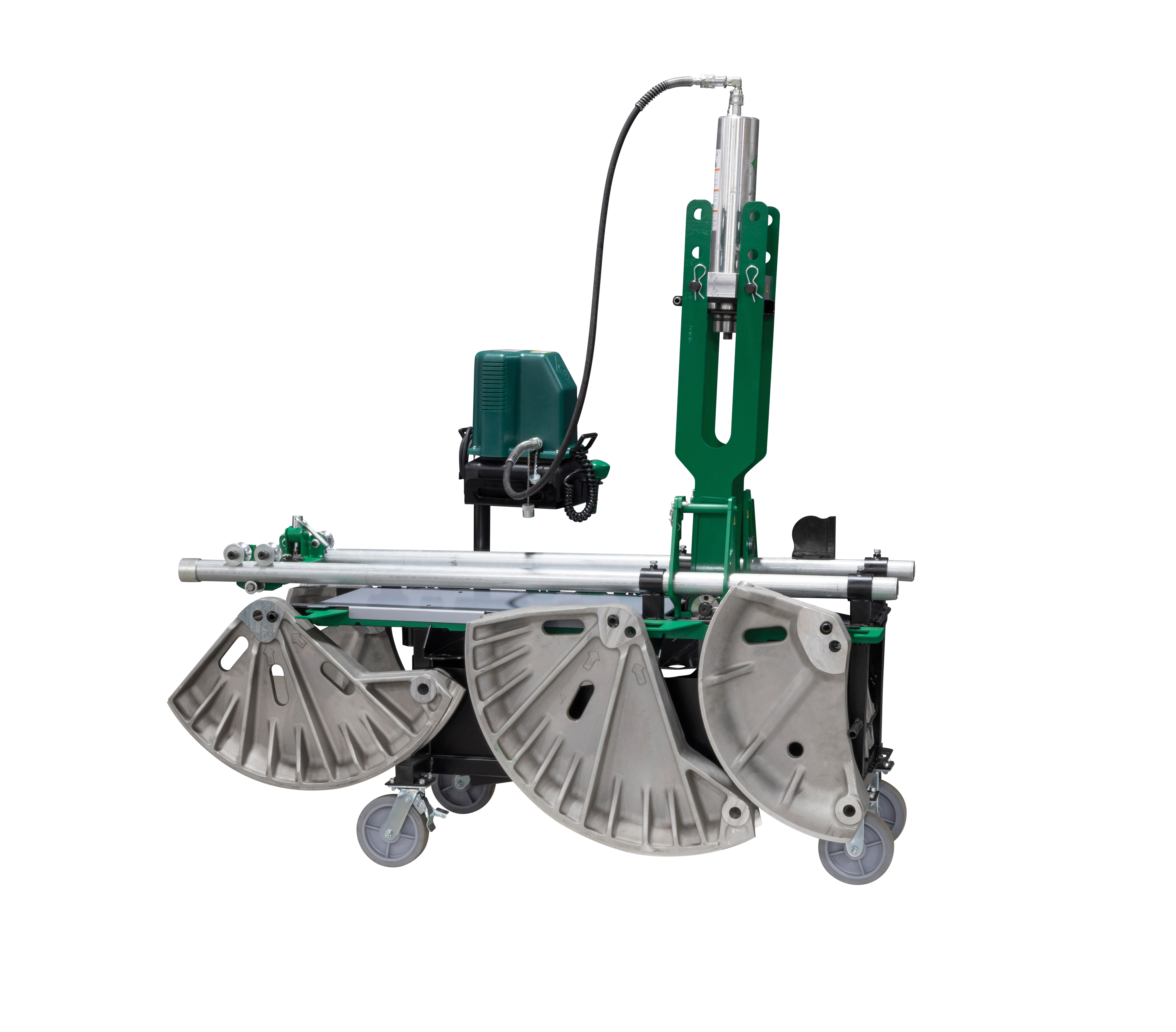 | |
Greenlee’s 855GX conduit bender | Greenlee’s 881GXE980MBTS conduit bender |
The 881 series of large conduit benders has been around for years. But Greenlee has added to this workhorse with the 881GXE980MBTS, which focuses on mobility and easier setup and includes several major upgrades. The mobile base with large, steerable casters allows the bender to be moved around the job site much more easily, and it is also considerably quicker to set up—which means contractors can get to bending much faster. The bender is designed to fit through a standard 32-inch doorway and has integrated forklift slots and dedicated strapping points, all centered around ease of moving the bender from place to place.
The components are redesigned to be much lighter, reducing user strain and fatigue, and the accessories are designed to be stored on the cart itself where ergonomics have been kept in mind. Security has also been addressed with locking features for all the shoes and accessories. Greenlee has even thought of technology with its hands-free media stand that provides easy access to tablets and notebooks.
Powered branch conduit benders
Milwaukee Tool’s, Brookfield, Wis., M18 Fuel branch conduit bender comes with shoes for ¾-inch and 1-inch EMT (it will also bend their rigid conduit equivalents). A ½-inch EMT version is available separately. The bender’s reasonably low weight, compact size and lightweight tripod are all designed to be easily moved to where the work is and set up quickly and efficiently. By using a powered design over hand bending, the tool has been shown to reduce peak muscle effort across the arms, shoulders and back—in some areas up to 45%—all in an effort to reduce strain and increase productivity.
The features continue with Auto-Zero technology that allows the bender to automatically sense zero degrees on every bend, which greatly improves bend accuracy and consistency. The tool has a preset angle dial from 0–90 degrees and even includes spring back adjustment from –9.5 degrees to +9.5 degrees. A back former is also included to keep consistent pressure on the conduit to eliminate rippling and kinking. It is an excellent tool that will positively affect efficiency and reduce potential work-related muscle strain. When paired with an XC5.0 battery pack, the tool can produce more than 100 bends of ¾-inch EMT conduit on one charge. That means less time managing batteries and more time bending conduit.
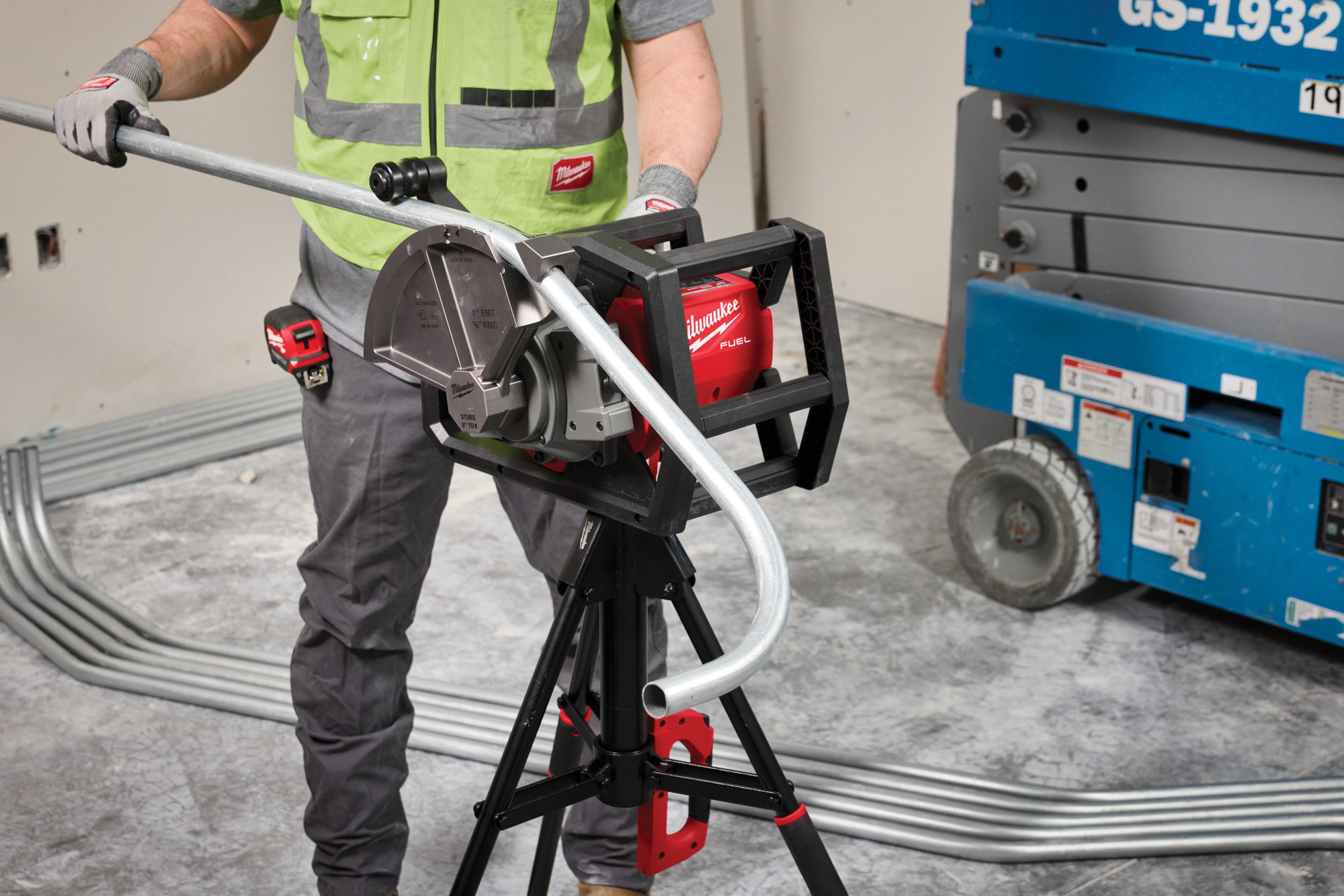
Milwaukee Tool's M18 Fuel branch conduit bender
I had the opportunity to speak to Jack Fisher, product manager on Milwaukee’s plumbing/electrical team. Fisher, along with a team of electrical engineers, mechanical engineers and industrial designers, developed, tested and refined the M18 Fuel branch conduit bender into what it is today.
“This particular project began with our advanced teams studying branch and electrical installation as a whole,” Fisher said. “Through ongoing research and feedback, we consistently heard the same message from electrical contractors: they were losing significant time and money bending conduit. Specifically, when it came to smaller branch sizes, users made it clear there wasn’t a properly sized solution for consistent, technical bends on the job site. Electricians often faced a difficult trade-off—either using a manual bender or a powered, stationary unit—to complete the work efficiently.”
Since this bender is the first of its kind (a cordless, portable branch conduit bender), Fisher also discussed how he thought it would change the electrical landscape: “This innovation will redefine users’ expectations of what a powered bender can do. Traditionally, each bender behaves differently, which means users have to learn and adjust every time they use a new one. This tool standardizes that experience, making it much easier for teams to train, maintain workflow consistency and collaborate efficiently across job sites. That level of repeatable performance is a major part of its long-term impact.”
I had the opportunity to try the tool myself, and it is simple to operate and much easier on the body. The learning curve is relatively short, and the tool produces bends quickly and accurately.
Bend with heat
Electrical workers who need to bend PVC have long used heated methods, such as heat blankets or hot boxes. Another option is a heat gun created by HotBend, Dallas. The tool is portable for small or large jobs, bends any size pipe from ½-inch to 8-inch schedule 40 or 80. It can also help modify existing bends. It uses 100,000 Btu of forced air, so no power is required.
Conduit is key
Conduit has been around since electricity started becoming widely used. But that doesn’t mean the technology to bend conduit has been stagnant. Whether it is bending branch conduit by hand, bending larger conduits with a powered bender, using heat or using new powered technology to bend our branch conduit, manufacturers have realized that consistency, efficiency and ergonomics play a huge role in what we do. And those manufacturers have stepped up to the plate by providing us with conduit-bending tools that focus on these areas. These advancements allow us to spend more time doing what we do best—bending and installing conduit.
Klein Tools | Greenlee | milwaukee tool