In a politicized world, the electric vehicle charger installation market marches on. While the transformation into vehicle electrification may be slowing, confidence in its future remains. In June 2025, BloombergNEF cut its expectation for cumulative U.S. EV sales through 2030 by 14 million units, representing 27% of total passenger car sales and down from the 48% predicted previously. Does EV demand dictate charger installation, or does having enough installed EV chargers help drive EV sales?
Where are the chargers?
According to the Department of Energy’s Office of Energy Efficiency and Renewable Energy, there are currently 78,687 EV station locations and 241,158 EV charging ports. The DOE defined charging ports as providing power to charge one vehicle at a time, though chargers may have multiple connectors (electric vehicle supply equipment ports). This definition is part of a resource called the Alternative Fueling Station Locator, which shows that publicly accessible EV charging stations are most plentiful east of the Mississippi, and more spread out in the West with strong pockets. California is brimming with them.
The current administration attempted a unilateral funding freeze of some $5 billion in federal funds available to assist in the rollout of EV chargers nationwide. Awarded under the Biden administration’s National Electric Vehicle Infrastructure (NEVI) Formula Program, a federal judge in Washington state overruled the NEVI funding freeze for 14 of 16 states that sued, retaining (as of this writing) their secured dollars in July 2025. As of mid-August, the Trump administration had unfrozen NEVI funds. As reported by Verge magazine, an estimated $3.3 billion of NEVI funding has not yet been spent or allocated to a project.
For perspective, NEVI funding or its possible full clawback does not portend a death for EVs and charger installation work. In mid-June, Loren McDonald, chief analyst of the Los Angeles-based data analytics firm Paren, said, “Despite the doom and gloom from the headlines, the head winds from the Trump administration’s attempts to slow progress down—the fast-charging industry is deploying new DC fast charger ports and stations at its highest pace ever in the U.S. Don’t believe the FUD [Fear, Uncertainty, and Disinformation]. The charging industry is moving full speed ahead, building larger, higher-power stations with amenities, greater reliability, and a better customer experience.”
Ben Prochazka is executive director of the Electrification Coalition, Washington D.C. Founded in 2008, it created the Electrification Road Map for electrifying the transportation system.
“We are working on actions and policies at the local, state and federal level needed to accelerate transportation electrification in the United States and across the world,” he said. “When we look at the currency of the market EVs, there is this messy middle, and it’s always the hardest part. How do you go from early adopters to mass adoption with new technology? EVs represent the second largest purchase that consumers make. You know, we’re still early enough in this transition. EV’s scale costs go down over time.”
“Don’t believe the FUD [Fear, Uncertainty, and Disinformation]. The charging industry is moving full speed ahead, building larger, higher-power stations with amenities, greater reliability, and a better customer experience.”
—Loren McDonald, Paren
EVs in politics
Prochazka laments how EVs have been caught up in political discourse. For him, it is better to steer the conversation around consumer choice and benefits, including EVs offering low maintenance, faster acceleration and maybe vehicle-to-grid capability.
“Right now, we’re on the third, maybe fourth generation of battery technology,” Prochazka said. “They are becoming more energy-dense.”
Battery advances will lead to faster charging, extended distances between charges, lighter battery footprints and other gains.
“The costs of batteries are going way down,” Prochazka said. “In 2013, the cost per kilowatt-hour (kWh) for a battery was about $1,100. Now we’re getting down to that golden mark between $80 to $90 per kWh. We start to become cost-competitive with the internal combustion engine and what it costs to produce.”
Under the Big Beautiful Bill, the Refueling Infrastructure Credit (30C), the incentive covering up to 30% of the cost of installing EV charging stations and other alternative refueling infrastructure, will terminate for property placed in service after June 30, 2026. Nevertheless, local and state incentives continue. Many have been cataloged by DOE’s Alternative Fuels Data Center.
“There’s still going be important programs that happen even without federal assistance,” Prochazka said. “I have confidence state and local programs will continue, utility programs will continue, all those are things that ultimately create and will continue to facilitate the acceleration of transportation electrification. Time is not what’s going on with charging infrastructure from the standpoint of building it fast enough. It’s about better education and demonstrating where the infrastructure already exists, then recognizing spots we still need to infill.”
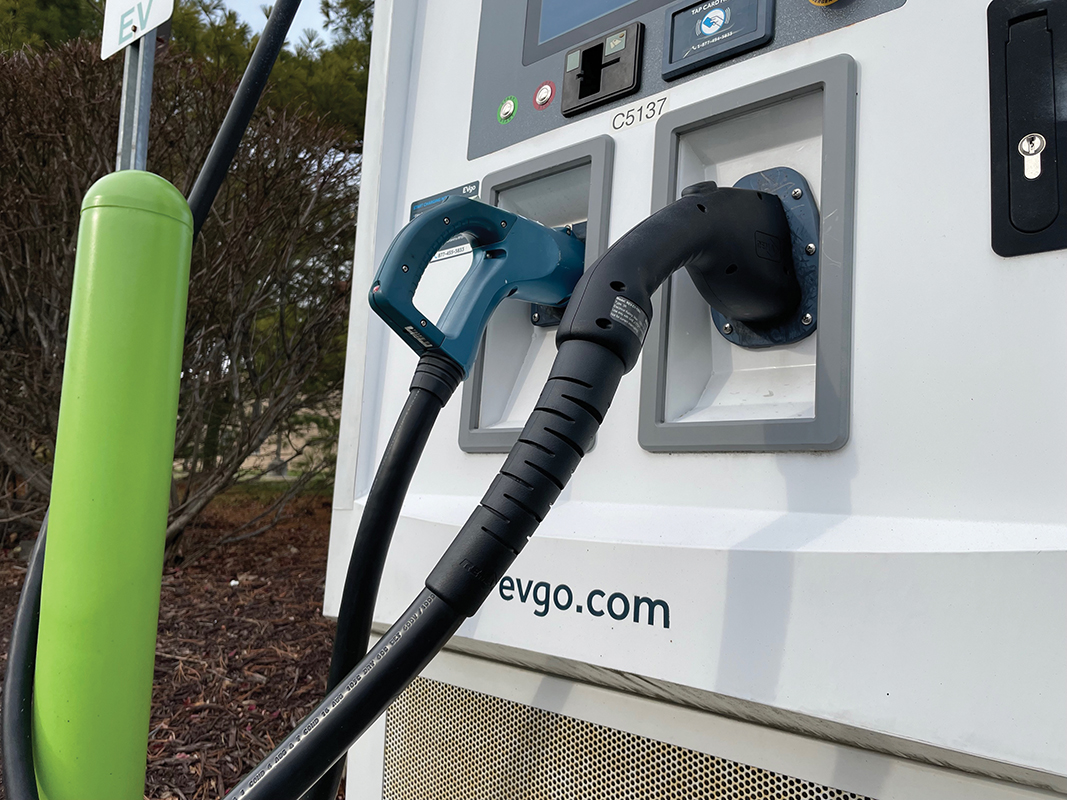
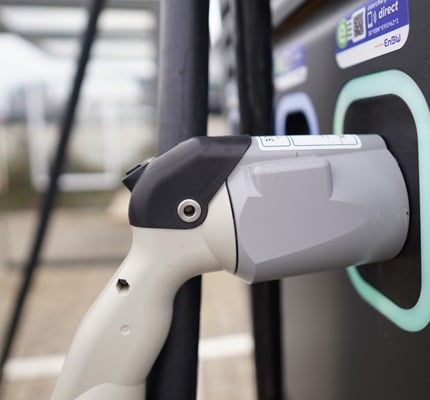
This charge port offers two different connector styles to accommodate various EVs.
DC fast chargers can add 100 to 200 miles of range in 30 minutes.
The rise in DC fast chargers
Direct current fast chargers (Level 3) are growing incrementally. “Inside EVs” reported in mid-June 2025 that Paren data indicated as many as 3,000 more DC fast charging ports from various charging networks are set to deploy this year than in 2024.
PlugShare, Los Angeles, reveals the greatest number of DC fast chargers are located west of the Mississippi. Its map (as of late June 2025) showed 251 charging locations that offer DC fast charging, including parts of Central America.
To best understand Level 3, it’s useful to review Level 1 and Level 2 charging. Level 1 AC charging is a residential application, where you plug the EV cord into a standard household receptacle. An hour of Level 1 charging adds about 4 miles of range to the vehicle’s battery. Level 2 AC charging is becoming the residential charger preference. It requires a 240V outlet and a J1772, Type 1 or Type 2, plug (compatible with most EVs). Level 2 chargers deliver 25–50 miles of range per hour (dependent on charger station amperage and vehicle capabilities). AC power is supplied from the charging station to the onboard charger, which supplies DC power to the battery.
Level 3 charging uses DC fast chargers. The charger station itself converts AC power to DC power before delivering it directly to a vehicle battery. DC fast chargers can add 100–200 miles of range in 30 minutes.
DC fast chargers are notably helpful for medium- and large-duty EVs. Level 3 is becoming attractive at stations offering power outputs up to 500 kilowatts (kW) located within heavy traffic corridors. The DOE estimated that, as early as 2023, more than 20% of U.S. EV public charging ports were Level 3. It expects DC fast charging to increase as EV fleets (commercial trucks, vans and buses) grow, as well as serving as fast-charging hubs for rideshare companies.
“Charge port standardization is a big deal,” Prochazka said. “The more it’s adopted, the easier for the EV owner.”
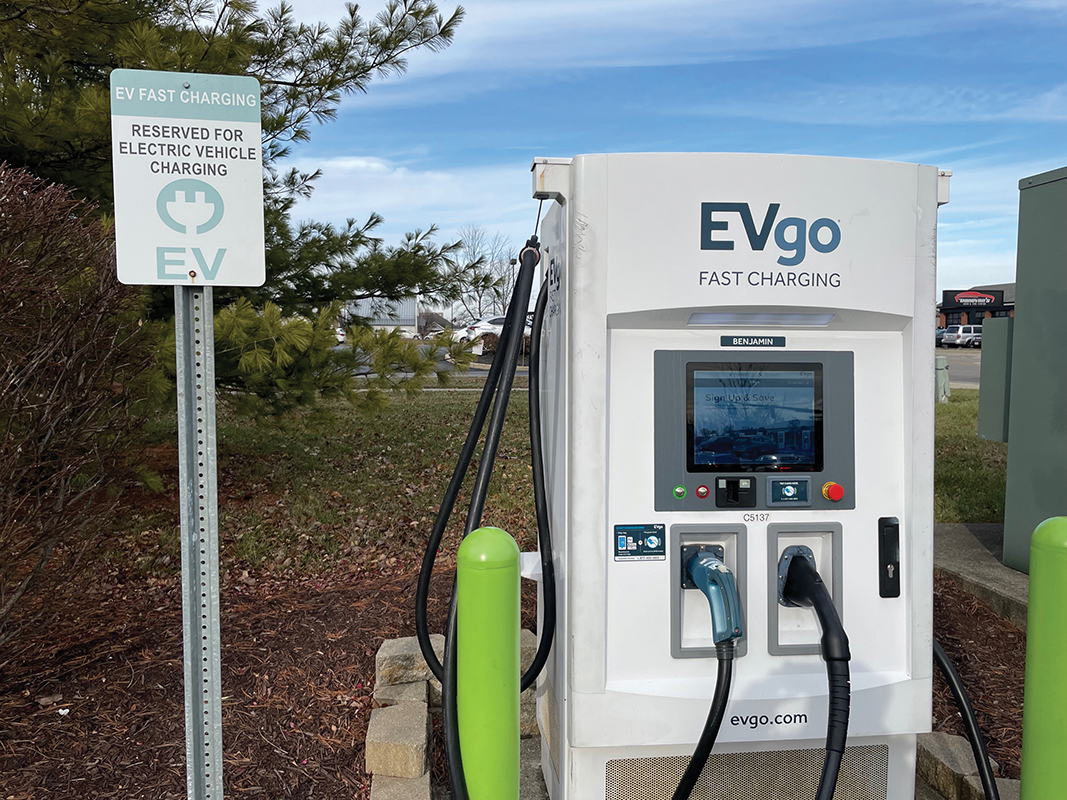
As many as 3,000 more DC fast charging ports from various charging networks
are set to deploy this year than were installed in 2024.
Types of Level 3 chargers
There are three types of DC fast charging systems, depending on the type of charge port on a vehicle: SAE Combined Charging System (CCS), CHAdeMO and J3400. SAE International is standardizing the J3400 connector based on Tesla’s design for its NACS connector. Several vehicle manufacturers are adopting the J3400 connector, which will allow non-Tesla EVs to use Tesla chargers.
Another standard (SAE J3068) was developed in 2018 for higher rates of AC charging using three-phase power, which is common at commercial and industrial locations in the United States. U.S. three-phase voltages are typically 208/120V, 480/277V. The standard targets power levels between 6 kW and 130 kW. DC fast chargers are also three-phase.
“Level 3 chargers require the service of an electrical contractor for installation and maintenance,” Prochazka said. “I would add that’s true for simpler appliance Level 2 chargers and home charger installations. But Level 3 chargers are a whole different animal, providing industrial-grade power and requiring a power cabinet. They are public chargers, not for the home.”
Installation of DC fast chargers is more expensive upfront, and you must balance the cost in the long term, he said. “That’s in part why you see battery storage and solar canopies being integrated into charging. Battery storage allows you to store power for use when utility rates are high. Though a developing market, vehicle-to-grid (V2G) chargers enable bidirectional power, making EVs an asset for the grid. There have been test programs across the county, and some V2G companies are already involved in fleet operations.
“I think sometimes the hard part is EVs sound complicated if you’re an average consumer or a fleet manager,” he said. “On the contrary, driving an EV or integrating an EV into fleets is very straightforward. There are great tools and resources to make it very simple.”
Other sources detailing current EV efforts (e.g., fleets) include Edison Electric Institute’s EV Program database and EV charger company sites (e.g., ChargePoint).
“In every neighborhood, every house, every community, every highway and interstate, there’s going to be a need to build out charging infrastructure,” Prochazka said. “This electric vehicle industry ultimately is a huge opportunity for the future of the electrical contractor.”
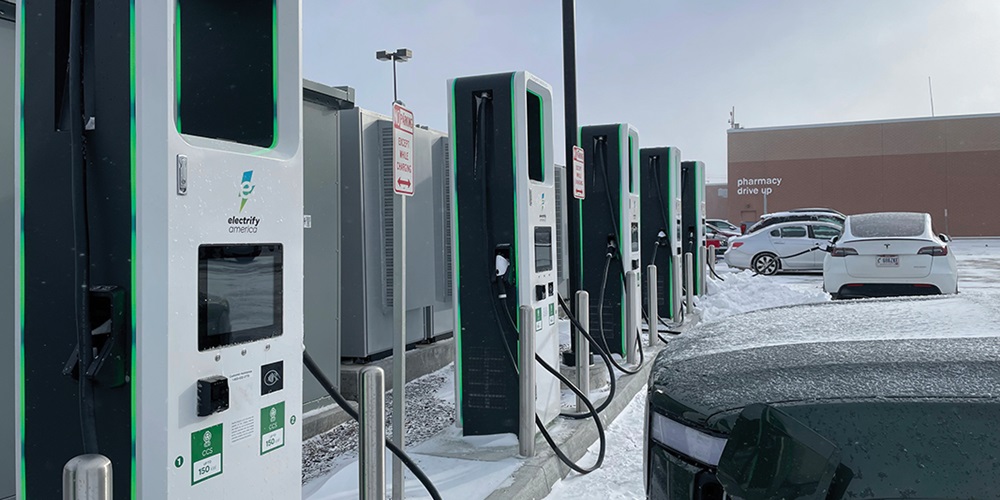
Header image: DC fast chargers are Level 3 and require power cabinets. The charger station converts AC power to DC before delivering it directly to a vehicle battery. These chargers are becoming attractive at installed stations, offering power outputs up to 500 kW.
Electrification Coalition
About The Author

GAVIN, Gavo Communications, is a LEED Green Associate providing marketing services for the energy, construction and urban planning industries. He can be reached at [email protected].