One unsung hero in the electrician’s tool pouches is the knife. This simple tool is so ubiquitous and essential to our daily jobs that its absence is felt the moment it is not within arm’s reach. From stripping cable jackets to opening packaging or trimming insulation, a reliable knife does it all.
But not all knives are created equally. The right one can make all the difference in safety, speed and efficiency. This article will explore different types of knives, with a specific focus on utility and folding knives.
The function of knives
An electrician’s knife has evolved over time to reflect the needs of the modern job site. Precision and control are important factors in the work we perform, and a quality knife ensures that cables and conductors are stripped cleanly and dense materials are cut with ease and efficiency.
Unlike a generic knife, an electrician’s knife is designed to withstand the rigors of the trade. These knives must endure repeated cuts into hard materials such as thermoplastic or rubber insulation. Knives should also offer easy deployment with a gloved hand while standing on a ladder or working in cramped areas.
So, what sets an electrician’s knife apart from any other blade? This primarily depends on personal preference for the blade style, the locking/opening mechanism and handle ergonomics. Whether the blade is retractable, folding or even fixed, each style serves a distinct purpose. We should choose our blades based on the environment and type of task we are tackling. Many electricians carry more than one type of knife to accommodate a wide variety of tasks.
Utility knives
Utility knives are the most common type for tradespeople, and electricians are no exception. Designed for heavy-duty use and quick blade changes, these are also budget friendly and designed for safety with retractable blades. Utility knives are all about function and efficiency.
The Stanley, New Britain, Conn., 10-499 6-inch quick-change retractable utility knife is a classic example of a no-nonsense utility knife made for construction professionals. It offers a retractable blade that ensures safety when not in use and gives some degree of adjustable blade depth to accommodate the material being cut. A standout feature is its quick-change mechanism, which allows the user to change the blade without needing a screwdriver. Simply extend the blade all the way out, push the yellow button at the front, remove the dull blade, and replace it with a new one—a definite time-saver.
The body of this knife is made of strong die-cast zinc to withstand the job site. Its slim design fits well in the hand and reduces fatigue when used for extended periods. Rounding out its features is an internal spare blade storage compartment with finger grooves, offering a secure grip even when hands are greasy or wet.
However, not every single task we perform is large-scale. Some are much more detailed and require precision cuts. While the knives in this next category are not necessarily designed to withstand the brute-force tasks a traditional utility knife does, they excel in finesse and ease of maintenance.
The 48-22-1960 9-mm snap-off utility knife from Milwaukee Tool, Brookfield, Wis., offers a more refined approach. The knife features a narrower but longer blade that isn’t meant to be replaced when it becomes dull. Instead, the blade is segmented along its length; the leading edge can be snapped off when it loses optimum sharpness, exposing a sharp, new edge. The knife has an all-metal body with a ribbed handle for grip and durability. It features an auto-locking slider for easy blade adjustments. While this blade is medium-sized, Dewalt, Towson, Md., offers larger and smaller versions.
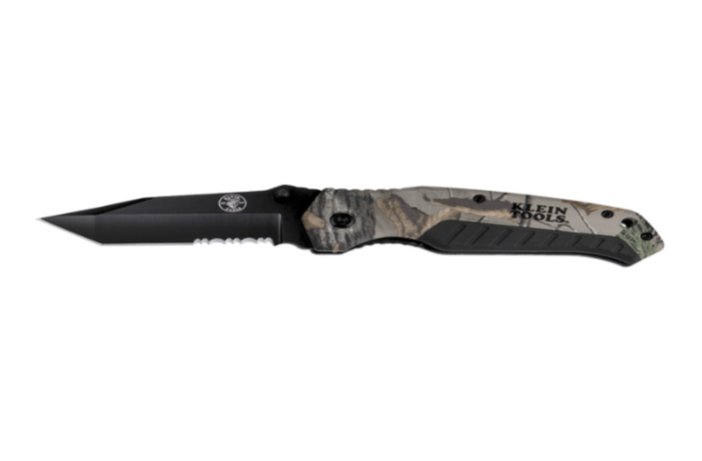 | 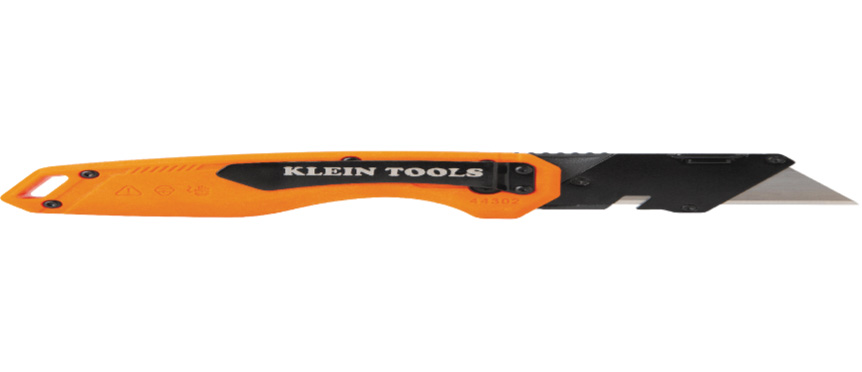 | |
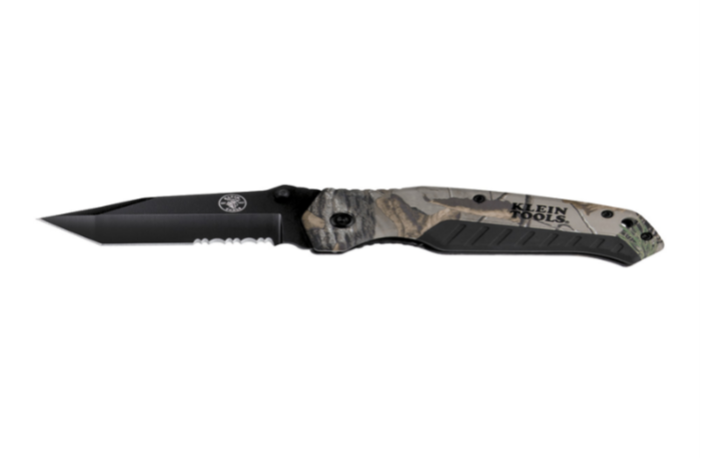
Klein Tools 44222 RealTree Xtra pocketknife with tanto-style blade | Klein Tools 44302 folding utility knife |
Folding knives
Folding utility knives are becoming increasingly popular among tradespeople, as they closely resemble the pocketknives we are used to carrying every day. They are available with a variety of blade types and styles and from a wide range of manufacturers. Many have additional features like belt clips or wire-stripping notches.
Klein Tools’, Lincolnshire, Ill., model 44302 folding utility knife is a standout example that blends the rugged performance of a utility blade with the compact convenience of a pocketknife. Without a ton of frills, it is designed with tradespeople in mind. The knife features a standard replaceable utility blade that is released with a side button and can positively lock the blade in the closed position, 135-degree or 180-degree orientations, allowing for greater flexibility in use. The plastic handle material won’t corrode and provides a greater degree of grip. This knife also has a lanyard hole and a belt clip to keep it close at hand.
For those seeking a tool with multiple functions, Milwaukee Tool’s FastBack 6-in-1 folding utility knife offers a ton of versatility. The tool uses a standard replaceable utility type blade that opens with a press-and-flip mechanism, allowing for easy one-handed opening. It features a tool-free blade-changing system and even has storage for one extra blade. Additional features include a fold-out ¼-inch bit holder that comes with a reversible No. 2 Phillips bit and ¼-inch slotted bit, a built-in wire stripper, a bottle opener and a belt clip. All these features are designed to reduce the amount of overall tools we have to carry.
When it comes to folding knives, the classic style and functionality of Post Falls, Idaho-based Buck Knives’ Buck 110 folding hunter knife is hard to beat. It is simple in design—but that is the point. It doesn’t have bells and whistles; it’s just a solid, foldable 420HC stainless steel blade, razor-sharp clip point, ebony handles and brass bolsters. The knife blade is 3¾ inch long, and when it folds into the handle, the closed length is only 47/8 inch, making it a perfect-sized knife. It can also be carried on a belt with the included leather sheath.
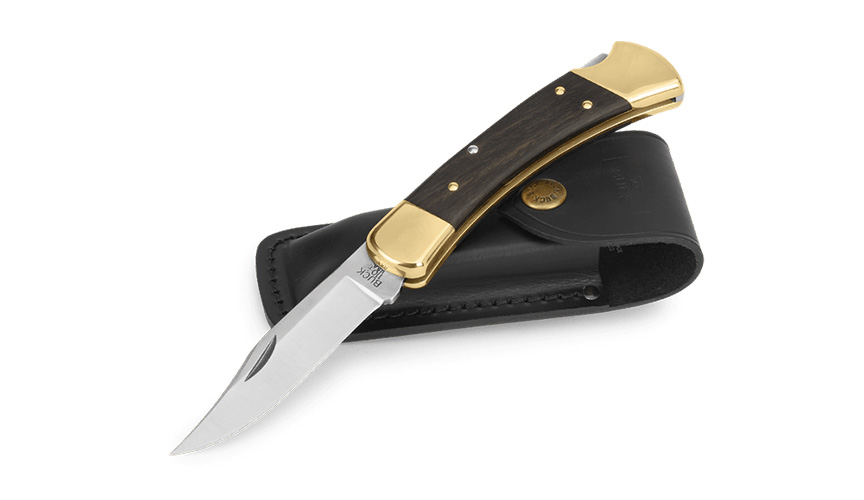
Buck Knives Buck 110 folding hunter knife
Factors to consider
Blade style is one of the most important factors when selecting a knife. While a simple drop point or clip point blade will work fine for most tasks, hawkbill blades are popular among electricians and telecommunications workers. The unique blade shape allows for precise, controlled cuts, significantly reducing the risk of accidental damage to the conductors or insulation.
However, some prefer a sturdier, tactical blade like the tanto point. With two cutting edges, the front portion can be used for puncturing while keeping the main longer blade sharp for slicing and cutting tasks. One example is Klein Tools’ 44222 RealTree Xtra pocketknife, which has a tanto blade. Blades are also available with partial serrations that work well at slicing tough or fibrous materials (like rope or twine).
A knife is only as good as its blade, and like any tool, it should be kept in good working condition. Replacement utility knife blades are easily sourced and cost-effective. Seasoned electricians will keep a supply of sharp blades in a small container in their truck or toolbox.
For a nonutility-type knife, a small honing tool or portable sharpener can extend blade life. Knives should be cleaned regularly, especially after cutting anything that has adhesives, insulation or packaging materials that leave residue. A simple wipe-down with a rag and occasional lubrication of moving parts (like folding mechanisms or slide tracks) will keep your blade ready for action. While WD-40 will usually work fine, check the manufacturer’s recommendations on your particular knife.
Conclusion
Whether it is a dependable, retractable utility knife for heavy cutting, a snap-off blade for precision cuts, a compact and versatile folding pocketknife, or the timeless look and functionality of a Buck knife, there is a knife for every electrician and every job. The key to having a good electrician’s knife is choosing the right one and keeping it sharp, clean and safely maintained. Knives may be simple, but for electricians, they are indispensable, precision instruments—an extension of the hands that wield them.
buck knives | klein tools