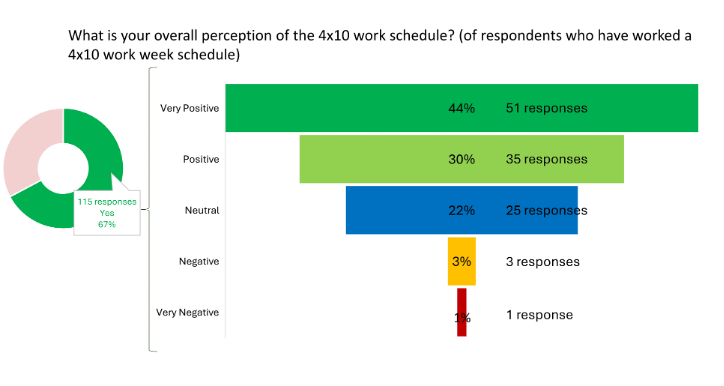
Many electrical contractors are constantly chasing a solution to the elusive higher productivity, lower absenteeism riddle. One solution starting to gain some traction is the 4x10 workweek schedule (four 10-hour days), as opposed to the typical 5x8 schedule (five 8-hour days). ELECTRI International released a new research paper*, prepared by Hala Nassereddine, that examines the 4x10 workweek and the benefits and challenges that go with it.
With the next generation of electricians nearing retirement age, many new electricians coming in see the 4x10 as a viable option and a preference for some. They see it as a quality-of-life upgrade, appreciating the three-day weekend and productivity of the 10-hour day. Nassereddine’s research showed that the majority saw the 4x10 workweek as offering better work/life balance, and improved focus and productivity as a close second benefit. With the improved work/life balance, the absenteeism rate declined.
The 4x10 workweek also allows electrical workers to use the fifth day for personal appointments, such as doctor visits, that would have normally required a missed day. The 4x10 workweek also provides the ability to work the fifth day if overtime is needed, still giving the electrician a 2-day weekend. Another advantage was the reduction of setup and takedown time, reduced from being necessary 5 times a week to 4 times, providing a gain of up to two hours per week.
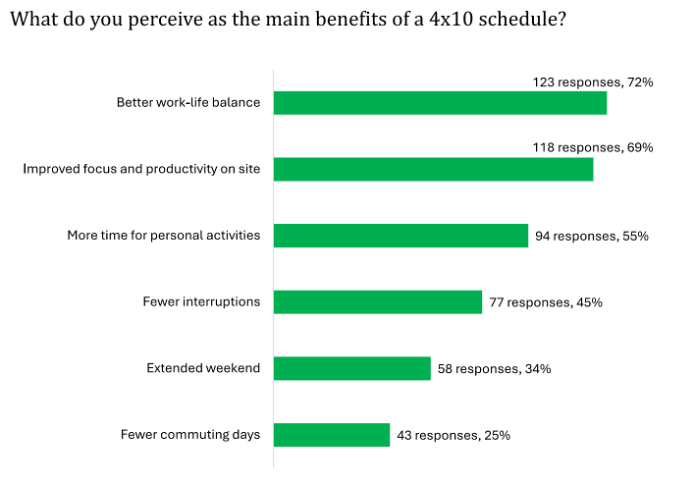
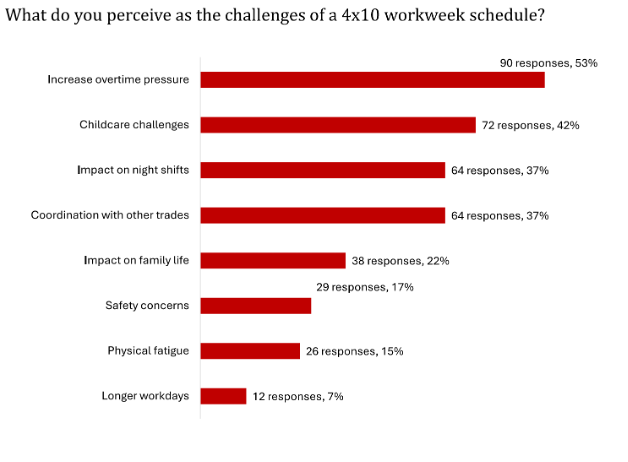
This solution does not come without its own set of challenges, such as increased pressure to work that 5th day as overtime, adjusting childcare schedules and coordinating with other trades that are on the 5x8 schedule. Some jobs also require there to be a certain number of electricians on the job Monday through Friday, requiring the electrical contractor to create overlapping 4x10 schedules—e.g., having one group work Monday through Thursday and a second group working Tuesday through Friday—complicating timesheet submissions.
Trade coordination is also another challenge. Working the 4x10 schedule, there will be times when the electrician is installing without the ability to coordinate with other trades if issues arise. There could also be communication issues between the office and the field if working hours do not align.
As with any other change in the industry, there are benefits and hurdles that need to be overcome. However, with the change in mentality of the incoming workforce, it should at least be considered. The 4x10 workweek could be used as a perk to attract new electricians, the majority of whom would prefer the 4-day workweek if given the choice. It could also help with retention, giving the electrician an option for better work/life balance.
Below are a couple of examples of KPIs that could be used to help evaluate the differences.
Attendance Rate: This will help determine the amount of absenteeism and give the ability to compare 4x10 workweek versus the 5x8 workweek

Retention Rate: This will help determine the amount of retention from a 4x10 workweek versus a 5x8 workweek.

*Editor's Note: To download the report, you will need to create a free account at www.Electri.org or log in to your existing account.
About The Author

CHRISTMAN specializes in innovation and construction technology from an electrical contractors point of view. He is passionate about elevating the industry. He can be reached at [email protected].