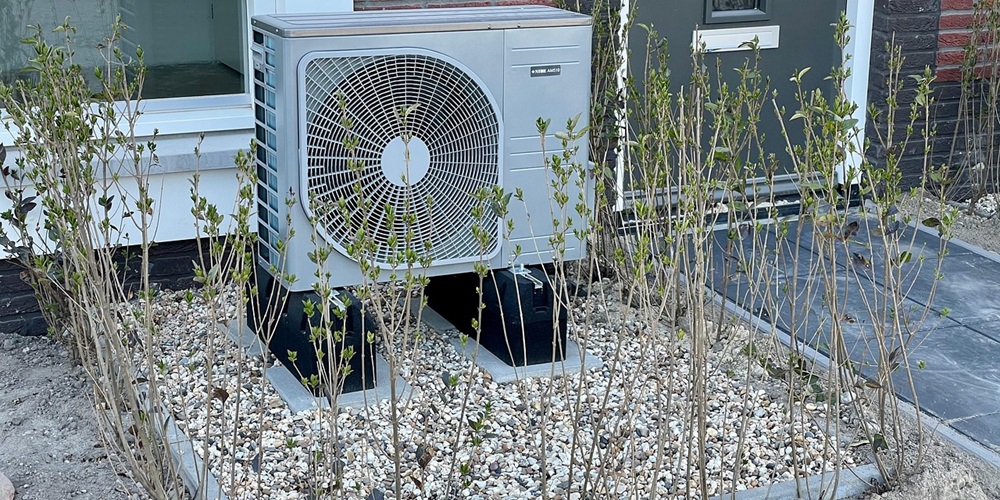
A September 2025 report from Rewiring America suggests that heat pumps, batteries and solar arrays may be able to supply up to 100% of the expected demand growth for electricity from artificial intelligence data centers through 2029.
Demand isn’t the only thing on the rise. Electricity prices are going up. Combined with inflation and the anticipated expiration of federal tax credits for energy-efficient appliances and distributed energy resources, this results in higher energy costs. Just in the first half of 2025, U.S. utilities requested $29 billion in rate increases, according to PowerLines, a nonprofit advocate for an improved energy system.
“The status quo isn’t working for households,” said Ari Matusiak, founder, president and CEO of Rewiring America.
To affordably meet expected near-term load growth, Rewiring America reports that hyperscalers and supporting utilities are considering “centralized, utility-scale solutions, like building fossil fuel or nuclear power plants.”
Alternatively, targeted residential energy investments could be the answer. They offer several benefits, such as offsetting the loss of federal energy tax credits, freeing up more than 100 gigawatts (GW) of grid capacity over five years and laying a foundation for an efficient, resilient power system. Investments could also enable hyperscalers and utilities to skip the typical five- to six-year lead times and avoid both rising construction costs for combined-cycle gas turbines and vulnerability to fluctuating natural gas prices.
Households—particularly those using inefficient electric heating, water heating and air conditioning—could benefit. If hyperscalers cover 50% of the upgrade cost, the typical home could see a reduction of the initial expense to about $9,000.
In total, more than 93 GW of grid capacity could be added at costs comparable to building a new fleet of gas power plants if large tech and infrastructure companies paid 50% of the cost of heat pump upgrades and 30% of the cost of on-site solar and storage, according to Rewiring America. Their gas-parity projection is based on a reduction of at least 40% in installed solar and storage costs, thanks to economies of scale, streamlined permitting and lower customer acquisition costs.
While hyperscalers could unlock 109 GW of additional grid capacity through distributed solar and storage by subsidizing 30% of installation costs to reach cost parity with new gas generation, it would be necessary for every single-family household in the United States to install a home battery, and those with a suitable roof to install a 5-kilowatt photovoltaic system, the Department of Energy’s report on virtual power plants noted. Nevertheless, according to the report and recent research by the Smart Electric Power Alliance and Sparkfund, a 109-GW target is possible.
Additional strategies to offset expected A.I. load growth include distributed capacity procurement, an emerging utility-led approach to virtual power plant (VPP) deployment; clean transition tariffs supporting distributed capacity instead of new generation; and scaled-up, performance-based contracts with third-party VPP aggregators.
“In competitive wholesale markets, such as [the Electric Reliability Council of Texas], data centers could contract directly with DER aggregators that monetize grid services,” Matusiak said.
About The Author

Lori Lovely is an award-winning writer and editor in central Indiana. She writes on technical topics, heavy equipment, automotive, motorsports, energy, water and wastewater, animals, real estate, home improvement, gardening and more. Reach her at: [email protected]