In science, “what-ifs” can lead to new discoveries. A case in point is the firebrick, used in industrial applications. Used for heating throughout history, developers found heated firebricks can serve as thermal batteries, holding extremely hot temperatures and producing non-fossil-fuel heat in the manufacturing processes. Adding electricity to bricks takes things a step further and could lead to the electrification of an entire industrial process.
In its list of 10 breakthrough technologies, MIT Technology Review put thermal batteries at the top. Firebricks have been used for over 200 years, and can be made of molten salt, aluminum, silica or other materials. The steel industry has used them to capture waste heat to reduce fuel demand. Other industries now see their usefulness.
What makes this antique technology a breakthrough? Now that electricity has been added, today’s systems can tap cheap, renewable power and transform that electricity into heat. Several companies have shown the way.
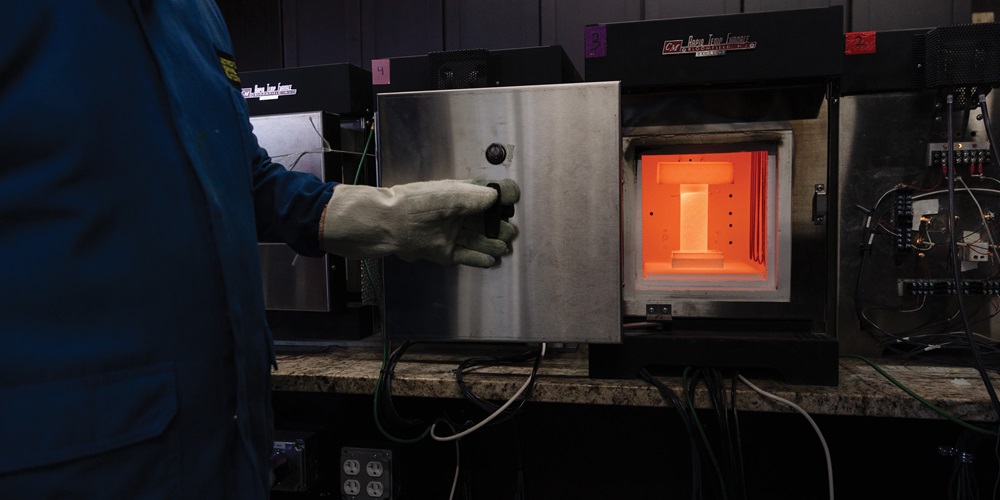
Rondo Energy is one such firm in the burgeoning firebrick thermal battery industry. Based in Alameda, Calif., and founded in 2023, the firm’s Rondo Heat Battery might be described as a large toaster oven using an electric element (iron wire) to heat bricks to 1,500°C (2,732°F). Using thermal radiation, thousands of bricks are heated, storing energy for hours with less than 1% loss per day. To access the stored heat, air flows up through the brick stack and is superheated with the help of the electric element. At the outlet, the heat can be delivered as air or steam.
The Rondo battery can store up to 2.4 gigawatts of energy a year. The firm promotes the use of alternative power to feed the battery and already has a handful of domestic and international customers, ranging from fuel producers to distilleries.
MIT also highlighted global firm Brenmiller Energy, New York. Founded in 2011, its system uses heated, crushed rock in its thermal energy storage units to provide cheap off-peak electricity and deliver process heat. The stones can be heated up to 500°C (932°F), providing up to 500 megawatts (MW) per hour and heat output up to 80 MWth (megawatts thermal). Like Rondo, Brenmiller sees the use of alternative power as a full-circle way to provide clean power in an industrial setting. Its customers include a beverage maker as well as two nonindustrial heating applications—a hospital and student housing.
Conductive electrified bricks
Asking “what if” led Daniel Stack to introducing electricity in a unique way to heat firebricks. During his time as a doctoral student at MIT, Stack worked on firebrick resistance-heated energy storage (FIRES) with Charles Forsberg, principal research scientist in MIT’s Department of Nuclear Science and Engineering. For Stack's doctoral work, he and Forsberg developed firebricks that were electrically conductive, eliminating the need for resistance heaters and allowing the bricks to directly produce heat.
In 2021, Electrified Thermal Solutions (ETS) was formed to introduce its new Joule Hive thermal battery (JHTB). Stack serves as CEO. Based outside of Boston in Medford, Mass., an operational elevator-sized demo of its thermal battery has caught the interest of investors and interested customers alike.
“It’s [JHTB] at an engineering scale," Stack said. "We’re making hot air with it and showing real voltages. Later this year, we will be demoing and testing a scaled-up shipping container-sized JHTB.”
Like others, Stack believes the cheapest way to decarbonize heavy industry is by turning electricity into heat from zero-carbon electricity assets. His JHTP may be the latest advance.
“Electric heating (toaster wires, carbide heaters or molybdenum heaters) can burn out or break down at the temperatures steel, glass or other industries are accustomed,” Stack said. “At MIT, we asked the question, what would it take to run electricity straight through this stack of bricks we already know are great at withstanding flame temperatures?”
His doctoral work centered around how to unlock the electrical properties of the common firebrick. By “tuning” the chemical composition of traditional, inexpensive firebricks—something Stack calls the “secret sauce"—his firm’s firebricks become electrically conductive when applied with voltage to heat them up. Stack calls them ”E-bricks.” That led to a new kind of thermal furnace.
“The bricks used are primarily aluminum oxide and chromium oxide, not too different from clay, which has a lot of aluminum oxide and silicon,” Stack said. “We were able to unlock the bricks’ electrical properties by tweaking the metal oxides.”
The walls and floors of glass-making furnaces and kilns are typically made from chromium aluminum oxide bricks, Stack explained. Accepting super-high heat, including molten glass materials flowing over them, they also have good temperature-cycling ability.
“You treat these bricks right, and they can last for decades,” he said.
ETS’ E-Brick circuits can generate the required temperatures directly from electricity while durably and continuously cycling between low and high temperatures.
A box of bricks
Brick-based thermal batteries house their bricks typically in a stainless-steel container. The same will be true for the ETS conductive brick battery. As Stack explained, the battery could be used to deliver heat to an industrial plant furnace or a kiln.
“The plant could be making cement or steel, or even potato chips," Stack said. "All these things require a tremendous amount of heat. We can fully charge the battery in about 5 hours, and full discharge in about 5 hours. If you want to go slower, that’s easy.”
“We can use the cheapest-priced electricity from wind or solar, nuclear or hydro, absorb that into the Joule Hive battery and give out electrified heat essentially 24/7 at a price that‘s cost-competitive with fossil fuels,” Stack said.
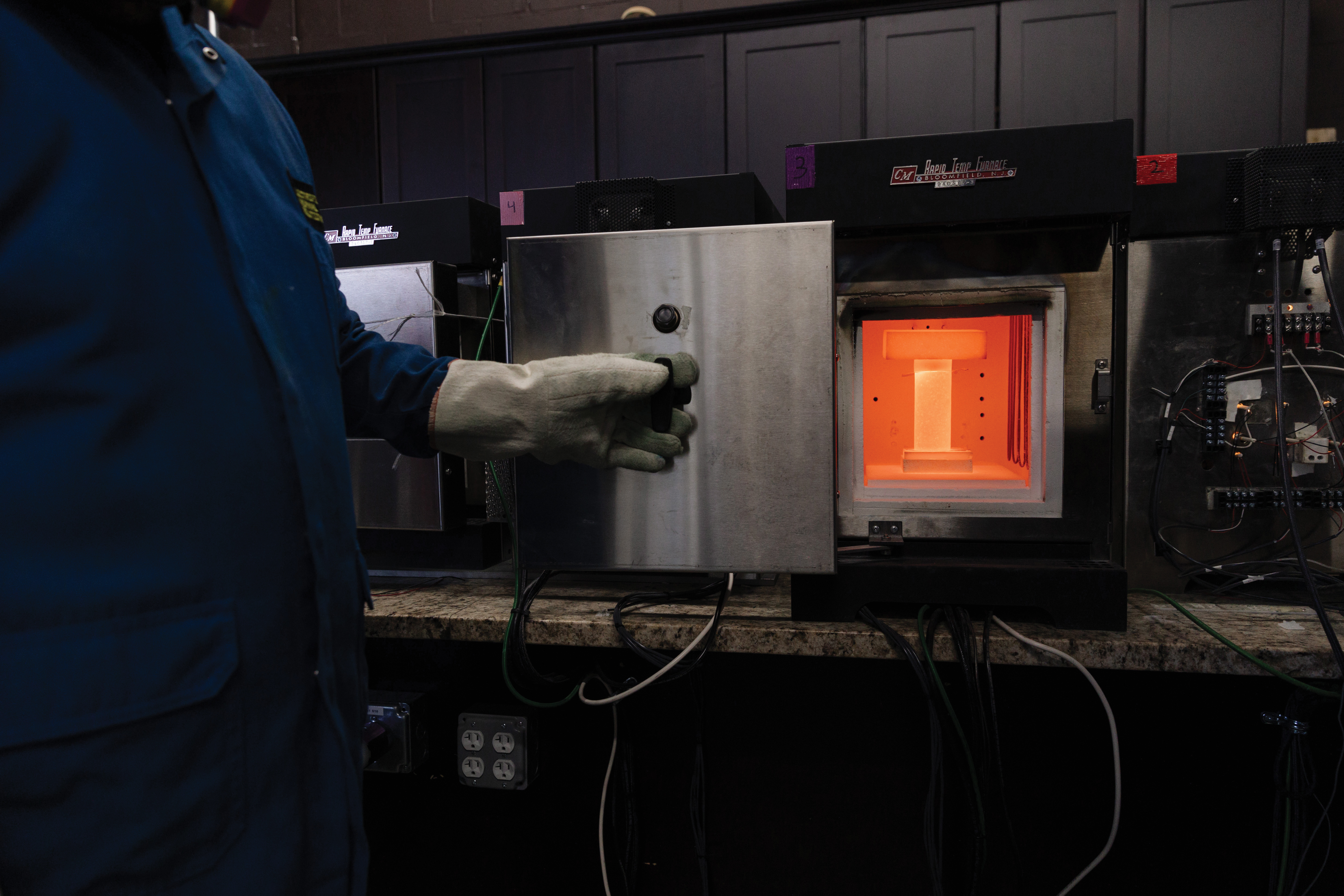
He explained that the battery is composed of E-bricks and regular firebricks. In that mix and configuration, the ETS battery has reached temperatures of 1,800°C (3,272°F), which is hotter than the melting point of steel. That temperature marks a milestone for brick batteries and opens the door for ETS to pursue industries that operate furnaces or other heat devices at such extreme temperatures. It should be noted the technology does not preclude using a fossil fuel source.
“We want to be an alternative bulk heating system for the largest industries, by bringing something genuinely new to the table” Stack said.
Like other brick-centric thermal batteries, the JHTB’s heated bricks may be fed an airflow or gases to heat based on customer needs. The resulting hot air from the battery could also be fed into a boiler chamber to run steam pipes. Gases such as hydrogen or carbon dioxide could be blown into the battery and heated, depending on plant needs.
 | .jpg?sfvrsn=1448a8c_3) | |
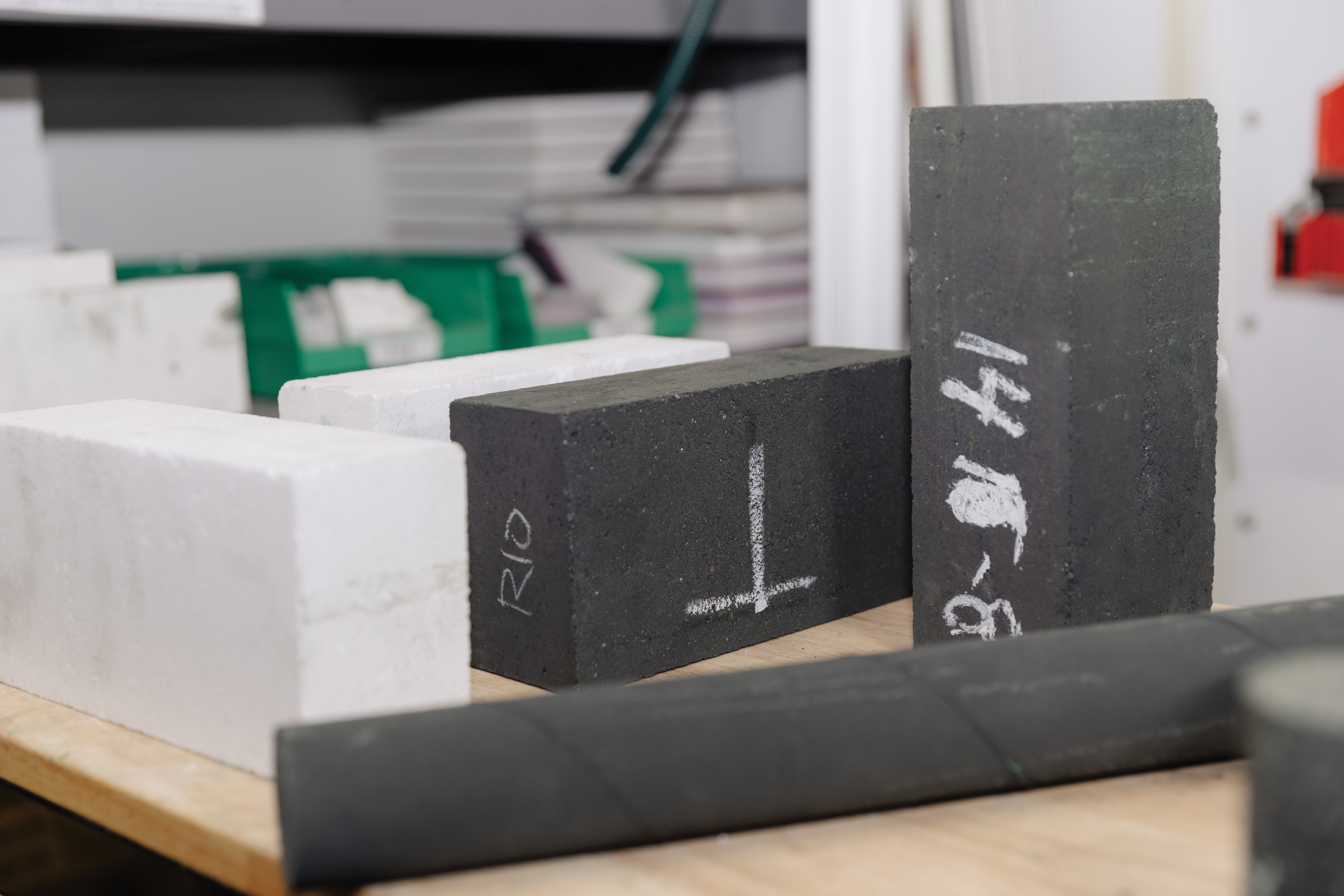
Electrified Thermal Solutions’ E-brick heats up and stores energy when voltage is run through it. | Joined with traditional firebricks in Electrified Thermal Solution’s Joule Hive thermal battery, the electrically conductive E-bricks help the battery deliver heat as hot as 1,800°C (3,272°F), a first for a brick-based thermal battery. |
An important pilot
Stack envisions the Joule Hive battery supplying 5, 10 or 20 MW of power. A shipping container configuration sized at a commercial scale (5 MW) will be piloted this year at the Southwest Research Institute in San Antonio through a $5 million grant from the U.S. Department of Energy. The battery will feature a stainless-steel lining providing thermal insulation for an inner chamber housing the core stack of electrically conductive and regular firebricks.
The project will run the JHTB to deliver high-temperature heat applicable for several industrial processes, including cement manufacturing, which currently relies on burning coal. ETS industrial partners include 3M, Buzzi Unicem USA and Amy’s Kitchen. The Electric Power Research Institute will help analyze life cycle cost and economics, assist with third-party verification and identify potential deployment sites. Other project advisers include Novelis (aluminum), Imerys (minerals), electric utilities Entergy and Tennessee Valley Authority, and leaders in basic chemical and steel production.
“There will certainly be a lot of learning, and I hope strongly demonstrated milestones from this system,” Stack said. “We’re excited that it will be running at the 13.8 kilovolts that is so typical of industrial sites across the U.S. and other countries.”
Stack said that his company is looking at additional configurations of its JHTB.
“We also plan to design tower-style systems that resemble a steel industry stove or a generator used in the glass industry. These would fit the footprint within the plants of these industries. The largest industries want hundreds of megawatts, and we could do that with just a few of these taller tower units,” he said.
Grid support
Stack described a hybrid perspective regarding its JHTB.
“Customers want heat at the lowest price. By accumulating heat when prices are lower on the electricity side, you are giving yourself the cheapest electricity as a heat source. This heat storage ability is also attractive for customers that might tie energy storage into the grid. That makes the JHTB a flexible asset much like traditional storage, but with a much cheaper battery using E-bricks versus lithium-ion.”
Other industry interest includes steel manufacturer ArcelorMittal, which signed a memorandum of understanding with ETS to conduct validation tests at its GasLab facility in Asturias, Spain, and explore pilot-scale deployment across its global operations.
“We have great industrial buy-in and we’re moving across the board on purchase agreements from different groups of industry,” Stack said. “Other industrial investors in our corner include Holcim, the largest cement company in the world, and Vale, the largest mining company in the world for iron ore.”
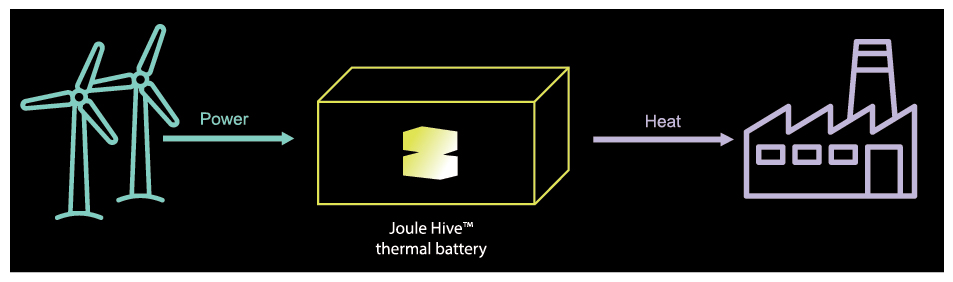
The Joule Hive battery system offers an alternative for supplying industrial process heat.
Enter the contractor
The JHTB will need electricity to feed it.
“Electricity is the heart of it, the power source,“ Stack said. “Every deployment will need to interface with either the utility drawing from the distribution system at, say, 13.8 kilovolts, or other medium-voltage distribution systems to our power module hooked up to our main Joule Hive core. Certainly, electrical contractors and the electrical infrastructure side of what we do here is going to be crucial.”
Stack sees industrial electrification as a vision for the future. An E-brick could be that important building block.
Electrified thermal solutions
About The Author

GAVIN, Gavo Communications, is a LEED Green Associate providing marketing services for the energy, construction and urban planning industries. He can be reached at [email protected].