To an outside observer whose understanding of line work comes from Glen Campbell’s “Wichita Lineman,” it may seem that the trade is a straightforward combination of a few challenging pieces: climbing poles, operating heavy machinery and obeying safety regulations.
To experts, however, a fully competent lineworker is trained in the theory of electricity’s interaction with the human body, the operation of machinery for line work’s particular demands, safe use of voltage testers and other measuring tools, open communication and working on a team. Only a holistic approach satisfies the demands of the job and keeps lineworkers safe from pole to pole.
Close, but no cigar
Of course, operating safely on any job site requires line and inside wire journeymen and apprentices to have equipment certifications to operate cranes and digger derricks. But, according to Brian Schneider, a senior instructor for Powerline Training Consultants, AuSable Forks, N.Y., only Electrical Industry Certifications Association (EICA) Electrical Instrumentation Control Automation Engineering certification ensures maximum safety and flexibility in the electrical environment. EICA was founded in 2014 and formed in 2015 to address the electrical industry’s need for safe crane operation near and around electrical lines, as well as safe operation in wilderness terrains common in transmission line environments.
“A crane operator, with state qualifications only, will stop working within 20 feet of power lines,” Schneider said, who teaches and tests lineworkers and apprentices for obtaining EICA certifications for operating digger derricks and cranes.
“An EICA-certified crane operator is actually trained as an electrical worker, meaning they can identify live electrical parts and understand minimum approach requirements,” Schneider said. “They are able to work safely up to 3 feet, 3 inches from power lines under the direction of an IBEW journeyman.”
Schneider trains people for EICA certification all over the United States, but he’s paying special attention to four states that still do not recognize EICA training—New York, Connecticut, Massachusetts and Rhode Island.
“We’re trying to train operators in greater numbers in these states so that the states will realize it’s a good thing to have certification for this specific industry,” Schneider said. “Right now, crane operators in these states aren’t prepared to work safely in the electrical setting unless they have EICA training.”
Training centers mostly request EICA training for apprentices and journeymen, but employers also can request EICA testing, whether for inside wire or line personnel.
Cranes, training and apprenticeships
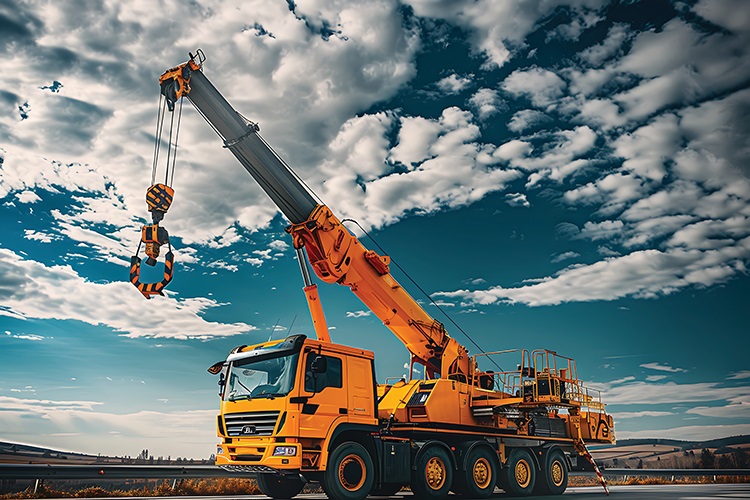
The EICA certification covers operation of rotating and stationary telescoping cranes as well as digger derricks.
“Most importantly, you have to show proficiency for operating in the electrical space,” Schneider said.
“EICA equipment certification pertains to working directly in power lines. It goes above and beyond crane training standards in most states,” said Neil Tolson, EICA’s executive director. “Not being EICA qualified and certified poses a conflict in the electrical setting because the work can’t be safely carried out.”
A state-certified crane operator also would not be trained to use an insulated articulated arm to move live power lines aside, Schneider said.
Hand signals are used to communicate. “But in the electrical space, the lineman basically commands the equipment operator on what they need to do,” Schneider said.
With more than 25 years in the electrical industry, Schneider is an inside wireman and lineworker. Schneider maintains a New York Class A commercial driver’s license, hydraulic crane and digger/derrick license. To obtain his EICA certification and renew it, Schneider has taken the same three-day EICA course he teaches.
“I can’t say enough good things about EICA,” he said. “I have no influence over who passes. I just evaluate their performance and turn in the results. EICA decides who passes.”
Even when lineworkers and journeyman are EICA certified, Schneider reminds his students that cranes and digger derricks are made by a variety of manufacturers, which accounts for subtle differences in controls.
“You can’t just jump on a piece of equipment you’ve never operated before, even though you are EICA certified, without taking time to familiarize yourself,” Schneider said.
As employers, line contractors are ultimately responsible for making sure equipment operators are adept at operating the controls on individual pieces of equipment, before starting any job. Whether the electrical contractor trains the operator or hires outside trainers, the employer—not the hired trainer—is responsible for safe operation.
Even so, EICA certification does a good job of making sure journeymen, apprentices and others are prepared to operate cranes and digger derricks in the electrical setting, Tolson said.
Once EICA obtained accreditation from the ANSI National Accreditation Board (ANAB) in 2017, EICA’s crane and digger derrick training and certification became a must for Department of Labor apprenticeship programs.
Tool competence
For about 10 months of the year, Brent Jeffries, vice president of field operations and safety instructor for Bierer Meters, Blythewood, S.C., travels by air throughout North America with a 70-pound case filled with his company’s line safety testing tools.
About eight years ago, the stepson of the company’s founder developed a novel approach to increasing sales contacts. In the process, he also fostered a unique and growing culture of electrical safety.
Jeffries began conducting safety workshops for utility employees, journeymen and apprentices at training centers and campuses of utilities and electrical contractors in the United States and Canada. The presentations start by reinforcing proper use of Bierer Meters tools and equipment, but they move on to interactive discussions about psychological safety for those working in the line industry.
“We start with tool competence and how to use the tools,” Jeffries said. The tools include voltage indicators, Hi POT meters, service testers/cable identifiers, DC meters/rail meters, personal ground testers, grounds and jumpers, and phasing meters.
The idea is to ensure workshop participants employ necessary safety practices, such as determining whether conductors are energized, making sure systems are phased properly, correctly identifying different types of cable and checking whether ties are sound.
“Then we go over past incidents they can avoid using these safety practices,” Jeffries said. “I also show them how electricity can flow across the body, with a 3,000-kilovolt power supply. They also get to see how electricity flows when a person is not working safely.”
“Much like an electrical system, metal pipes and metal structures, we, too, require equipotential grounding to the earth,” Jeffries said, adding that the same principle relates to the dynamics of human interaction.
“When we’re grounded, when there’s open communication, we’re like a well-functioning grid. When everything is connected, that’s the only way to reach our full potential working as a team,” he said.
Jeffries calls that sense of connection “your electric reality.”
“It must be supported by an environment that encourages open communication and leadership skills,” he said. “These should be taught side by side along with how to wire a circuit.”
Rewiring ourselves
Jeffries helps workshop participants identify red flags that can disrupt group connection and communication. As an example, he recalled one workshop participant who prefaced statements by saying, “I’m just an apprentice, but … ,” as if what he was about to say would not be valued as much as contributions from others.
“Stuff like that is part of the top-down matrix that tries to conquer, divide and control,” Jeffries said. “But much more can be accomplished with a spirit of cooperation and human connection.”
Jeffries never charges for his workshops, which have grown in popularity. He conducts anywhere from three to five per week.
“Everyone from CEO to groundman begin[s] to see the importance of working together,” he said.
Under Jeffries’ leadership, Bierer Meters also founded a grassroots organization called Electric Culture of Safety (ECOS). The coalition boasts more than 14,000 members from the line industry to promote “Line Team Attitude” and best safety practices.
Members and experts share industry knowledge and experiences through online presentations, workshops and discussions. Among one of ECOS’ strongest supporters is Mike Starner, executive director of outside line safety for NECA. His online discussion with Jeffries, “The Dark Woods,” explores unknowns that lineworkers face in the field.
“Changing hearts and minds as the presenters share their sometimes very raw feelings and passion about the safety of our fellow sisters and brothers out there on the line,” said Lito Wilkins, journeyman lineworker and safety director for International Line Builders Inc.’s Northern California division. “This is exactly what the trade needs in a time where too many aren’t making it home safely at the end of the day.”
Visit the ECOS website, electriccultureofsafety.com, to view discussions and presentations like the ones conducted by Jeffries and Starner.
MahmudulHassan / stock.adobe.com
About The Author
.jpg?sfvrsn=a64b988b_1)
DeGrane is a Chicago-based freelance writer. She has covered electrical contracting, renewable energy, senior living and other industries with articles published in the Chicago Tribune, New York Times and trade publications. Reach her at [email protected].