In late June, the nation’s largest transmission infrastructure project in history, the Grain Belt Express, was on the verge of breaking ground. Two weeks later, a phone call from President Donald Trump to Energy Secretary Chris Wright, at the request of Missouri Senator Josh Hawley, put the effort’s future in danger.
The project, which has been in planning and approval stages for 15 years, had received federal loan guarantees under the Biden administration that Trump ordered Wright to cancel. This decision, along with efforts by the Missouri attorney general to force state regulators to withdraw their approval for the project, will likely end up in court, potentially pushing construction start dates back.
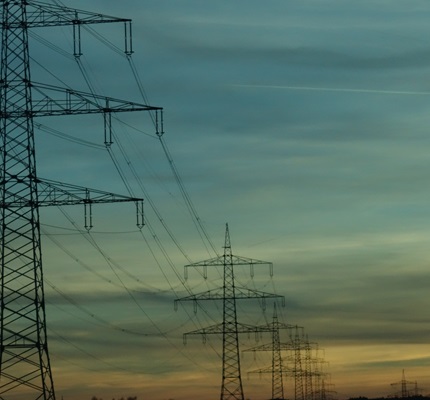
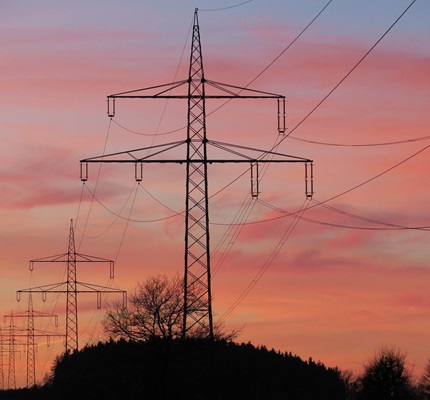
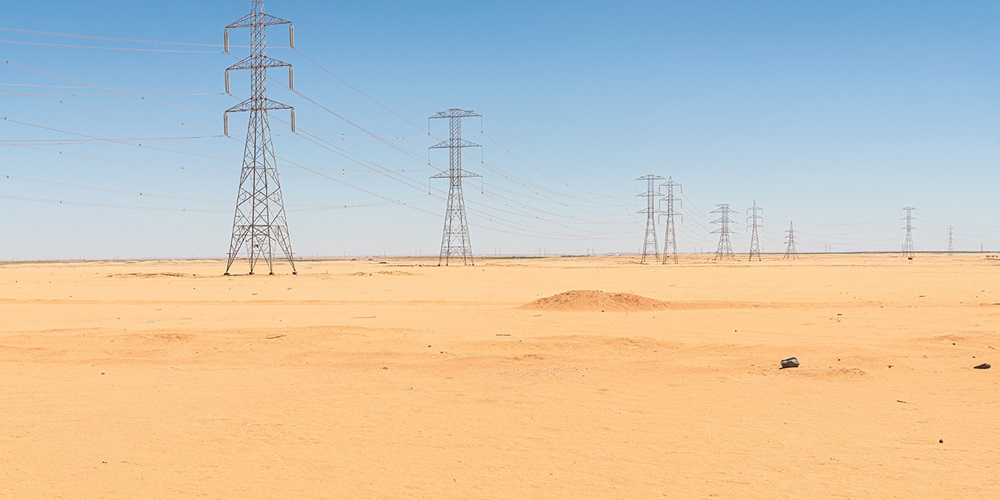
While this example is extreme in its ambitions, it highlights the challenges new transmission (often called “greenfield”) proposals face in today’s political environment. As a result, some transmission owners and developers are exploring what they can do to get more out of their existing rights-of-way.
Potentially historic reach
The Grain Belt Express is designed to do what no transmission line has done yet at the scale intended by its owner, the energy company Invenergy. Plans call for the line to carry thousands of megawatts (MW) of electricity from wind farms in Kansas and points west across four state lines and, most important, across the borders of three independent system operators.
The latter has long been a goal for transmission companies and green energy supporters, bringing wind-generated energy from the nation’s wind-rich western half to population centers east of the Mississippi. Winds are relatively steady in the regions that would feed into the new line’s supply, which could help balance out fluctuations in customers’ territories. And they are most productive at night, when solar resources fade.
The price tag is estimated at $7 billion to $11 billion—a significant cost, for sure. But the fuel for the energy it would carry would be essentially free over the course of a 50-year service life, so customers wouldn’t have to worry about the price fluctuations fossil fuels, such as natural gas, can face.
According to news reports, Hawley has been requesting that the Department of Energy cancel its $4.9 billion loan guarantee for the project, arguing against the eminent domain powers granted by the Missouri Public Service Commission after years of negotiations and plan alterations. He also raised his concerns in a meeting with Trump. On July 23, 2025, the loan guarantee was canceled. As of this writing, the project’s fate is uncertain.
In the meantime
While transmission construction at the scale needed to address feared energy shortfalls seems stalled, demand for electricity grows. While artificial intelligence-related data centers are seen as a prime driver, they’re hardly the only one.
“Prior to the growth in data centers, we already had thousands of gigawatts of generation and storage capacity waiting in the interconnection queues waiting to come online,” said Amy Rose, group manager II, model engineering for the National Renewable Energy Laboratory’s Grid Planning and Analysis Center. “Another factor that is often less appreciated is the role of transmission to support grid reliability, by transmitting power where it is most needed during periods of grid stress, such as extreme weather events.”
As Casey Baker, senior program manager with energy research group GridLab, Berkeley, Calif., noted, the demand is growing quickly.
“In 2023, the U.S. Department of Energy found that, even under the most modest scenarios, the U.S. needs to increase regional transmission capacity by at least 20%, but more likely 64%–124% over the next decade. We’re even more behind with interregional transmission,” Baker said.
Baker is co-author of an April 2024 paper, “The 2035 Report: Reconductoring,” which outlines potential transmission gains offered by upgrading lines already operating.
“Our report found there is enormous untapped potential near existing rights-of-way, where line uprating could effectively unlock 100 terawatt-miles by 2050,” he said. “We believe that, in the near future, this is the best tool to expand the system, while siting and permitting the greenfield transmission needed to unlock new, lower-cost generation and serve new and growing customers.”
Among the reconductoring strategies outlined in the report is the idea of replacing traditional steel-core conductors with advanced, high-temperature, low-sag products—a smaller, lighter and stronger composite material, typically ceramic, glass or carbon fibers. This design allows more of the aluminum that conducts electricity to be incorporated in the same diameter. As a result, lines can operate at higher temperatures while line sag is reduced.
Boost current efficiency
Making use of surplus capacity at locations where existing generation interconnects with the grid, called surplus interconnection, is another tactic for getting more power onto existing lines.
“Using surplus interconnection capacity could avoid or defer the need for new transmission investments and allow more lower-cost resources onto the grid faster,” Rose said. “Some regions are trying to facilitate this through maps and other publicly available resources, to allow developers to identify areas that may have surplus capacity.”
Planners are especially interested in co-locating resources such as energy storage adjacent to peak-period generators that might only operate 10% of the year.
“The best metaphor is a mall parking lot, which may need to be large for Christmas shopping season,” Baker said. “In response, malls often rent out the unused parts for RV shows, carnivals and other events. Surplus interconnection service allows that generator owner to add resources without going through the interconnection queue. We see this as a huge opportunity and potentially the fastest way to bring new capacity onto the system.”
There’s also the option to ensure existing conductors are used at their highest capacity based on existing weather patterns. Traditionally, transmission owners have set line capacities based on assumed conditions throughout the year. These capacities might shift between seasons, but otherwise remain static. A new approach called dynamic line rating (DLR), uses advanced sensors to control energy flow on a more real-time basis.
“They adjust the amount of power that can be transferred based on weather conditions such as wind speed, temperature and solar irradiance,” Rose said, noting the possibility of a 10%–30% boost in transfer capacity, based on DOE findings.
DLR can help address line congestion, a contributor to higher utility bills. When lines are overtaxed, they might not be able to deliver the lowest-cost electricity to consumers, forcing local utilities to turn to more expensive generation options. This raises costs to customers. So, being able to safely raise the capacity of existing lines could help bring prices down.
PPL Electric was the first U.S. utility to adopt this technology, with a monitoring program that began in October 2022, choosing three historically congested 230-kilovolt transmission lines for their trial. After running the system through the 2022–2023 winter, the utility found congestion costs on a single line fell by $65 million, compared to the winter of 2021–2022. The move also delayed the need for $50 million for new transmission infrastructure.
However, as Baker noted, DLR has limits, especially in warmer months.
“In summer peaking systems, particularly in the desert Southwest, there may not be a lot of potential because the system is congested during the hottest part of the year,” he said. “You can’t squeeze too much more power out of line safely when it is really hot.”
Baker cautions that new strategies, which can also include raising tower heights and converting longer AC lines to high-voltage DC, can only get us so far when it comes to meeting rising demand and maintaining reliability in extreme weather.
“We absolutely need new greenfield lines, and we need to be moving on mapping those out and building them, ASAP,” he said. “The recent outage in Louisiana, and during Winter Storm Uri in Texas, showed that new—particularly interregional—transmission is direly needed to address extreme weather risk.”
Transformer Shortfall Is Also a Threat
Developers are facing historic delays in the production of new electrical transformers, and many now in operation are at risk of aging out of service.
“For project developers, the lead time for transformers could be more than two years—I’ve heard concerns from developers and manufacturers that if we are able to speed up project permitting, it may exacerbate our transformer supply chain problems,” said Amy Rose, group manager II, model engineering for the National Renewable Energy Laboratory.
A June Wood Mackenzie report sees delivery periods stretching over three years.
“In the U.S., we have a handful of companies that manufacture large power transformers [LPTs], but about 80% of our demand is met by imports,” Rose said. “Even for the manufacturing facilities we have, we import key components such as grain-oriented electrical steel and manufactured cores.”
The need to replace existing units could complicate issues. LPTs are designed for a service life of about 40 years, and a 2014 Department of Energy report estimated the average age of installed units was then 38–40 years. Manufacturers now are stepping up U.S. production capacity, but transformers are designed to meet location-specific requirements, making rapid upscaling difficult.
“There are several companies building or expanding facilities to build new transformers or refurbish existing one,” Rose said. “But we will likely need to import the majority of our LPTs for the next decade.” —C.R.
STOCK.ADOBE.COM/TRAVELLING JACK
About The Author

ROSS has covered building and energy technologies and electric-utility business issues for more than 25 years. Contact him at [email protected].