As the federal government downsizes its support for electric vehicles, states are left to backfill the deficit.
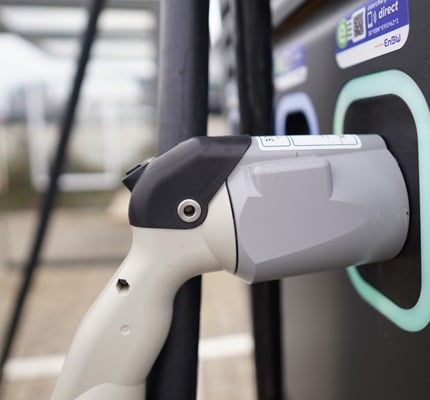
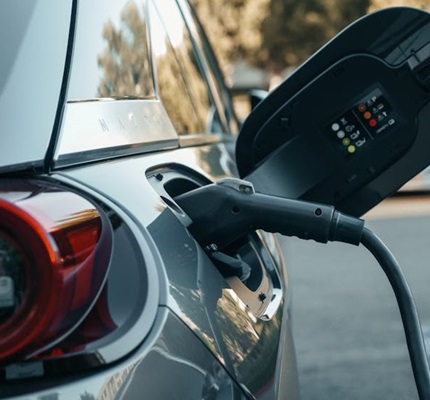
The nation’s EV leader, California, is doing just that. Recently, the California Energy Commission (CEC) announced the launch of the Fast Charge California Project, a $55 million incentive program. It will provide up to 100% of the installation costs for EV fast chargers at businesses and public sites.
The program is part of the CEC’s California Electric Vehicle Infrastructure Project (CALeVIP), which the state describes as “the nation’s largest EV charging incentive initiative.” According to California, CALeVIP has helped with the deployment of nearly 10,000 EV chargers since 2017.
To qualify for funding from the Fast Charge program, sites must be publicly accessible. Priority will be given to sites located in tribal areas and disadvantaged or low-income communities. Eligible locations include convenience stores, gas stations, retail centers, parking lots and other high-traffic destinations.
Other highlights of the program include incentives for DC fast chargers only, $55,000 per port for 150–274.99 kilowatts (kW), and a cap of $100,000 per charging port for over 275 kW.
According to Hannon Rasool, director of the CEC Fuels and Transportation Division, Fast Charge California is unprecedented, with several firsts. “It is the biggest CALeVIP project ever,” he said, adding that “it is the first to be statewide. And, it’s the first to cover up to 100% of eligible costs.”
California is the nation’s EV leader, with 1.25 million registered EVs statewide, according to the U.S. Department of Energy. That’s five times the number for both Florida and Texas, the two states with the next closest totals, both at about 250,000 registered EVs.
While California also has highest number of public charging stations of any state in the nation, it ranks a dismal 49 out of 50 in public charging stations per the number of EVs in the state, according to the Pew Research Center, because of the high number of EVs.
While the Golden State is making strides to address this discrepancy, not all news is bad concerning federal support. Earlier this month, the U.S. Department of Transportation (DOT) issued new, revised guidance for the National Electric Vehicle Infrastructure program, which gives states a path to applying for funding again. This comes after the DOT had previously paused the program in February to conduct a policy review.
About The Author

LAEZMAN is a Los Angeles-based freelance writer who has been covering renewable power for more than 10 years. He may be reached at [email protected].