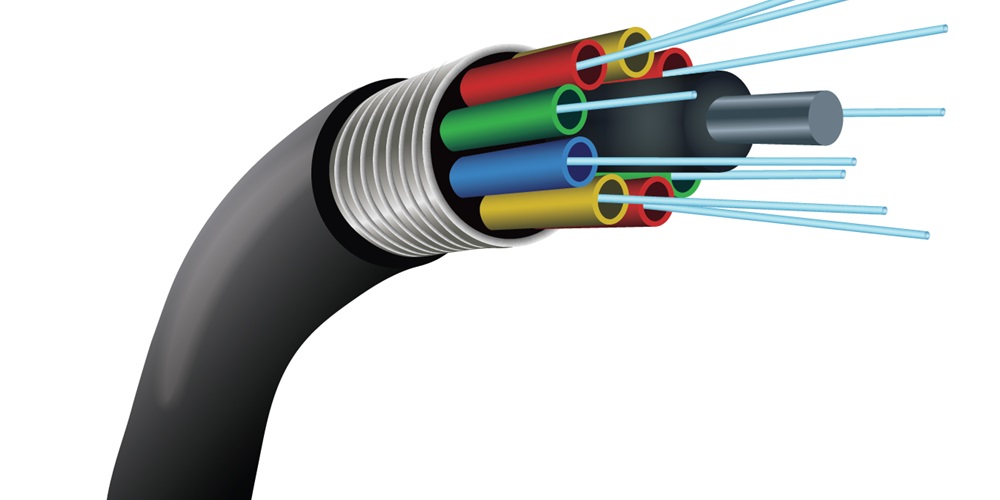
While walking down the street near the Fiber Optic Association’s office recently, we found a scrap of fiber optic cable laying in the gutter. What a find! It was a short length of Corning Rocket Ribbon 864 fiber cable left over from an installation by a contractor.
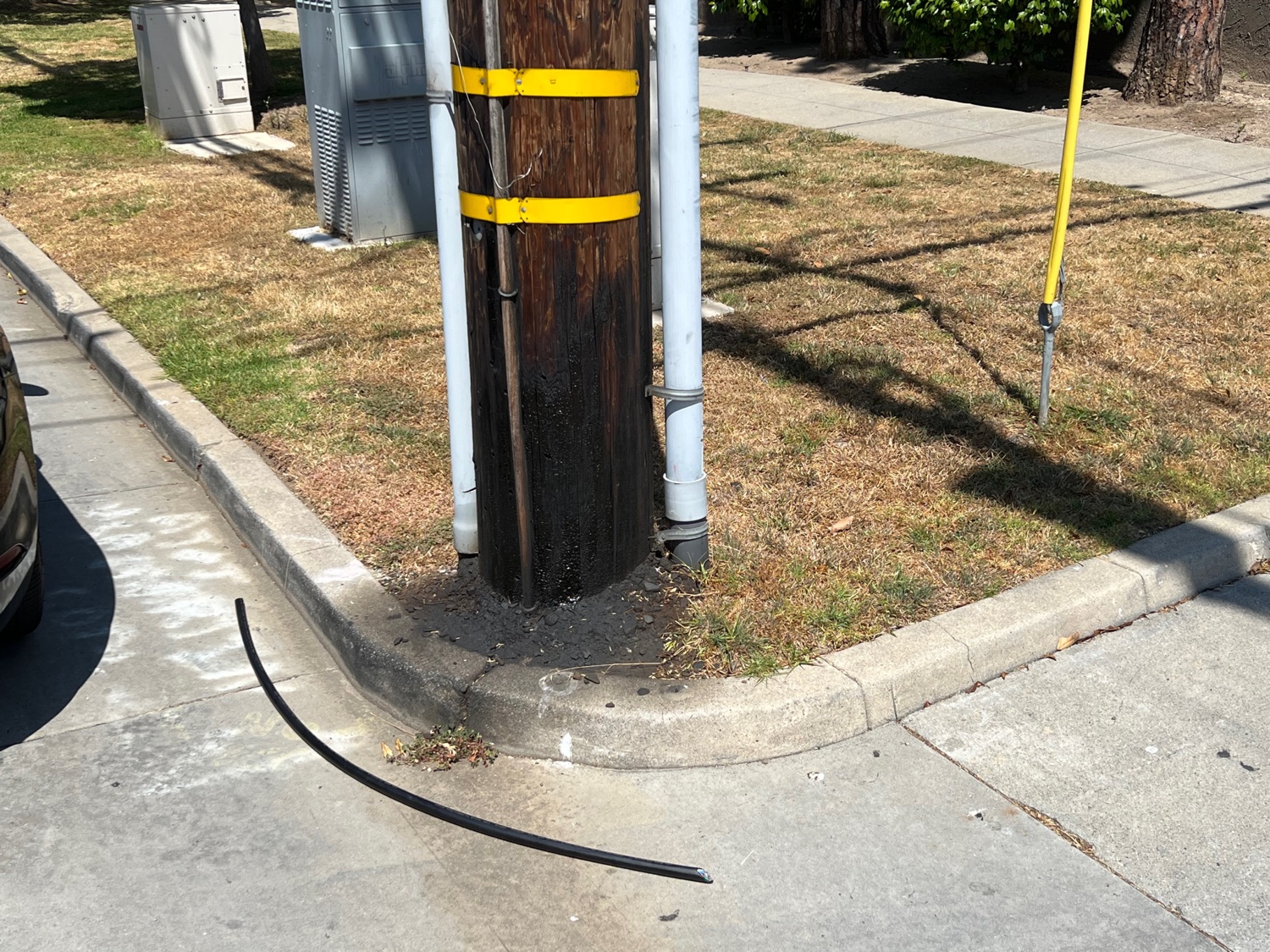
Corning RR cable found on the street
We brought the cable back to our office with the intention of opening it up and creating a video about the construction of this modern high-fiber-count cable, but something got our attention first. The cable had a very long line of printing on it with lots of interesting and useful information.

Before we started deconstructing the cable, we took time to photograph the printed information and try to interpret it. That turned out to be the most important information we learned from it. Then, as you will see below, we dissected the cable and learned even more.
Let’s look more closely so we can easily read the cable information.

The text on the cable starts with the Corning product name “Corning Rocket Ribbon (TM) Optical Cable,” the date of manufacture, “01/2022” and a serial or build number. The antique phone handset graphic denotes this as a telecom cable.
Here is the most important information:
- 864F means the cable contains 864 fibers
- SM means single-mode fiber
- 250 means the fiber has a 250-micron buffer coating
- 0.89IN means the cable has a diameter of 0.89 inches (metric would be in mm)
- 206 LB/KFT means the cable weighs 206 pounds per 1,000 feet (metric would be kg/km)
- MBD 27IN means the minimum bend diameter is 27 inches (metric would be in mm or cm)
- 600LBF means the maximum pulling tension is rated at 600 pounds (metric would be in Newtons)
There is a lot of information in those few inches along the cable—information that every installer needs to know.
Since it is an OSP cable, we assume it is single-mode fiber, of course.
When you are fusion splicing this cable, you need to know the coating diameter for choosing the proper fixturing for your fusion splicing machine.
The weight of the cable is important if the cable is being lashed to a messenger, because it is used to calculate loading on the messenger and can determine the size and tension on the messenger.
The minimum bend diameter is important if the cable is being coiled or pulled over a capstan, sheaves or blocks. And the pulling tension applies if the cable is pulled, not in the case of aerial installation like this one.

The next text is the cable model number and the length. “SR-5B9MR-864” is a Corning SST (Single tube) UltraRibbon Gel-Free Cable with low water peak fiber.
And finally, the cable has distance marked: “00030 FEET.” On this cable it’s updated every 2 feet. Knowing how much cable is on the reel or the distance at the other end of the cable on the reel allows installers to keep track of how much cable was used and how much more is left.
This is an excellent example of why you need to learn to read cables. There is a lot of useful information, and some is critical for proper installation. On the next job, take a minute and read the cable you are installing; you might learn something interesting and useful too.
Note: This is an outside plant cable. Indoor cables should have similar information, but also include some note of being tested for flammability such as a UL registration.
What does the cable look like?
Next, we continued examining and dissecting this cable.
When you look at the end of the cable, you understand how dense it is. There is no internal strength member; the arrow on the right points to a foam plastic filler that spaces the 6 bundles of ribbons. The arrows point to the strength members—two on each side of the cable embedded in the jacket.
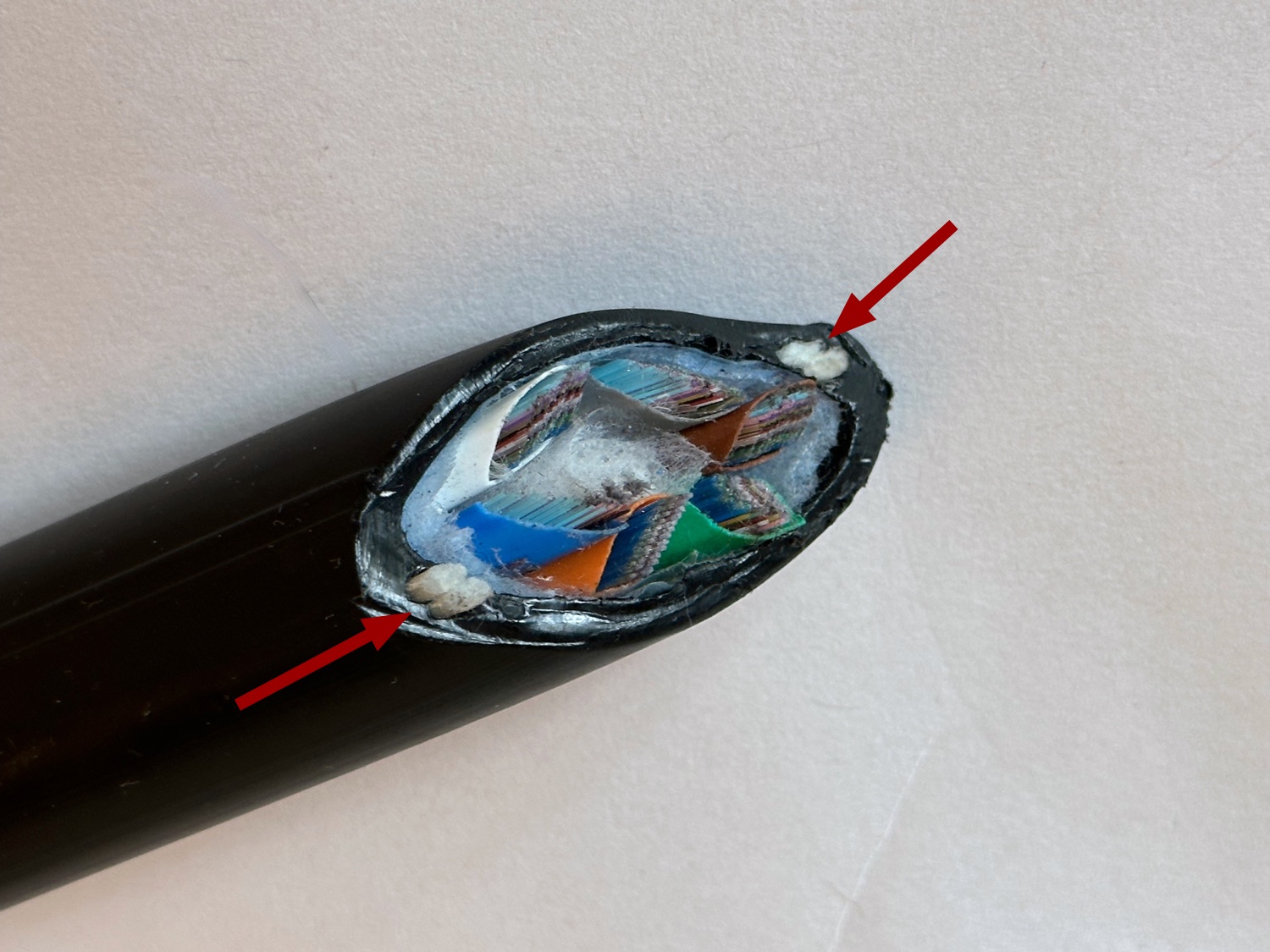
The cable is only 0.89 inches (22 mm) in diameter, but was too large for our cable jacket cutter, so we used a knife to split the jacket to expose the 6 color-coded bundles of ribbons on the inside.
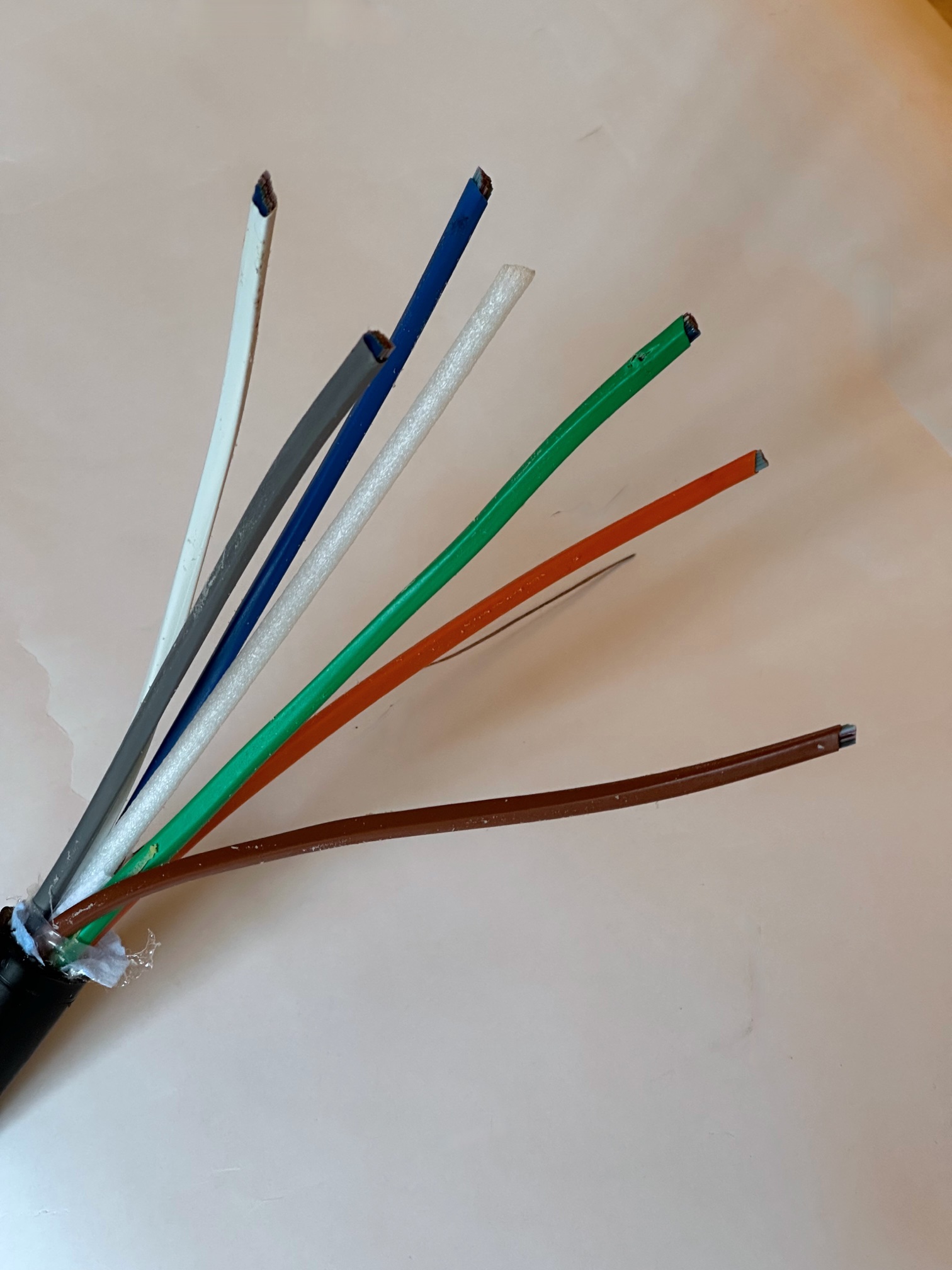
The directions on the Corning website said to use a fingernail to strip the coating on the ribbon bundles, and it worked since the coating was soft plastic. Below you can see the 12 ribbons from the white bundle.
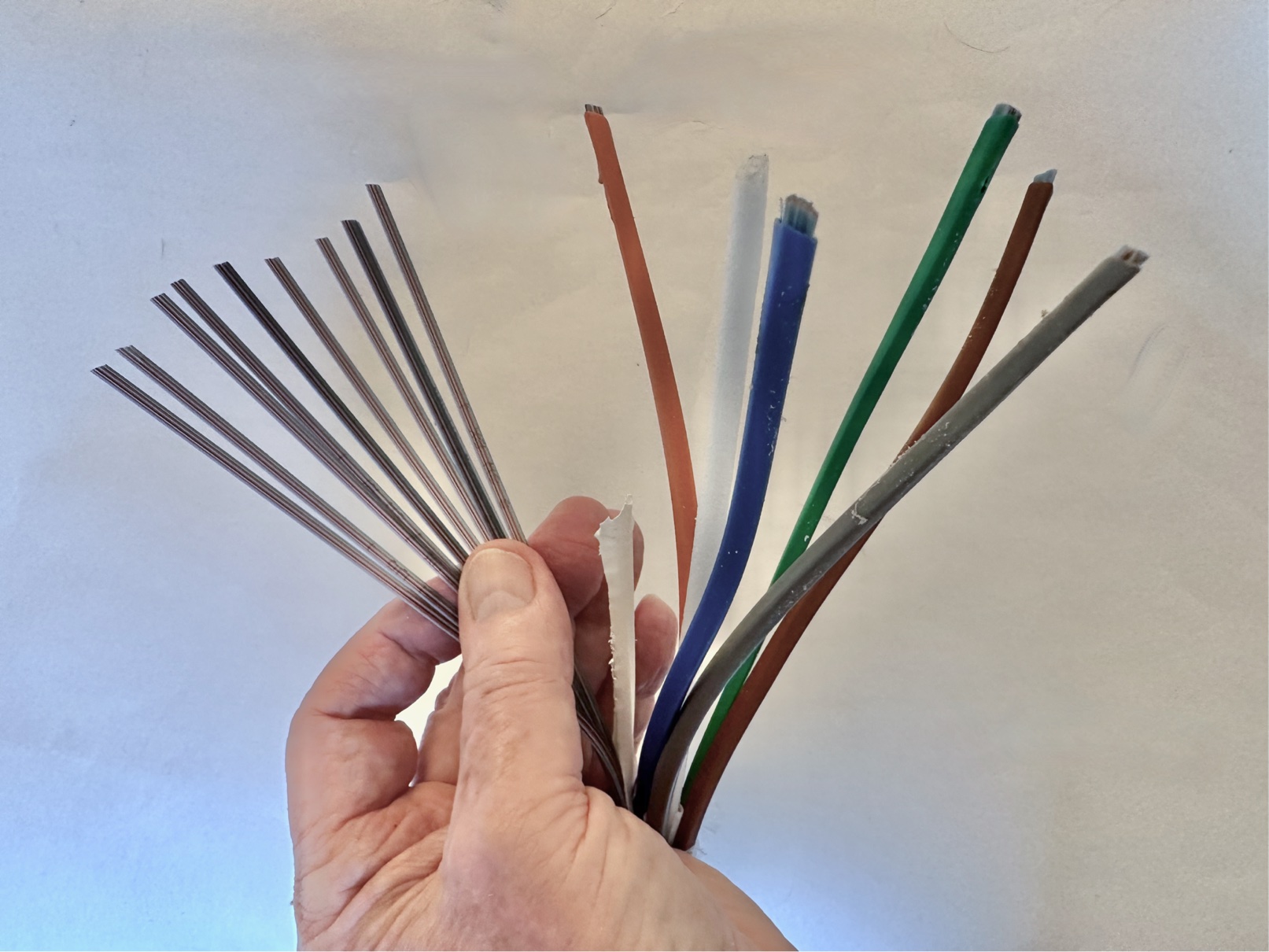
In this close-up of the ribbons, you can see each ribbon is marked for identification. That is a feature of these hard ribbons that is lost when you convert to the flexible ribbons now being widely used.
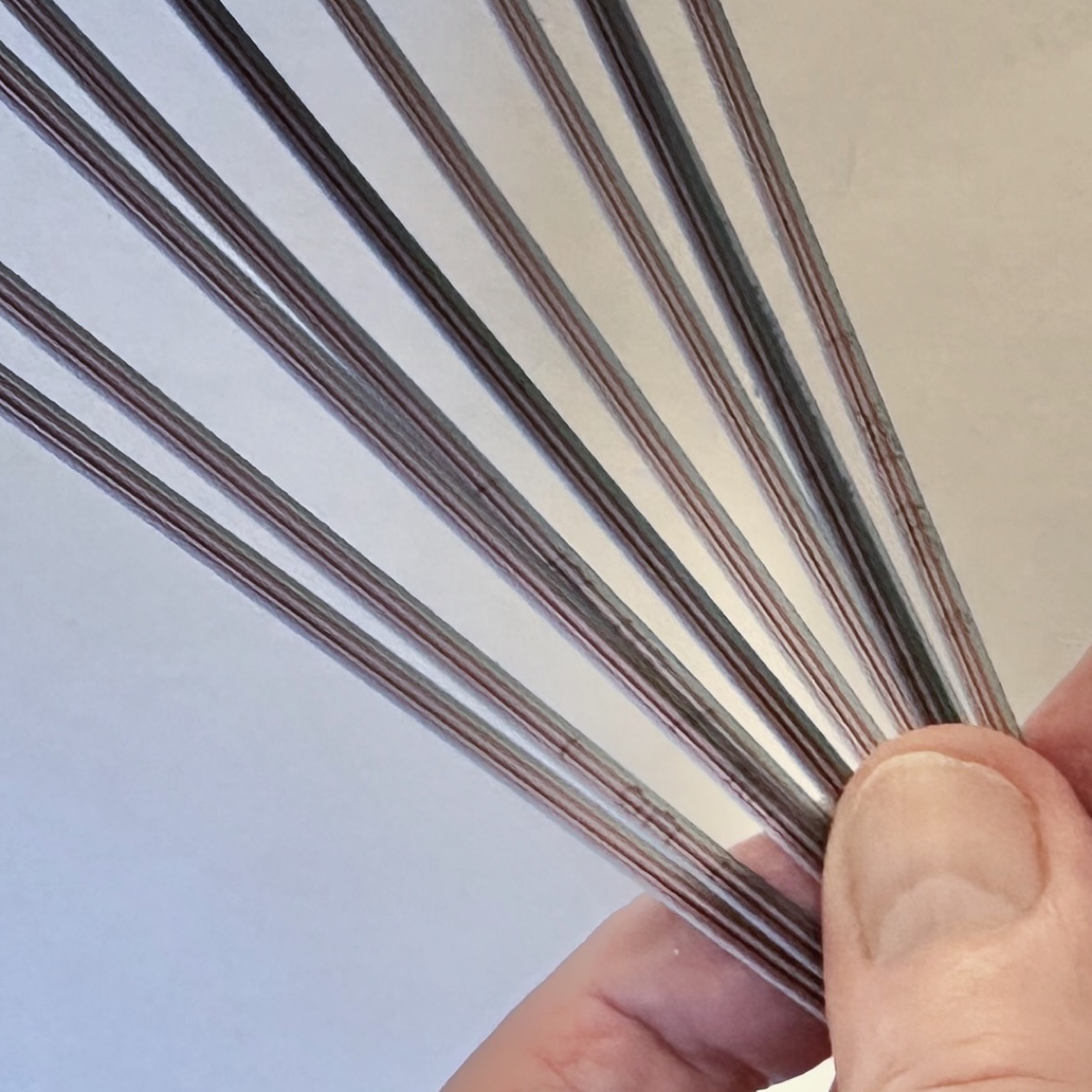
What I hear from a reliable source within the industry is that within a couple of years, these inflexible hard ribbon cables will be extinct. Everything will be flexible ribbons, and fibers will be mostly BI (bend insensitive) fibers (G.657) with 200-micron fiber buffer coatings.
Besides changing how these cables are handled, one thing will be lost—the ability to print identifying information on the ribbons so that matching fibers to splice will be more difficult. Instead, fiber identification will probably be using some sort of codes marked on one of the fibers.
About The Author

HAYES is a VDV writer and educator and the president of the Fiber Optic Association. Find him at www.JimHayes.com.