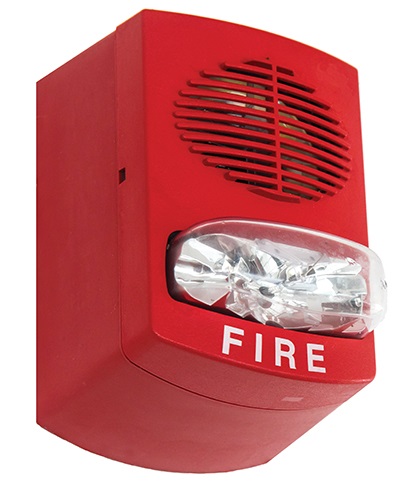
An Alarm signal sounding in a building is an indication that a detection device (or manual pull station) has been actuated. It sends a clear message that a fire has been detected and occupants must evacuate. It is vital to design the system so building occupants can safely receive that message through audible and visual notification.
NFPA 72, National Fire Alarm and Signaling Code, doesn't recognize for “trouble alarm” or “supervisory alarm,” which I hear in the field all the time. We do recognize these terms as trouble and supervisory “signals.” The priority level for signals is clear: alarm, supervisory and trouble. This means if the system is showing a trouble signal and a supervisory condition happens, then the supervisory signal takes precedence on the fire alarm control unit. An alarm condition, of course, takes precedence over the other two.
NFPA 72 provides guidance
NFPA 72-2025 provides important details regarding audible notification. First, the audible alarm notification appliances must produce signals that are distinctive from other similar appliances used in the same area and not part of the fire alarm or emergency communications system. Signals may not be used for any other purpose.
Pre-alarm, alarm, supervisory and trouble signals must be a distinctive sound.
Alarm evacuation signals cannot be used for any other purpose and must comply with Section 18.4.2. This requires the alarm audible signal pattern used to notify building occupants of the need to evacuate the building or relocate to another area be the standard alarm evacuation signal consisting of a three-pulse temporal pattern in accordance with ANSI/ASA S3.41, Audible Emergency Evacuation (E2) and Evacuation Signals With Relocation Instructions (ESRI).
Additionally, the code requires that all public mode alarm evacuation signals can be heard by building occupants; however, an average ambient sound level greater than 105 dBA requires a visual notification appliance.
Sound level pressure measures the dBA in the occupied areas of the building to ensure compliance with the code. The total sound pressure level produced by combining the ambient sound pressure level with all audible notification appliances operating must not exceed 110 dBA at the minimum hearing distance. The code provides specifies requirements and guidance regarding ambient sound pressure levels.
Public mode signaling is typically the most common form of audible evacuation signals, meaning the minimum requirements would be 15 dBA above ambient sound levels in all occupied areas of the building.
Most important, the audible notification system’s designer must identify which rooms and spaces will and will not have audible notification. The designer must document during the planning and design of the notification system what sound pressure levels will be produced by the audible appliances in the coverage areas to comply with the code. The one caveat to the sound pressure level measurements and documentation is that voice messages are not required to meet the audibility requirements.
Consider a nightclub where the music sound pressure levels will overpower the audible fire alarm system notification appliance sound pressure levels. In this case, you must reduce or stop the source of the ambient noise.
Annex A to Section 18.4.4.5.3 provides the following guidance: “In facilities where an amplified sound system is used for music and other voice amplification, such as live performances in theaters, auditoriums, and so on, and there are audible notification appliances installed at the same area of the facility, a fire alarm control relay or interface should be provided to automatically shut down the amplified music or voice system upon activation of the audible notification appliances. This automatic shutdown of the nonemergency sound system should be performed to allow for the emergency fire alarm system signal to sound and be audible to the occupants of the facility.”
Editor's note: Read more about installing audible notification appliances in locations with high ambient sound levels in the October 2025 issue.
A signaling system arranged to stop or reduce ambient noise must produce a sound pressure level at least 15 dB above the reduced average ambient sound pressure level or 5 dB above the maximum sound pressure level lasting at least 60 seconds after the ambient noise is reduced, whichever is greater, measured 5 feet above the floor in the area required to be served by the system using the A-weighted scale (dBA) of the sound pressure level measuring device.
Additionally, visual notification appliances must be installed in the affected areas, and relays, circuits or interfaces necessary to stop or reduce ambient noise shall meet the requirements of the National Electrical Code and NFPA 72.
Because the requirements for audible and visual notification appliances are different, I recommend laying out the audible notification appliances first to meet the requirements, then adding the visual appliances as required. Only where two appliances are close to each other do you use the combination units. Installing all combination units throughout a building is a costly mistake.
Remember, the message being sent with audible notification appliance is that there is an alarm condition and occupants should evacuate according to the plan.
stock.adobe.com / satit
About The Author

MOORE, PE, is a licensed professional fire protection engineer, and located in Jamestown, R.I. He is the editor of five editions of the National Fire Alarm Code Handbook. He authored, “Designing Mass Notification Systems – A Pathway to Effective Communications.” He is a principal member of the NFPA 72 Correlating Committee and former chair, now principal member, of the Emergency Communications System Technical Committee. He can be reached at [email protected].