You're reading an older article from ELECTRICAL CONTRACTOR. Some content, such as code-related information, may be outdated. Visit our homepage to view the most up-to-date articles.
Automation is on the cusp of changing our lives—from the speed with which an ecommerce order is fulfilled, to the method we use to check in to our flight and travel to our destination. As the Internet of Things (IoT) and its accompanying technology continues to blossom, commercial automation systems will become integral to facility design and valuable to anyone who benefits from the systems’ efficiency.
The usage of commercial automation systems in buildings and industrial facilities is a growth market. Replacement systems are in demand with an IoT environment, coupled with a drive to reduce costs by lowering energy consumption and improving operations.
Last year, London-based market research firm Technavio estimated building automation would grow by 9 percent per year through 2019. It also predicted the global industrial controls and factory automation market will reach close to $154 billion in revenue by 2019.
“The need to replace legacy automation systems with highly efficient automation solutions for process improvements is one of the primary drivers of this market,” said Bharath Kumar, a lead analyst for automation research, Technavio. “Automation solutions enable organizations to take fast and predictive maintenance steps that prevent plant operation failures and increase productivity. With many companies taking concrete steps to achieve maximum efficiency, the market will likely witness greater adoption of industrial controls and factory automation during the forecast period.”
Automating in a connected world
Sensors and their ability to provide multiple data points drive data analytics—something that everyone seems interested in nowadays. This is motivating designers to find better automation systems. It’s also allowing facility and equipment owners to benefit from data to drive meaningful decisions.
“The increasingly lower cost and proliferation of connected sensors has opened up a new world of analytics for commercial uses,” said Van D. Wilkins, an Irvine, Calif.-based national accounts manager for ABM Electrical Power Services, a consulting firm focused on buildings and facilities. “This spread of connected devices creates new opportunities for automation and, thereby, contracting and service opportunities for the savvy electrical contractor.”
Wilkins said automation is all about what you can do with the data that the IoT provides. It is no longer just for the sake of making processes more efficient and reducing labor.
Data drives decisions
“Moving forward with a variety of connected devices provides a wealth of data to drive statistical processes for retail usage, commerce exchanges, transportation of goods, people and advertising,” Wilkins said.
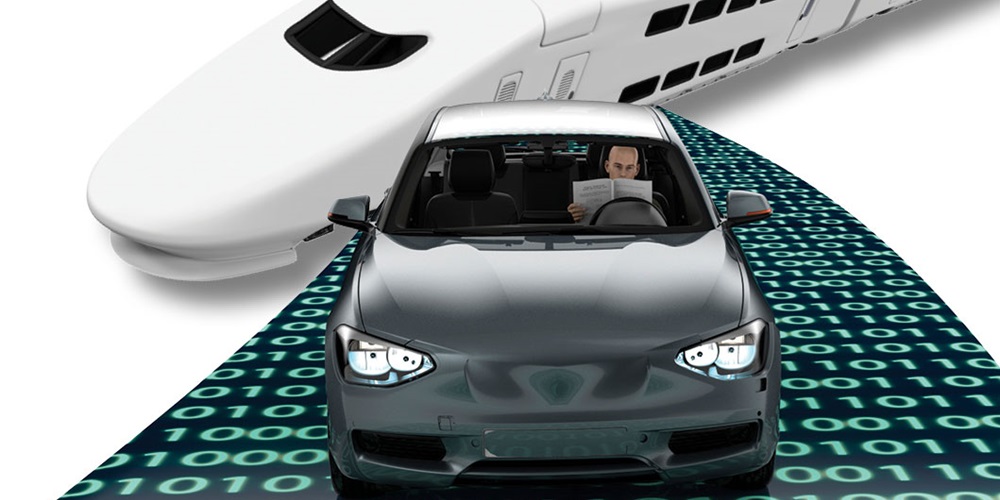
Specifically, he sees automation playing a major role in the transportation industry. This includes all facets of the transportation and supply chain industry. The industry lends itself well to automated systems and the accompanying data that the IoT and automated systems provide. Such data can help make transportation more efficient, effective and, in many cases, competitive.
“Whether it’s public transit using connected buses, shuttles, trains or automobiles, all these various networked devices are being used to determine the value of the transportation spheres,” Wilkins said. “This change in transportation is driven by the electrification and automation of the transit space. Electrical contractors need to become adept at the rapidly evolving world of automated vehicles, electric vehicle charging devices, energy storage, vehicle-to-grid and demand-response schemes that involve the entire transportation environment. Parking automation is rapidly spreading as the value of real estate is changing, and the connected vehicles are changing the financial transactions around public parking.”
Ripe opportunity
Transportation is not the only industry to benefit from IoT and other automation technology that enables data pickup and monitoring for resource allocation. Most industrial facilities are seeking ways to capitalize on the IoT and related automation systems.
“As IoT proliferates with a multitude of low-voltage devices, many working from power over ethernet and under 50 volts [V], a contractor and his labor force can be left out of opportunities or not be competitive while trying to maintain crews to perform traditional electrical work—50V–600V, for distribution systems or high power work,” Wilkins said. “Each contractor needs to make the decision about partnering with a particular technology provider or being brand agnostic and continually investing in training. As technology companies come and go, there is a caution in being too heavily dependent upon one technology provider.”
The opportunities are great for electrical contractors that train to this market and are aware of the capabilities of automation and the IoT.
About The Author

ROMEO is a freelance writer based in Chesapeake, Va. He focuses on business and technology topics. Find him at www.JimRomeo.net.