You're reading an older article from ELECTRICAL CONTRACTOR. Some content, such as code-related information, may be outdated. Visit our homepage to view the most up-to-date articles.
In my last article, I reviewed changes to fire alarm requirements for the occupancy classifications in the 2015 International Building Code (IBC). This month, I review changes to the general fire alarm requirements as well as the new section on carbon monoxide (CO) detection requirements. As a reminder, the International Fire Code (IFC) had requirements for existing occupancies in Section 907, then Chapter 46. Those requirements now reside in Chapter 11, Section 1103.7.
General fire alarm requirements
The first change is in Section 907.3.1 for duct detectors. All duct detectors must now only report a supervisory signal and not a fire alarm signal. Although there is no change line in the margin, the 2012 IBC allowed either signal.
The next change to review is Exception No. 1 for Audible Alarms in Section 907.5.2.1. Although the intent did not change, the wording in Exception No. 1 and the addition of Exception No. 2 helps to clarify the requirement. In 2012, the wording for Exception No. 1 stated, “Visible alarm notification appliances shall be allowed in lieu of audible alarm notification appliances in critical care areas of Group I-2 occupancies.” In 2015, that was changed to, “Audible alarm notification appliances are not required in critical care areas of Group I-2 Condition 2 occupancies that are in compliance with Section 907.2.6, Exception 2.” This allowed for private-mode signaling where approved by the fire official and staff responsibilities are documented.
The new Exception No. 2 states, “A visible alarm notification appliance installed in a nurses’ control station or other continuously attended staff location in a Group I-2 Condition 2 suite shall be an acceptable alternative to the installation of audible alarm notification appliances throughout the suite in Group I-2 Condition 2 occupancies that are in compliance with Section 907.2.6, Exception 2.” This should be much clearer for those of you that install systems in hospitals.
Section 907.6.3 was changed from “Zones” to “Initiating Device Identification.” The new language states, “The fire alarm system shall identify the specific initiating device address, location, device type, floor level where applicable and status including indication of normal, alarm, trouble and supervisory status, as appropriate.” The International Association of Fire Chiefs proposed this as part of its plan to help reduce responses to nuisance alarms by better identifying alarm signals. As you can see, you will either have to install an addressable fire alarm or point-annunciate each device. There are a few exceptions for small systems. Language in NFPA 72 is not quite as restrictive. It allows for zone identification in addition to device identification.
Although not totally related to a fire alarm system, many of you no doubt experience inconsistent interpretations of the requirements when delayed-egress locks or access-controlled locks are installed. Review the new language in IBC Section 1010. The requirements have not really changed, but the sections have been rewritten to clarify the intent of the code. This is a step in the right direction.
CO detection
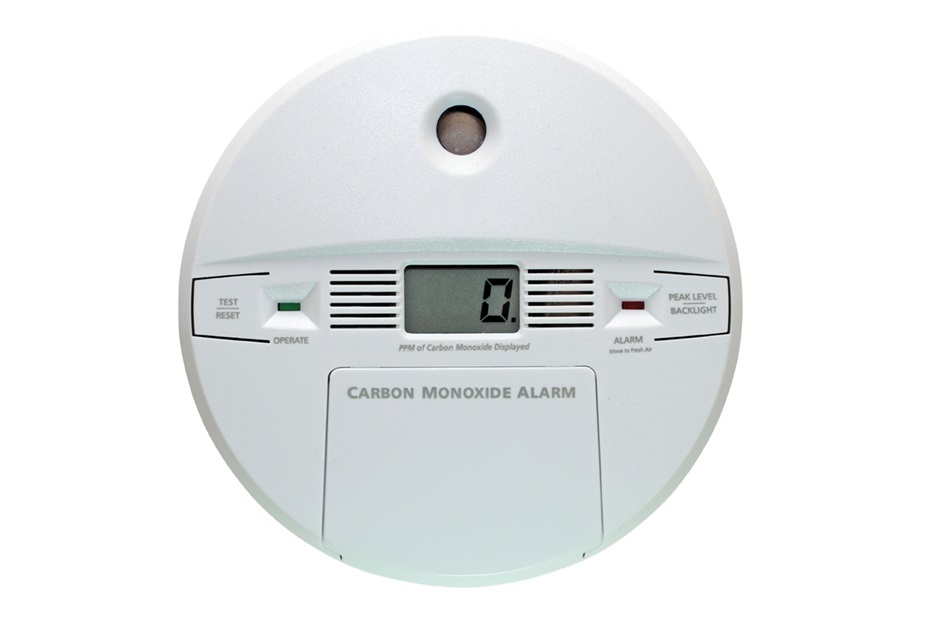
New Section 915 on CO detection was added to the IBC and IFC in 2015; many new requirements were also added to the International Residential Code. Section 915 requires CO detection in dwelling units and sleeping units of new Group I-1, I-2, I-4 and R and in Group E classrooms that contain a fuel-burning appliance or a fuel-burning fireplace. You are also required to have CO detection in the above locations that are served by a fuel-burning, forced-air furnace. If a fuel-burning appliance or fireplace is in the building but not in the dwelling unit, sleeping unit or classroom, some exceptions will apply. CO detection would not be required in the above locations if no communicating openings between the fuel-burning equipment and the above locations are installed, if CO detection is installed between the fuel-burning equipment and those locations, or if CO detection is installed on the ceiling of the room containing the fuel-burning equipment. In addition, if those occupancies have an attached garage, CO detection must be installed, with a few exceptions.
Section 915 also provides location requirements for dwelling units and sleeping units that are similar to smoke alarm locations, so it may be beneficial to install combination devices. For classrooms, the CO detection installed in each classroom must have their signals automatically transmitted to an on-site staffed location unless the Group E occupancy is 30 or less. Both CO alarm and detection system requirements are described in Section 915.3. This section provides requirements for power connections and listings of the devices.
Many states now have requirements for CO detection, so ensure you know your state’s rules. A good place to start is System Sensor’s CO Legislation Map, which can be found at www.systemsensor.com/en-us/res/Pages/CO-Legislation-Map.aspx.
About The Author

HAMMERBERG, SET, CFPS, is an independent fire alarm presenter and consultant currently residing in The Villages, Fla. Tom represented the Automatic Fire Alarm Association on multiple NFPA technical committees as well as actively participating in the ICC code making process for many years. He is NICET Level IV certified in fire alarm systems and a Certified Fire Protection Specialist. He can be reached at [email protected].