When you examine an end-user’s needs, do you really know what they expect from their security solution? They want plug-and-play, like popular consumer platforms based on the highly convenient and adaptable iOS and Android operating systems.
Demand for mobility, accessibility and convenience is pushing security’s limits. The cloud is everywhere, even in video surveillance, and it satisfies consumer demands with ease of use and simple connectivity.
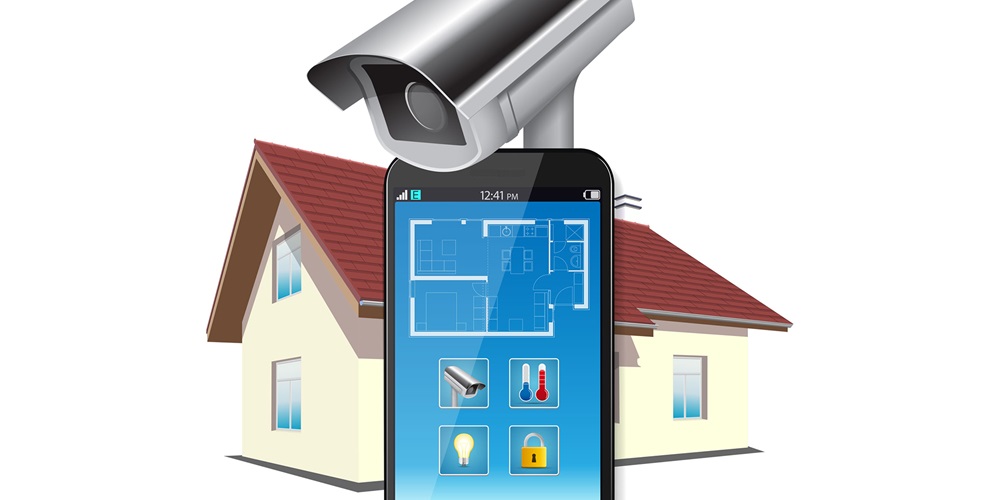
Furthermore, consumers want intuitive, well-designed apps. They want automation to be straightforward and integrated with lighting and other building systems.
“The most popular products are single-point systems tied into security, like the video doorbell, for example,” said Duane Paulson, senior vice president, product and market development, Nortek Security and Controls, Carlsbad, Calif. “A lot of ideas come from our customers—even considering what they feel is a pain in the neck from their perspective.”
Just as residential customers want one point of control across the board, commercial clients want to be able to use their smartphones to access everything. They also want the ability to use whatever connected device they have in addition to a smartphone, such as a tablet, laptop or desktop. They want a user interface that represents and controls the entire landscape of systems in an easy-to-interpret fashion. As such, industry experts expect the card or keypad for access control to disappear in the future.
So, what will it take for the commercial security industry to move to truly open, integrated systems? Contractors must demand it or go elsewhere.
Select interoperable products
Electrical contractors have the power to influence this change. For example, there is nothing more frustrating than a customer who has a perfectly good access control system and wants to add hands-free or mobile entrance credentials but can’t because his or her current software platform is proprietary. Or, consider the customer that has a fine video surveillance system but can’t add cameras because the system accepts a limited number of devices.
The reality is that, as additional solutions and data arise—through the Internet of Things (loT) and analytics—it will be more important to have the type of unified connectivity that allows everything to work together. Consumers, facility owners and operators count on contractors to meet those needs.
These trends and the overall need for deeper, unbridled integration; cross-collaboration; and partnerships emerged strongly at the annual Securing New Ground conference hosted by the Security Industry Association (SIA), Silver Spring, Md. The event, which focuses on the impact of change, is a harbinger on security industry activity and forward-reaching trends. The SIA is the largest trade association and standards-making body representing the manufacturers of security products and systems.
Martin Gren, inventor of the networked IP camera, co-founder and chairman of Axis Communications, Chelmsford, Mass., said industries are converging, bringing together a complement of technology and manpower.
“Industries are merging across the IP landscape, including video surveillance, telephony, intercoms, building automation, HVAC, access control, intrusion and fire,” Gren said.
One example is video management solutions and access control, which need to be integrated because users want add- itional convenience.
“Video is slowly merging with access control, and we see the move to IP intercoms, with the large installed base of existing audio products,” Gren said. “The goal is to enable systems to become more proactive, and that’s the challenge as well.”
Interoperability and integration requires compatibility with old and future systems. Data must be transferrable into smart, targeted information so users can proactively mitigate threats and prevent loss.
This also requires security providers to have a changing business model. Features need to be all-in-one, and on-site technicians may be the best ones to bring new ideas for integrated systems to their clients.
“We need to eliminate the silos that exist and have everything working together,” said Dan Herscovici, senior vice president and general manager, Xfinity Home by Comcast, Philadelphia. “Customers want to control everything under one app. They don’t want all those separate silos.”
Comcast has had positive customer reaction to technicians who upsell services after the installation.
For ECs, the task at hand is to continue to learn new technology and to embrace manufacturers who are helping them with open, integrated solutions that are easy to control and operate while providing the highest levels of safety and security.